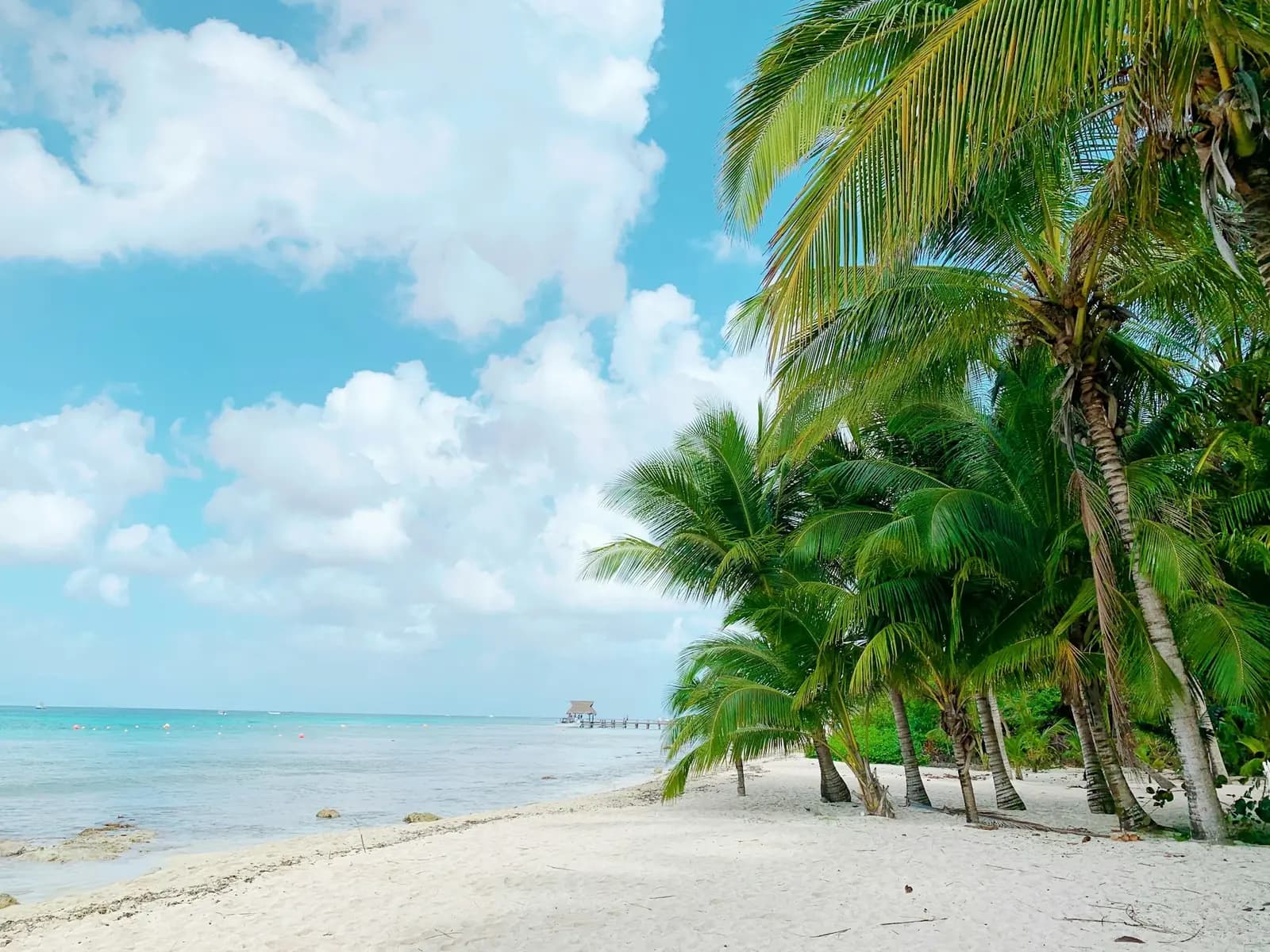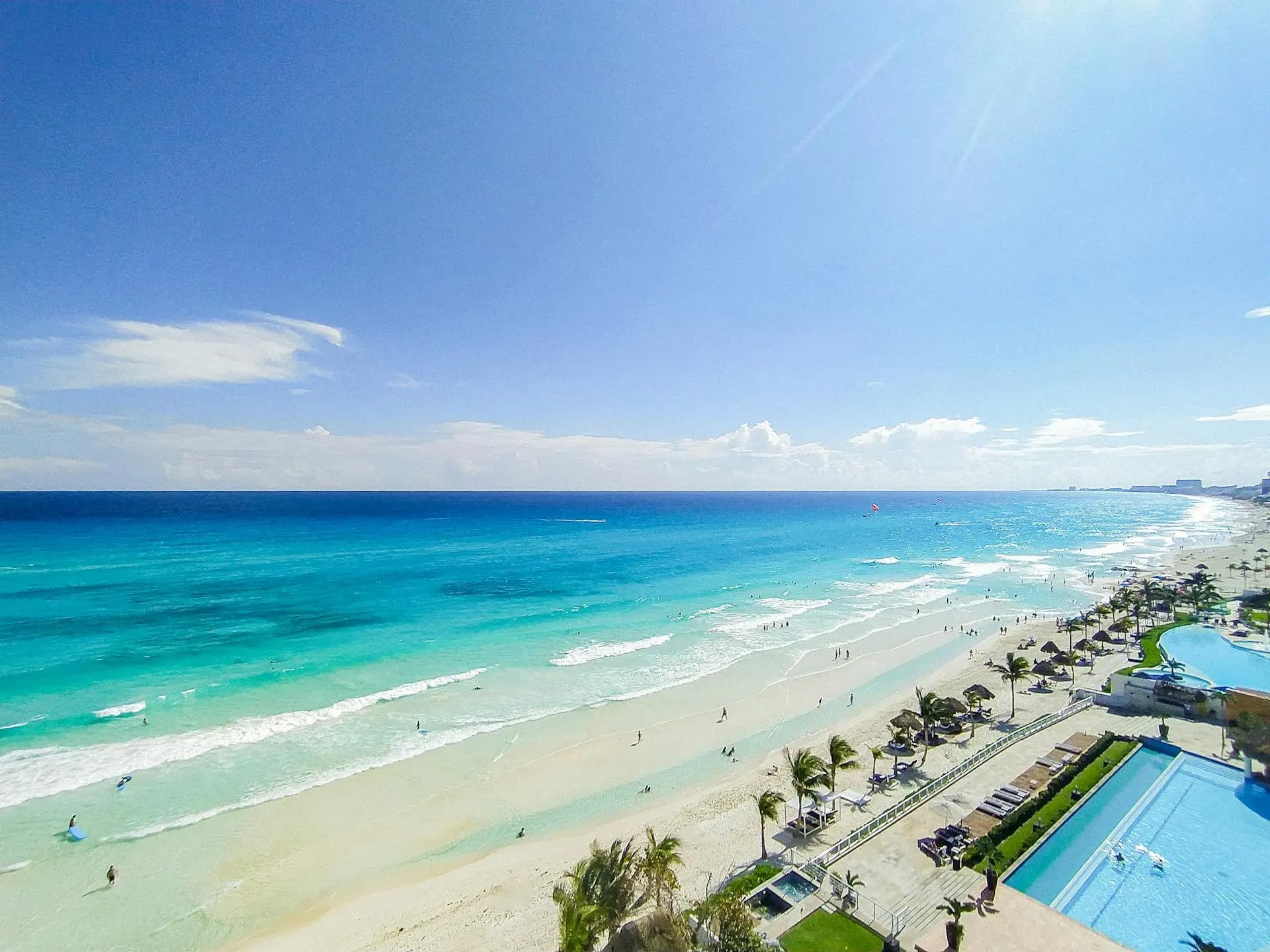
Cancún is easier on older travelers than its spring-break reputation suggests: one flat boulevard, hotel pickup on almost every day trip, and four public beaches with amphibious wheelchairs. This guide ranks the activities by how much walking they actually involve.
What You Should Know
- Cancún suits older travelers better than its reputation suggests. The Hotel Zone is a single flat 22 km boulevard, and almost every headline day trip includes round-trip hotel pickup, so you rarely need to drive, park, or walk far to a departure point.
- Four Cancún public beaches are designated inclusive beaches: Las Perlas, Langosta, Chaacmool, and Delfines. They carry amphibious wheelchairs, mats running down to the waterline, ramps, handrails, and accessible bathrooms, and were chosen specifically for their calm water and gentle shore break.
- The Mayan sites differ enormously in effort, and this is the single most useful thing to plan around. El Rey in the Hotel Zone is flat, under 1.2 hectares, and takes about an hour. Chichén Itzá is 1 to 4 miles of walking on gravel, though INAH lends wheelchairs free at the visitor center.
- December through February is the most comfortable window, with highs in the low 80s°F and the year's lowest humidity. Cold fronts can drop daytime temperatures to around 70°F for two to four days at a stretch, so bring a light layer even in winter.
Best Things to Do in Cancún for Seniors
The best things to do in Cancún for seniors are not a shorter version of everyone else's list: they are the ones where the effort is predictable. Cancún happens to be well set up for that. The Hotel Zone is one flat boulevard rather than a hill town, the big-ticket day trips collect you from your lobby in an air-conditioned van, and four public beaches carry amphibious wheelchairs and matting down to the water.
What actually catches people out is not mobility, it is heat and duration. A Chichén Itzá day is 12 hours door to door and 1 to 4 miles on foot in full sun; a sunset cruise is four seated hours in the cool of the evening. Both are excellent, and they are not remotely the same ask. So this guide sorts everything by effort first, then covers which ruins are flat, which beaches have real accessibility equipment, and when in the year the weather cooperates. For the general list, see our best things to do in Cancún guide, and for car-free logistics our Cancún without a car guide.
Sat Mexico Tours: Early Morning Chichén Itzá
The early departure is the whole point. Leaving before dawn puts you at the ruins in the coolest, emptiest part of the day, which is the single biggest comfort difference on a Chichén Itzá trip. Group size is capped at 40, buffet lunch and round-trip transport are included, and the Valladolid stop gives you a sit-down break in the middle of a long day.
Book NowBest Cancún Activities for Seniors: Compared by Effort
The column that matters here is Effort. Everything below is well rated and includes transport, so the real decision is how much walking, standing, and sun each one asks of you. Prices are the per-person from-price; some day trips add a separate site entrance fee.
| Activity | Operator | Rating | From | Effort | Time |
|---|---|---|---|---|---|
| Isla Mujeres sunset cruise | Contoy Adventures | 4.6 ⭐ (147) | $69 | Very low. Seated aboard, evening cool | 4 hrs |
| Xcaret Park + evening show | Xcaret Day Trip from Cancún | 4.3 ⭐ (2,011) | $185 | Low to moderate. Large park, paved paths, seated show | Full day |
| Puerto Morelos tacos & town tour | What To Do In Cancun | 4.8 ⭐ (1,311) | $45 | Low. Short flat walks between stops | Half day |
| Downtown street food & market | Cancun Food Tours | 4.8 ⭐ (744) | $64 | Moderate. 3.5 hrs mostly on foot, flat | 3.5 hrs |
| Puerto Morelos reef snorkel | Extreme Adventuring Cancun | 4.7 ⭐ (2,431) | $39 | Moderate. Boat steps, ~1 hr swimming | Half day |
| Tulum ruins & cenote, guided | Sat Mexico Tours | 4.6 ⭐ (2,605) | $69 | Moderate. ~70% accessible paths, some stairs | 5 hrs |
| Isla Contoy & Isla Mujeres | Ocean Tours | 4.8 ⭐ (762) | $179 (+ park fee) | Moderate. Long boat day, sand walking | 8 hrs |
| Chichén Itzá, early departure | Sat Mexico Tours | 4.8 ⭐ (6,869) | $39 | High. 1–4 mi on gravel, long day | Full day |
Check live availability for these tours
ℹ️ Ratings, prices, and inclusions were taken from our individual Cancún tour guides and reviewed by our team in August 2026. Effort ratings are our own assessment based on published itineraries, walking distances, and terrain. Prices are the per-person from-price and may change; confirm pickup from your specific hotel before booking.
Best Cancún Activities for Older Adults by Mobility Level
The single most useful way to plan this trip is to be honest about how long you want to be on your feet, then work back from there. Retirees with a flexible calendar and travelers with limited mobility often end up wanting the same things: shade, somewhere to sit, and a day that ends when they want it to. Find your row and start there.
| Mobility level | Best picks | What to know |
|---|---|---|
| Very limited walking | Isla Mujeres sunset cruise, the inclusive beaches, El Rey ruins | All three are seated or flat. El Rey has no stairs and shaded benches, and Las Perlas has amphibious chairs and matting down to the water. |
| Some walking, with rests | Puerto Morelos tacos and town tour, Xcaret | Short flat walks with somewhere to sit at every stop. Xcaret is a large park but paved, and you set your own pace between the shows. |
| Comfortable for a few hours | Downtown street food tour, Tulum ruins, Puerto Morelos reef snorkel | The food tour is 3.5 hours mostly standing. Tulum adds a 1 km approach to the ticket booth, though a shuttle covers it for around 50 pesos. |
| Active, used to full days | Chichén Itzá, Isla Contoy and Isla Mujeres | Either 1 to 4 miles on gravel in open sun, or an eight-hour boat day with sand walking. Both are worth it if distance is not the constraint. |
Our experience (mixed-mobility groups): When one person in the party walks well and another does not, the sunset cruise and Xcaret are the two that keep everyone together without anyone waiting in a car park. Splitting up for a day works better than picking a compromise trip that suits nobody.
The Days We'd Book First
1. The sunset cruise, if you only do one boat day
Four hours, entirely seated, leaving in the late afternoon when the heat has broken. There is no swimming, no snorkel gear, and no scramble down a ladder: you board, you sit, the bar is open, and Isla Mujeres slides past. Contoy Adventures caps it at 50 guests and runs it Tuesday, Thursday, and Saturday, so it needs a little planning around. This is the lowest-effort headline experience in Cancún and the one most likely to suit a mixed-mobility group traveling together.
2. Puerto Morelos, for a half day that never rushes
The taco and town tour is a half day rather than a full one, and Puerto Morelos itself is a small flat fishing village built around a square. Three taco stops, a tequila tasting, and round-trip transport, with short walks between each stop and somewhere to sit at every one. At $45 it is also the cheapest way to get a genuine Mexican town into a trip that might otherwise stay inside the Hotel Zone.
3. Chichén Itzá, but only the early departure
Chichén Itzá is a New Seven Wonder and worth the effort, and the effort is real: 1 to 4 miles of walking depending on how much of the site you cover, on gravel and grass, in open sun. The early-morning departure is what makes it manageable, because you walk the site before the heat peaks and before the midday coach crowds arrive. Note that El Castillo has been closed to climbing since 2008, so the pyramid is a viewing experience rather than a climb, which for once works in your favour.
Our experience (the shuttle nobody mentions): INAH lends wheelchairs free at the Chichén Itzá visitor center, and roughly 70% of the main plaza is reachable on paved or compacted paths. If walking the full site is not realistic, you can still see El Castillo, the Great Ball Court, and the Temple of the Warriors from the flat central area.
4. Xcaret, the most accessible of the eco-parks
Of the big parks on this coast, Xcaret is the one that has done the most on access: paved routes to the restaurants and shops near the entrance, an accessible boat ride, step-free access to the theater, and a published accessibility map you can plan against before you arrive. The day is long and the park is large, so it is not effortless, but you set your own pace and the headline event is the evening cultural show, which you watch seated. If you want one full day that is not a bus-and-ruins day, this is it. Our Xcaret vs Xplor vs Xel-Há comparison covers how the three parks differ.
5. The downtown food tour, for a city you would otherwise miss
Most visitors never leave the Hotel Zone. This 3.5-hour walking tour of downtown Cancún covers street food stalls, a local market, and the murals, with transport included and a group capped at 30. It is flat throughout, but it is 3.5 hours largely on your feet, so it sits a step above the Puerto Morelos trip in effort. Our Cancún food tours guide compares the full range if this is the angle you want.
Mayan Ruins Ranked by How Much Walking
This is the table we wish existed when planning for older travelers. The archaeological sites near Cancún vary from a one-hour flat stroll to a four-mile day, and the difference is not obvious from the tour listings.
| Site | Walking | Terrain | Verdict |
|---|---|---|---|
| El Rey (Hotel Zone) | Under 1 hr | Flat paths, no stairs or steep inclines | Easiest by far |
| Tulum | 1 km to the entrance, then moderate | Compacted gravel; stairs near the cliffs | ~70% accessible since the 2026 Parque del Jaguar works |
| Chichén Itzá | 1–4 miles | Gravel, grass, some uneven sections | Flat plaza, slight incline from entrance |
| Cobá | Spread out over a wide site | Jungle paths between groups | Tricycle taxis available, around 100 pesos |
El Rey: the one most people skip
El Rey sits in the Hotel Zone itself, walkable from some hotels and directly on the R1 bus route. The whole site is under 1.2 hectares with flat, clearly defined paths, no stairs and no steep inclines, and several palapa and tree-shaded spots to sit. An unhurried visit takes about an hour. If a full ruins day trip is off the table, this is a genuine Mayan site you can visit on your own terms in a morning, with the Museo Maya de Cancún next door.
Tulum: better than it used to be
Tulum improved substantially with the 2026 Parque del Jaguar works, which upgraded trails to make roughly 70% of the site navigable with mobility devices. The catch that surprises people is the approach: it is about 1 km from the parking and commercial area to the ticket booth, though an electric shuttle runs the stretch for around 50 pesos round trip. Stairs remain near the cliff edge and down to the beach.
Chichén Itzá and Cobá
Chichén Itzá is the biggest ask, at 1 to 4 miles depending on how completely you explore it, but the main plaza itself is flat with only a slight incline up from the entrance, and INAH lends wheelchairs at no cost from the visitor center. Cobá is spread across a wide jungle site, and the practical answer there is the tricycle taxis, which carry you between the groups for around 100 pesos.
Accessible Cancún: Beaches, Buses and Getting Around
Cancún has made real, specific investments in beach accessibility, and they are worth knowing about because they are not well signposted.
The four inclusive beaches
Four public beaches are designated playas incluyentes: Las Perlas, Langosta, Chaacmool, and Delfines. The city chose these four for their low tide and calm waves rather than their size. Las Perlas is the most fully equipped, with three wheelchairs, three amphibious chairs, two amphibious beds and two amphibious walkers, matting running down to the water, ramps, handrails, and independent accessible bathrooms. It also faces the sheltered bay rather than the open Caribbean, so the water is shallow and gentle. Playa Delfines, the largest free public beach, has a wheelchair-accessible ramp at its viewpoint, and Playa Tortugas has ramps leading from the parking area onto the sand.
Our experience (bay side versus ocean side): The Hotel Zone's bay-facing beaches at the northern end have noticeably calmer, shallower water than the long ocean-facing stretch, where the shore break can be strong enough to knock you off balance. For confident wading rather than swimming, the bay side is the safer choice regardless of mobility.
Getting around
The R1 and R2 buses run the full Boulevard Kukulcán strip for around 12 pesos and are the cheapest way to move along the Hotel Zone, but they are not accessible for wheelchair users and the boarding steps are high. If mobility is a factor, an adapted taxi is the realistic option, and tours with hotel pickup avoid the question entirely. Ride-hailing is unreliable in the Hotel Zone. Our car-free Cancún guide covers the transport picture in detail, and our airport transfer guide covers the arrival.
The ferry question
Reports on the Isla Mujeres ferry are genuinely mixed: the Ultramar boats have some facilities for passengers with reduced mobility, but boarding still involves steps, and how easy it is depends on the tide and the terminal. Crews do assist. If this is a concern, a tour that includes the crossing with staff on hand is a smoother route than doing the ferry independently.
What to Expect on a Cancún Day Trip
- Hotel pickup: Almost all day tours collect you from your Hotel Zone lobby. The window is wide and the van usually loops several other hotels first, so door-to-door time can run an hour longer than the advertised tour length.
- The transfer: Air-conditioned van or coach. Chichén Itzá is roughly 2.5 to 3 hours each way, Puerto Morelos around 30 minutes, so the difference in seated travel time is substantial.
- On site: Guided walking with stops. Shade is limited at the ruins, and seating is scarce away from the entrance and the central plaza.
- The break: Most full-day trips build in a buffet lunch and, on the Chichén Itzá routes, a stop in Valladolid, which is where you get a proper sit down.
- Return: Full-day trips typically get you back to your hotel between 6pm and 8pm, later in traffic.
Our experience (the bathroom stops): On the long inland routes, facilities appear at the lunch stop and at the site entrances, not reliably in between. Guides are used to being asked, and it is worth flagging at the start of the day rather than mid-drive.
The practical read: a half-day trip to Puerto Morelos is a genuinely relaxed morning, while a Chichén Itzá day is a committed 12 hours door to door. Both are worth doing, but stacking two full days back to back is the mistake we see most often.
How Much Do Cancún Tours for Seniors Cost?
Expect $39 to $69 per person for most half-day and evening trips, and $39 to $179 for full-day excursions, before separate site or park entrance fees. The lowest-effort options are not the most expensive ones, which is unusual and works in your favour.
- Budget ($39–$45): The early-morning Chichén Itzá trip and the Puerto Morelos reef snorkel both start at $39, and the Puerto Morelos taco and town tour is $45. All include round-trip transport. Chichén Itzá adds a separate site entrance fee.
- Mid-range ($64–$69): The downtown street food tour at $64 and the Isla Mujeres sunset cruise at $69. This is the sweet spot for comfort: shorter days, smaller groups, and in the cruise's case, no walking at all.
- Premium ($179+): The Isla Contoy and Isla Mujeres day at $179 plus a park fee, which buys a full eight hours, a protected-island nature walk, and lunch aboard.
If you are choosing one paid experience, the sunset cruise at $69 gives the highest comfort-to-cost ratio of anything in this guide. If you want the landmark, the $39 early Chichén Itzá departure is remarkable value for a New Seven Wonder, provided you accept the walking.
Best Time to Visit Cancún for Seniors and Retirees
Weather matters more here than at most beach destinations, because the limiting factor on a Cancún day is usually heat rather than distance.
- December to February (best): Highs in the low 80s°F with the year's lowest humidity and clear skies. This is the most comfortable window by a clear margin. It is also peak season, so hotel rates and crowds are at their highest.
- March and April (very good): Still dry and clear, warming through the period. Late April starts to feel hot in the middle of the day.
- May to September (hardest): Hot and humid, with the summer sargassum peak on the beaches. If you travel now, front-load the day and keep afternoons indoors.
- October and November (good value): The heat eases and prices drop before the December peak. November is the pick of the two.
If your dates are flexible, and for retirees they often are, that flexibility is worth real money here. The most comfortable weather sits inside the most expensive weeks, but late November and the first ten days of December give you nearly the same conditions before the holiday surcharge lands. One thing to pack for regardless: cold fronts can push daytime temperatures down to around 70°F and nights to 65°F for two to four days at a time between December and February, so a light layer earns its place in the case. Our best time to visit Cancún guide breaks down every month, and our sargassum season guide covers the summer seaweed.
From Our Experience
What we consistently see is that the trips that go wrong are the over-scheduled ones, not the physically demanding ones. Travelers who booked one substantial day trip, kept the next day free for the beach or El Rey, and chose morning departures over afternoon ones came back describing Cancún as easy. The ones who stacked Chichén Itzá, Tulum, and a catamaran across three consecutive days did not.
Tips for Seniors Visiting Cancún
- Book the earliest departure available: On any inland trip this is the single biggest comfort decision. You walk the site before the heat peaks and before the coach crowds arrive, and you get home earlier.
- Leave a recovery day after any full-day trip: A Chichén Itzá day is roughly 12 hours door to door. Plan the following day around the beach, El Rey, or the Museo Maya rather than another excursion.
- Ask for the front seats when you book: Van and coach operators will usually accommodate a request for seats near the door if you mention mobility at booking. It is far harder to arrange in the parking lot at 6am.
- Use the bay-side beaches for swimming: The northern Hotel Zone beaches face the sheltered bay with shallow, calm water, while the long ocean-facing stretch can have a shore break strong enough to unbalance you.
- Ask your hotel about the inclusive beach equipment: The amphibious chairs at Las Perlas, Langosta, Chaacmool and Delfines are free but limited in number, and availability is not posted anywhere reliable. A call ahead saves a wasted trip.
- Bring the light layer: Cold fronts between December and February drop days to around 70°F, and the air conditioning in vans and restaurants runs cold year-round.
- Consider an all-inclusive as a base: For travelers who want short days and a reliable fallback, having food, shade, and a pool a few steps from the room removes a lot of daily logistics. Our Cancún all-inclusive resorts guide covers the options.
How We Selected These Tours
The Cancun Trip Insider team ranked these by the criteria that actually govern an older traveler's day: total walking distance, terrain underfoot, availability of shade and seating, transfer length, and whether the operator includes door-to-door hotel pickup. Effort ratings are our own assessment, drawn from published itineraries and site conditions rather than marketing copy. Every tour here is a verified listing from a highly rated operator. We excluded experiences with unavoidable ladder or ladder-style boat boarding, sites reached only by steep or unrailed stairs, and operators whose pickup arrangements reviewers described as unreliable, since a missed pickup costs an older traveler far more than an inconvenience. The selection deliberately spans four very different days: a fully seated evening cruise, a relaxed half-day village trip, a flat urban food walk, and one committed full-day trip to a New Seven Wonder, so the guide works whether you want a gentle week or one landmark you will not compromise on.
Frequently Asked Questions
Is Cancún good for seniors?+
Yes, more than its spring-break reputation suggests. The Hotel Zone is a single flat boulevard, almost every major day trip includes round-trip hotel pickup, and four public beaches carry amphibious wheelchairs and matting to the waterline. The main things to plan around are heat and trip length rather than terrain.
Which Cancún beaches are wheelchair accessible?+
Four are designated inclusive beaches: Las Perlas, Langosta, Chaacmool and Delfines, chosen for their calm water and low tide. Las Perlas is the best equipped, with amphibious chairs, beds and walkers, matting to the water, ramps, handrails and accessible bathrooms. Playa Delfines has an accessible ramp at its viewpoint, and Playa Tortugas has ramps from the parking area.
Can seniors visit Chichén Itzá?+
Yes, with realistic expectations. You will walk between 1 and 4 miles depending on how much of the site you cover, on gravel and grass with some uneven sections, and the day runs about 12 hours door to door from Cancún. The main plaza is flat, and INAH lends wheelchairs free at the visitor center. Book the earliest departure to avoid the midday heat.
What is the easiest Mayan ruin to visit near Cancún?+
El Rey, in the Hotel Zone itself. The site is under 1.2 hectares with flat paths, no stairs and no steep inclines, several shaded places to sit, and takes about an hour at an unhurried pace. It is walkable from some hotels and sits directly on the R1 bus route, with the Museo Maya de Cancún next door.
What is the best month for older travelers to visit Cancún?+
December through February, when highs sit in the low 80s°F and humidity is at its lowest for the year. January and February are the driest and clearest. The trade-off is peak-season pricing and crowds. Pack a light layer, because cold fronts can drop daytime temperatures to around 70°F for two to four days at a time.
Are Cancún buses accessible for people with limited mobility?+
Not really. The R1 and R2 buses run the whole Hotel Zone for around 12 pesos and are excellent value, but they are not wheelchair accessible and the boarding steps are high. An adapted taxi is the practical alternative, and booking tours that include hotel pickup avoids the problem altogether.
What is the least strenuous tour in Cancún?+
The Isla Mujeres sunset cruise. It runs about four hours in the evening once the heat has broken, you are seated aboard throughout, and there is no swimming or snorkeling involved. Hotel pickup is included and the group is capped at 50, though it only sails on set days, so it needs a little planning around.
Is Cancún good for a multigenerational trip with grandparents?+
It works well, because the activities that suit grandparents overlap with the ones that suit young children: shallow bay-side beaches, short boat trips, and Xcaret. If you are traveling with elderly parents and the group's walking speeds differ a lot, the sunset cruise and Xcaret keep everyone together, and an all-inclusive base means nobody is stuck waiting on the group to eat.
How many day trips should seniors plan in a week in Cancún?+
Two full days at most, spaced apart. A full-day inland trip like Chichén Itzá runs roughly 12 hours door to door, and stacking those back to back is the most common planning mistake we see. Alternate a big day with a low-effort one: the beach, El Rey, or a half-day trip to Puerto Morelos.
Affiliate note: Some links on this page are affiliate links. If you book through them, we may earn a small commission at no additional cost to you.