Cancun is safe for most tourists, but where you stay and what the current travel advisory actually says matters. Here is what you need to know before you go in 2026.
What You Should Know
- The U.S. State Department currently assesses Quintana Roo at Level 2: Exercise Increased Caution, the same level as Mexico's overall rating, while several other Mexican states are rated Level 3 or Level 4. The advisory does not single out the Hotel Zone or Isla Mujeres.
- Canada's 'exercise a high degree of caution' advisory for Mexico is a long-standing country-wide position, not a new or escalated warning, and its regional advisories do not include Quintana Roo. The UK advises against travel only to parts of Mexico, and Quintana Roo is not among them.
- Mexican beaches in Quintana Roo are subject to regular COFEPRIS (Federal Commission for Protection against Sanitary Risks) water quality inspections. Several Hotel Zone beaches hold Blue Flag certification, meeting international standards for water safety and environmental management.
- Most reported safety incidents involving tourists in Cancún tend to occur in downtown El Centro after dark or in nightclub areas along Blvd. Kukulkán after midnight, rather than on Hotel Zone beaches or in resort corridors. Staying in the Hotel Zone and established tourist areas reduces risk exposure.
Is Cancun Safe to Travel in 2026?
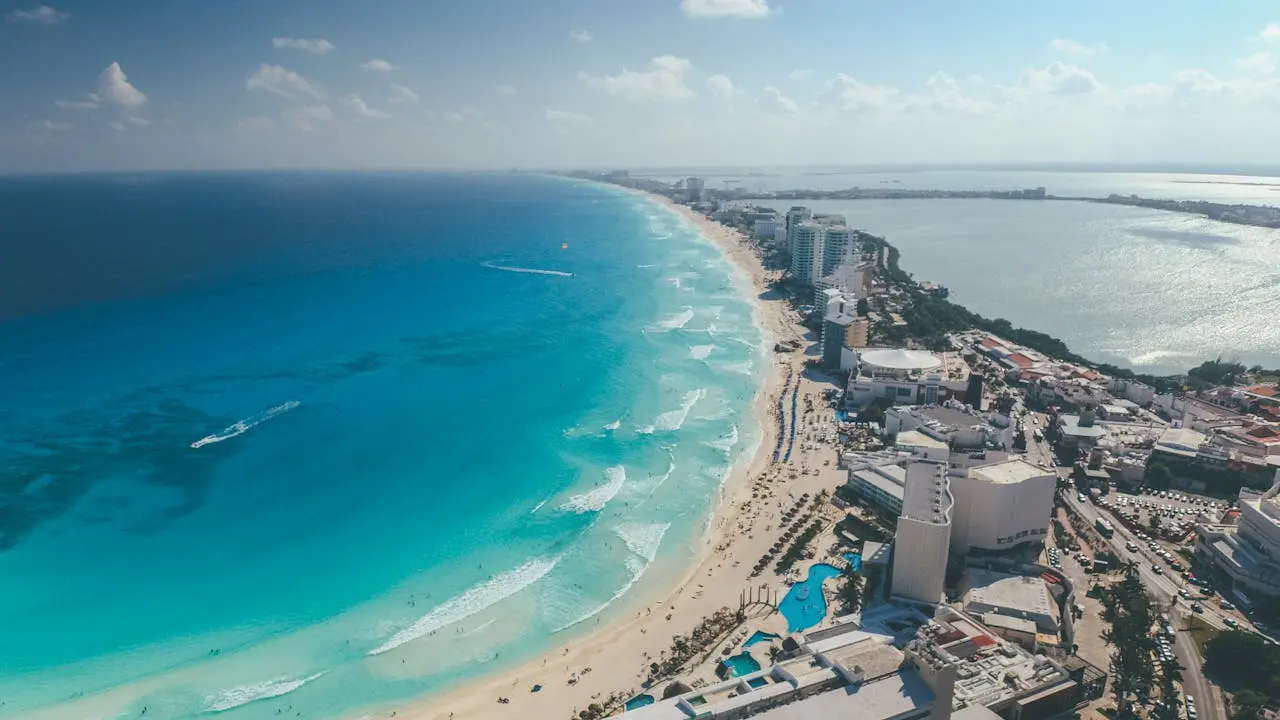
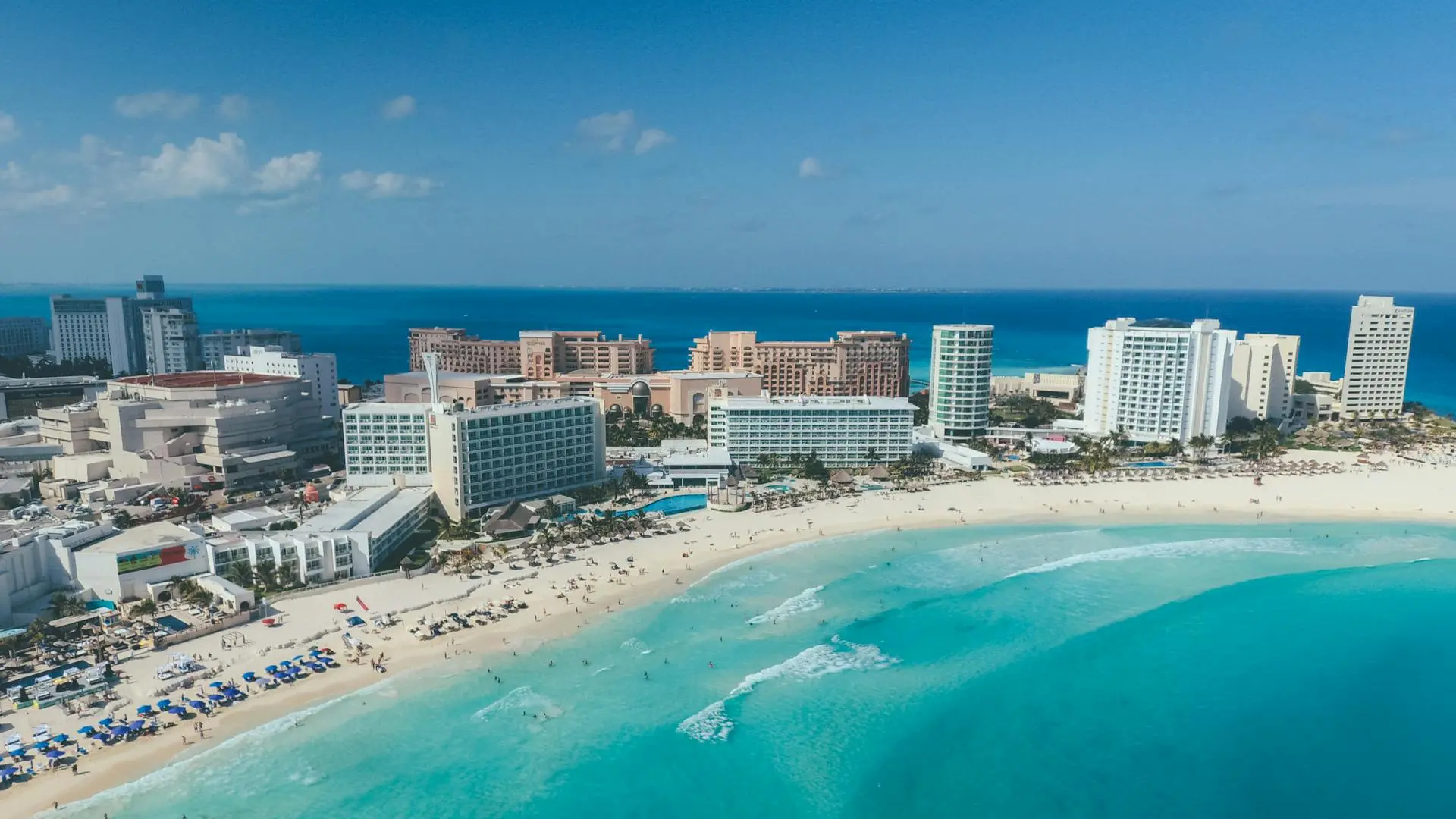
Cancún receives millions of visitors each year, and many complete their trips without serious safety issues. The Hotel Zone (Zona Hotelera), the 14-mile barrier island strip where most resorts, beaches, and restaurants are located, operates as a tourist-oriented environment with a visible security presence. That said, the Mexican state of Quintana Roo carries a Level 2 advisory from the U.S. State Department, and understanding exactly what that means for your trip is worth knowing before you land.
Is Cancún safe to travel in 2026?
Yes. Cancún is generally safe for tourists, especially in the Hotel Zone, Isla Mujeres, and major resort areas. The main risks are petty theft, unsafe swimming conditions when red flags are posted, unofficial airport taxis, and nightlife-related incidents after midnight.
This guide covers the current Cancún travel advisory status from major governments, which beaches have passed safety inspections, which areas require more caution, and practical steps that reduce risk to near zero. If you are asking whether it is safe to travel to Cancún right now, our honest answer is yes, with context.
Most incidents reported in Quintana Roo involve disputes between criminal groups or localized crime rather than tourists being specifically targeted. That said, travelers should still follow official advisory guidance, stay in established tourist areas, and avoid locations where incidents are more likely. That does not mean your risk is zero, but for most resort-based travelers, the experience is closer to a standard beach holiday than the headlines may suggest.
For a full picture of what to do once you arrive, our guide to the best things to do in Cancún covers activities across the Hotel Zone and beyond.
Current Cancun Travel Advisory: What Each Government Says
Here is a current summary of official travel advisories for Mexico and Cancún specifically, drawn from government sources as of 2026. These apply to the Quintana Roo region where Cancún is located.
| Government | Advisory Level | Quintana Roo Specific | Official Source |
|---|---|---|---|
| United States | Level 2: Exercise Increased Caution | Quintana Roo is assessed at Level 2, the same as the overall rating; several other states are Level 3 or 4. The Hotel Zone is not flagged separately. | U.S. State Department |
| Canada | Exercise a High Degree of Caution | Cancún and the Riviera Maya corridor are not specifically flagged as high-risk for tourists. | Government of Canada |
| United Kingdom | No named level; advises against all but essential travel to parts of Mexico | Quintana Roo is not among the areas the FCDO advises against visiting. | UK Foreign, Commonwealth & Development Office |
ℹ️ Travel advisories are updated regularly. Always check your government's official advisory page before departure for the most current status.
The pattern across all three governments: Cancún's tourist zones (the Hotel Zone, Isla Mujeres, and Playa del Carmen) do not draw the elevated warnings that some of Mexico's northern border states receive. The country-wide advisory language reflects conditions across Mexico as a whole, not a specific risk profile for the Hotel Zone. The U.S. advisory rates each Mexican state separately: Quintana Roo sits at Level 2, while states with documented cartel conflict carry Level 3 or Level 4 warnings.
One thing worth knowing if you are Canadian: the "exercise a high degree of caution" advisory for Mexico has been Canada's standing position for years. It is not a response to a specific current event. Many Canadian travelers who visit Cancún regularly are entirely unsurprised by it and plan their trips without concern.
Cancun Safety by Area: Quick Reference
| Area | Safety Level | Best Advice |
|---|---|---|
| Hotel Zone (Zona Hotelera) | Generally safe | Use normal tourist precautions; watch belongings on the beach |
| Isla Mujeres | Generally safe | Stick to the main tourist areas and Playa Norte |
| Playa del Carmen (5th Ave corridor) | Generally safe | Stay near La Quinta Avenida; extra caution after midnight |
| Downtown Cancún (El Centro) | Use caution | Visit during the day; return to the Hotel Zone before dark |
| Nightclub strip (Blvd. Kukulkán km 9–11) | Use caution after midnight | Stay with your group; do not leave drinks unattended |
| Residential outskirts | Avoid | No tourist interest; no tourist police coverage |
How Safe Is the Hotel Zone (Zona Hotelera)?
The Hotel Zone is a 14-mile barrier island connected to the Cancún mainland by two bridges. We think that geography is worth understanding: two controlled access points mean the zone is structurally harder to disrupt than a city neighbourhood with dozens of entry routes. The Hotel Zone has a dedicated tourist police presence (Policía Turística), separate from the general municipal police force and focused on tourist interactions. Official guidance emphasizes a visible security presence, especially in busy resort and nightlife areas.
In the Hotel Zone, the most commonly reported tourist issues tend to be petty theft, pickpocketing, drink-related incidents, and beach belongings going missing. These risks exist in any major tourist destination and are manageable with basic awareness.
- Areas with the strongest safety record: The northern hotel stretch from Punta Cancún to the convention centre, and the beaches at Playa Delfines and Playa Chac Mool.
- Higher-risk spots within the Hotel Zone: The nightclub strip near km 9 to km 11 after midnight, particularly if you become separated from your group.
- Controlled-access resorts: Resorts with wristband-based all-inclusive systems (most major Hotel Zone properties) rarely see incidents on their grounds. On-site security and controlled entry handle this effectively.
- Rental cars and police: Driving a rental car in the Hotel Zone puts you at higher risk of being pulled over for on-the-spot fines. This is not violent crime, but it is a hassle, especially if your Spanish is limited and you are unfamiliar with how to handle the situation. Hotel shuttles, the ADO bus, and resort-arranged transport avoid this entirely.
Day trips out of the Hotel Zone, including Chichén Itzá, Isla Mujeres, and the cenotes along Highway 307, are widely done and widely reported as problem-free. Multiple travelers confirm normal conditions on these routes. For these excursions, we'd lean toward a resort-arranged or reputable local operator rather than an independent rental; it is the most straightforward way to reduce friction on roads you don't know.
If you are staying at one of the all-inclusive resorts in Cancún, your day-to-day safety exposure is minimal. Most guests complete a full week without any incident more serious than a misplaced phone.
Cancun Beach Safety: Water Quality and Flag Inspections
Cancún beach safety has two components: water quality and physical conditions (currents and surf). Both are monitored, but the flag system is the most immediately relevant for swimmers.
The Beach Flag System
Cancún uses a colour-coded flag system at all public Hotel Zone beaches. Flags are updated daily based on current conditions and posted at beach access points maintained by ZOFEMAT (Federal Maritime Zone Authority), which oversees beach management in Quintana Roo.
- Blue/Green flag: Calm conditions, safe to swim. Most common during the dry season (December through April).
- Yellow flag: Caution: moderate currents or waves. Swimming is permitted but advised for confident swimmers only.
- Red flag: Dangerous conditions: strong currents, high surf, or other hazards. Swimming is prohibited. Appears most often during tropical weather events between June and November.
- Black flag: Beach closed. Posted during severe weather or contamination events.
Serious water-related incidents are more likely when travelers ignore posted beach warnings, especially red or black flags. The flags are not decorative; they reflect real-time assessments. What most visitors don't factor in is that conditions can shift between morning and afternoon on Cancún's exposed Caribbean coastline; a flag posted at 9 AM may not reflect what the water is doing by early afternoon, especially from June through November.
Water Quality Inspections (Cancun Beaches Safety Inspection)
Beach water quality in Quintana Roo is tested by COFEPRIS, Mexico's federal health safety body. COFEPRIS publishes water quality results regularly, and Hotel Zone beaches consistently pass testing for enterococcus and coliform bacteria levels. Several beaches in the Hotel Zone corridor hold Blue Flag certification, the internationally recognised standard covering water quality, environmental education, and safety services.
ℹ️ Always check the flag posted at your beach access point before entering the water. Conditions change quickly, especially from June through November when tropical weather systems can arrive with little warning.
Which Parts of Cancun Require More Caution?
Accurate Cancún safety advice distinguishes between the Hotel Zone (generally low risk for tourists) and areas that carry a higher actual risk profile.
El Centro (Downtown Cancún)
Downtown Cancún, roughly 15 minutes from the Hotel Zone, is where the local population lives and works. Markets, bus terminals, and local restaurants are here. It is not a no-go zone (many visitors take taxis or the R1/R2 bus to explore), but petty crime rates are higher than in the Hotel Zone. If you visit El Centro, keep valuables out of sight, use established taxi stands rather than flagging random cabs, and plan to return before dark.
Nightlife Areas After Midnight
The club strip along Blvd. Kukulkán between km 9 and km 11 accounts for most tourist-related incidents in Cancún: drink spiking, opportunistic theft, and aggressive solicitation. Staying with your group, watching your drink, and knowing your resort's address are the three most effective precautions before a night out.
Residential Areas Outside the Tourist Corridor
Residential neighbourhoods beyond the Hotel Zone and central market area are not tourist destinations and do not have tourist police coverage. There is no compelling reason to visit them, and doing so adds risk without adding experience.
Highway 307 South of Playa del Carmen
If you are taking a day trip south toward Tulum or spending time in Playa del Carmen, it is worth understanding the road situation. Highway 307 is essentially the only road connecting the Riviera Maya corridor between Cancún and Tulum. When the highway is blocked by protests, security incidents, or checkpoint activity, there is no meaningful alternative route. Travelers have reported delays of two to three hours on this stretch when disruptions occur, with limited ability to exit the highway or change plans. This is a specific vulnerability that the Hotel Zone, with its two-bridge barrier island setup, does not share. We wouldn't skip Tulum or Playa on account of this alone, but it is worth being aware of when planning and knowing your driver's contact number if you are on that road when something unusual happens.
Our Take
The most underestimated risk in Cancún is not crime but the water. A red flag on a calm-looking morning means rip currents below the surface, so treat beach flags as non-negotiable.
Practical Cancun Safety Tips for 2026
- Book your airport transfer before you land: Unofficial taxi operators outside Cancún International Airport are the most consistent source of overcharging and occasional safety concerns for first-time visitors. Pre-booked Cancún airport transfers give you a confirmed driver, a fixed rate, and a direct contact number before you arrive.
- Travelling as an older visitor? Our Cancún for seniors guide covers getting around the Hotel Zone, hotel pickup on day trips, and which ruins involve the least walking.
- Respect beach flags without exception: Ignoring a red flag is one of the most common ways a beach day turns dangerous. Treat the flags as non-negotiable regardless of how calm the water looks from shore.
- Use hotel-arranged transport for day trips: For excursions to Chichén Itzá, cenotes, or Tulum, booking through your resort or a reputable local operator is a cleaner experience than renting a car independently. You get a vetted driver, someone who monitors road conditions, and a direct contact if anything changes while you are out.
- Skip the rental car in the Hotel Zone: Rental cars attract more police attention on Hotel Zone roads, and on-the-spot fines are a well-documented friction point, particularly if you are not comfortable negotiating in Spanish. We'd choose hotel shuttles, the ADO bus, or resort transport in the Hotel Zone; they handle it easily and cut out that variable entirely.
- Use ATMs inside hotels or shopping centres: La Isla Shopping Village and Plazas Las Américas in the Hotel Zone have well-monitored ATMs. Streetside machines, particularly at night, carry higher skimming risk.
- Keep originals secure, carry photocopies: Store your passport in your hotel safe and carry a photocopy. Mexican law allows police to request identification, but you are not required to surrender your original document.
- Register with your embassy: U.S. travellers can enrol in the Smart Traveler Enrollment Program (STEP) to receive alerts and make it easier for the embassy to locate you in an emergency.
- Know your resort's 24-hour number: Every major Hotel Zone resort has around-the-clock security and reception. If something goes wrong, your resort is your first call. They know local emergency contacts and can help navigate language barriers with local authorities.
- Return from day trips before dark: Road conditions and lighting outside the Hotel Zone deteriorate after sunset. For day trips to Tulum, Chichén Itzá, or cenotes, build the itinerary to have you back on the Hotel Zone side well before nightfall.
Haven't Booked Your Airport Transfer?
Cancún International Airport is one of the first places where tourist safety matters. Unofficial operators and street-level taxi solicitors in the arrivals hall can mean inconsistent pricing and stressful negotiations after a long flight.
Pre-booking an airport transfer from Cancún gives you a confirmed driver name, a fixed rate, and contact information before you land. Air-conditioned vehicles, no negotiation on arrival, and experienced drivers who know the Hotel Zone routes make for a much smoother start to the trip.
How We Researched This Guide
The Cancun Trip Insider team compiled this safety guide using current government advisory sources (U.S. State Department, Government of Canada, and UK FCDO) along with COFEPRIS beach inspection data and firsthand reports from travelers who visited Cancún in 2025 and 2026. We deliberately excluded generic content that applies the same risk assessment to all of Mexico. The safety profile of Cancún's Hotel Zone is factually different from Mexico's northern border states, and conflating them misleads travelers. Our aim is destination-specific information that helps people make actual decisions about their trip. This guide is reviewed when advisory levels change or new inspection data is published. Information was last verified in May 2026.
Frequently Asked Questions
Is Cancun safe to travel to right now?+
Yes, Cancún is considered safe for tourists, particularly in the Hotel Zone (Zona Hotelera). The U.S. State Department rates Quintana Roo at Level 2: Exercise Increased Caution. The Hotel Zone, Isla Mujeres, and Playa del Carmen see few incidents beyond petty theft. Downtown Cancún and nightclub areas after midnight require more awareness.
What is the current US travel advisory for Cancun?+
The U.S. State Department rates Mexico overall at Level 2: Exercise Increased Caution and assesses each state separately. Quintana Roo, the state where Cancún is located, is at Level 2, while several other states are rated Level 3 or Level 4. The advisory is updated regularly at travel.state.gov.
Is the Cancun Hotel Zone safe?+
The Hotel Zone is the safest part of Cancún for tourists. It has dedicated tourist police, controlled resort access, and a track record of low serious crime. Most incidents in the Hotel Zone involve petty theft: phone snatching on beaches or pickpocketing in crowded nightlife areas. Violent crime targeting tourists in the Hotel Zone is rare.
Are Cancun beaches safe to swim in?+
Most Cancún Hotel Zone beaches are safe for swimming, but always check the flag posted at your beach access point. Green/blue flags mean calm, safe conditions. Yellow means use caution. Red means do not swim; currents or surf are dangerous. Red flags appear most often during tropical weather events from June through November. Water quality is regularly tested by COFEPRIS, Mexico's federal health safety body.
Is it safe to go downtown in Cancun?+
Downtown Cancún (El Centro) is generally safe during the day and is worth visiting for local markets and authentic food. At night, the risk of petty theft is higher than in the Hotel Zone. If you visit, use established taxi stands, keep valuables out of sight, and avoid poorly lit streets after dark.
Is Cancun safe for solo female travelers?+
Cancún is one of the more accessible destinations in Mexico for solo female travelers, particularly in the Hotel Zone. Standard precautions apply: stay in well-lit areas, avoid accepting drinks from strangers, keep your group in sight at nightclubs, and share your location with someone you trust. Most solo female travelers in the Hotel Zone report no safety concerns beyond what is expected in any party-oriented beach destination.
What should I avoid in Cancun?+
Avoid swimming when a red or black flag is posted on the beach. Avoid unofficial taxis at the airport; use pre-booked transfers. Avoid leaving drinks unattended at nightclubs along Blvd. Kukulkán. Avoid wandering into residential neighbourhoods outside the Hotel Zone after dark. Most safety incidents in Cancún trace back to one of these four situations.
Do I need travel insurance for Cancun?+
Travel insurance is strongly recommended. Medical care at Hotel Zone private hospitals is good but expensive without coverage. Insurance that includes medical evacuation is particularly valuable if you plan activities like snorkeling, ATV tours, or cenote diving, where the nearest specialist facility may be 30 to 45 minutes away.
Affiliate note: Some links on this page are affiliate links. If you book through them, we may earn a small commission at no additional cost to you.