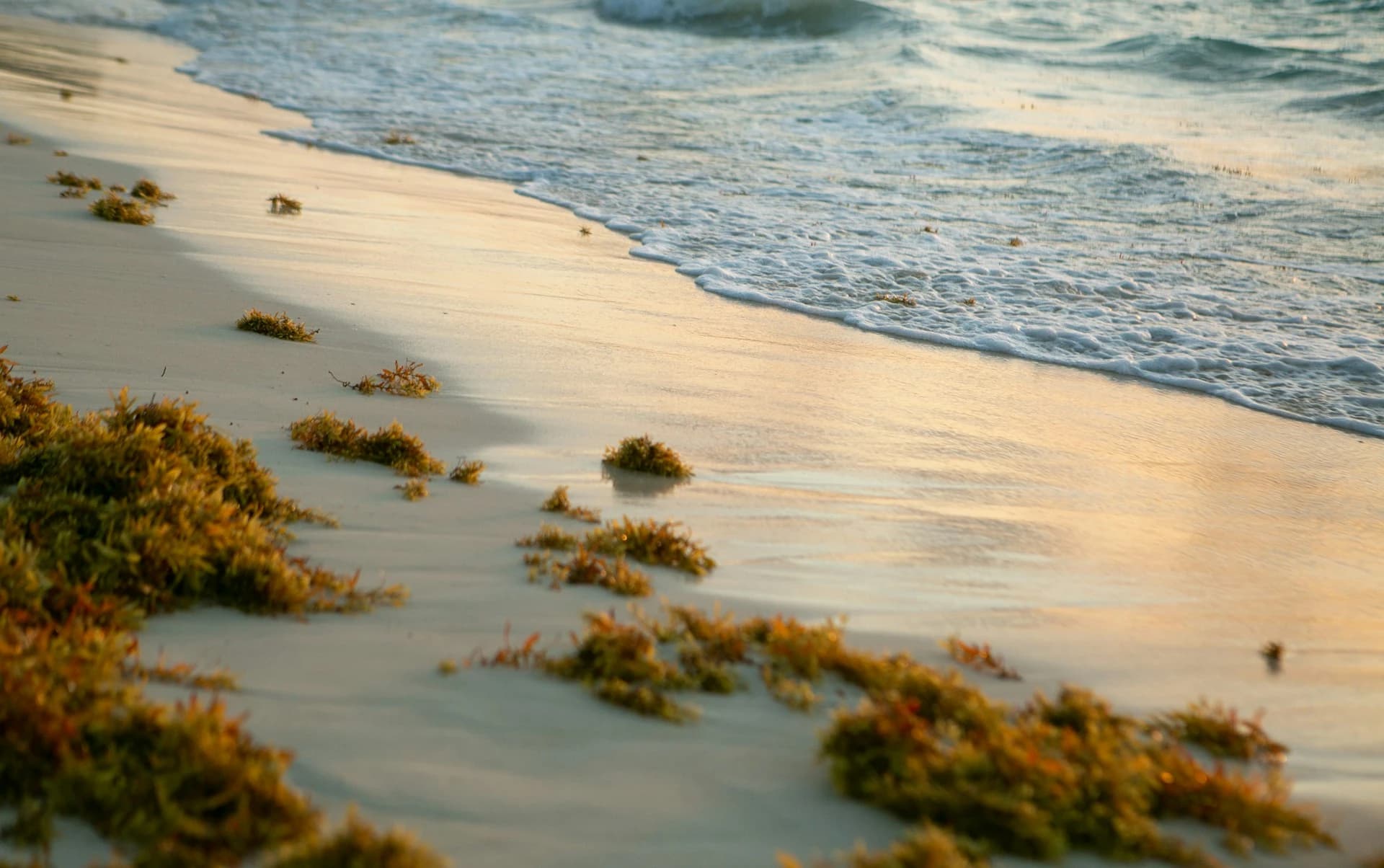
Cozumel is one of the most sargassum-free spots in the Mexican Caribbean because every beach and beach club sits on the sheltered west coast. This guide covers which beaches get seaweed, the month-by-month pattern, the 2026 outlook, and how the island compares to the mainland.
What You Should Know
- Cozumel is one of the best sargassum escapes in the Mexican Caribbean. Every hotel, beach club, and dive site sits on the west coast, which faces the sheltered channel toward the mainland and stays reliably clear even in heavy years.
- It is not the whole island, though: the wild east coast faces the open Caribbean and does collect sargassum, while the west-side beaches stay clearest. You swim on the west side anyway, so the protected beaches are the ones you actually use.
- The reason is geography. Sargassum drifts in from the east and the trade winds funnel it past the island toward the mainland, so Cozumel sits just outside the main flow path while towns like Playa del Carmen are first in line.
- The clean season is November to April; the regional peak is June to August. Even then, the west coast holds up far better than the mainland, which is exactly why a Cozumel ferry day is the classic clean-water move from Playa del Carmen.
Does Cozumel Get Sargassum?
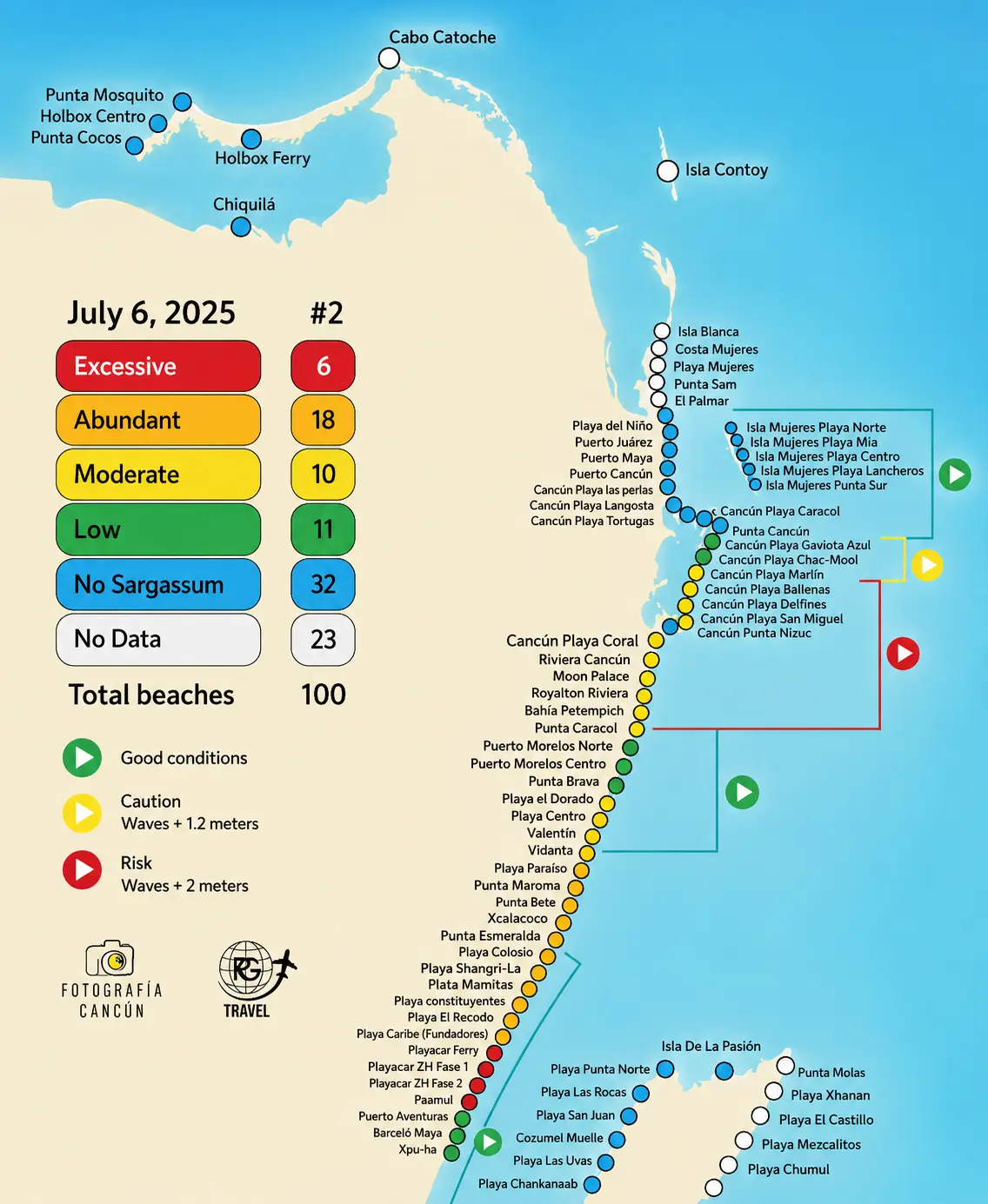
The short answer: Cozumel gets far less sargassum than the mainland, and its entire west coast, where all the beaches, beach clubs, and dive sites are, is among the most reliably seaweed-free water in the Mexican Caribbean. The reason is geography. Cozumel is an island, and its developed side faces west, toward the sheltered channel between the island and the mainland, rather than the open Atlantic. Most of the sargassum drifting in from the east is funneled by the trade winds past the island and onto the mainland coast, so it never reaches the west shore. That is why, on a day when Playa del Carmen is dealing with a heavy landing, the ferry across to a Cozumel beach club is the classic clean-water escape.
The honest, complete answer is more nuanced. Cozumel does get sargassum on its exposed side: the east coast faces the open Caribbean head-on and collects it like any windward beach. But that coast has strong surf and currents and is not a swimming coast anyway, so it is a scenic drive-and-photo side rather than where anyone spends a beach day. Because the beaches you actually swim at are all on the protected west side, the practical experience is that Cozumel stays clean when much of the coast does not. This guide covers which beaches get sargassum, the month-by-month pattern, the 2026 outlook, and how the island compares to the mainland. For the head-to-head, see our Cozumel vs Playa del Carmen sargassum comparison.
Here is how Cozumel's west coast compares to the rest of the coast for sargassum risk:
| Destination | Sargassum (Seaweed) Risk |
|---|---|
| Cozumel west coast | Very Low |
| Cancún north beaches | Low |
| Cancún Hotel Zone (south) | Moderate |
| Playa del Carmen | High |
| Tulum | Very High |
Current Cozumel Sargassum Conditions (Updated July 2026)
As of early July 2026, the Mexican Caribbean is in its peak sargassum season, and 2026 is tracking as a record year across the region. On Cozumel, the west coast is holding up as it usually does: the beaches, beach clubs, and dive sites on the sheltered side are seeing only the occasional light, patchy landing that is cleared quickly, while the exposed east coast is collecting more, as it does every peak season. Compared with the mainland beaches across the channel, the island's swimming side remains one of the cleaner bets on the coast.
Expect the regional peak to continue through August before easing in September and October. If you are checking the Cozumel seaweed today, the live trackers in the tracking section below are the most reliable source, since conditions can change within a few days. We review this guide periodically, but same-week beach photos remain the best way to confirm the latest. Last reviewed: July 2026.
Cozumel Seaweed vs Sargassum: Same Thing
If you are searching for Cozumel seaweed, or Cozumel algae, that is the same thing as sargassum: the terms are used interchangeably for the brown algae that drifts in from the Atlantic and washes up on Caribbean beaches. Whether you call it the Cozumel seaweed season or the sargassum season, the timing, the beaches, and the advice in this guide are identical. The seaweed on Cozumel is concentrated on the east coast, while the west-side beaches and beach clubs stay clearest, and the Cozumel seaweed forecast follows the same regional satellite data covered below. In short, if you have read about a seaweed problem on the coast, it is sargassum, and the good news is that the side of Cozumel you actually visit is among the least affected anywhere in the region.
Which Cozumel Beaches Get Sargassum
Cozumel's two coasts face completely different directions, and that is what decides where the sargassum lands. The protected west side, where all the beaches, beach clubs, and dive sites are, stays clearest; the open-Caribbean east coast takes the brunt.
| Beach / Area | Sargassum (Seaweed) Risk |
|---|---|
| South-coast beach clubs (Mr. Sanchos, Paradise Beach) | Very Low |
| Palancar and El Cielo (south-west, boat snorkel) | Very Low |
| San Miguel and the northwest hotel zone | Low |
| East coast (Chen Rio, Punta Morena, Playa Bonita) | High |
| Punta Sur (southern tip) | Moderate to High |
The west-coast beach clubs (the clearest beaches)
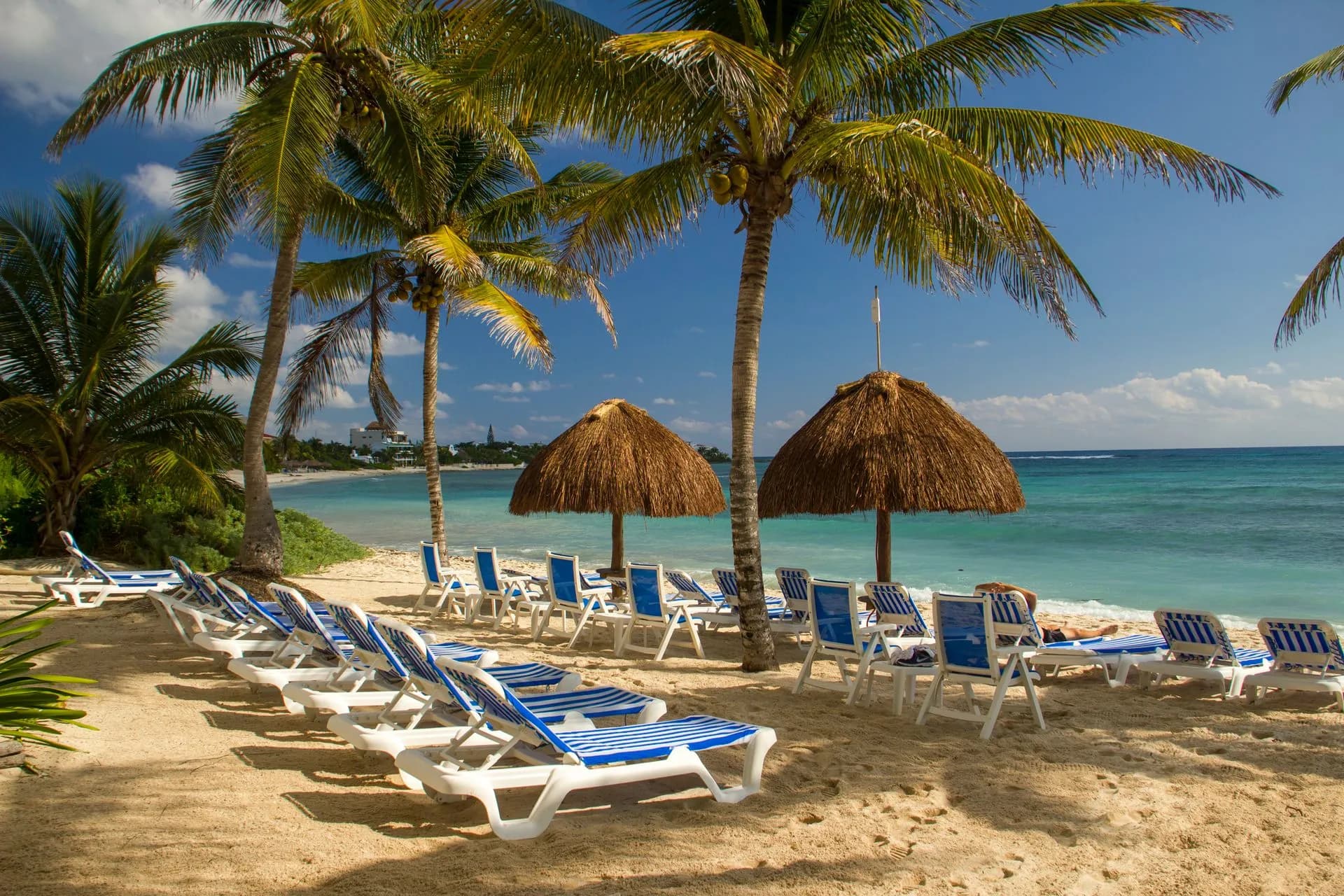
The south-coast beach clubs along the sheltered west shore, including Mr. Sanchos and Paradise Beach, are where most visitors spend a beach day, and they stay among the cleanest water in the region. Facing the calm channel rather than the open Atlantic, they see only the occasional light patch even during the regional peak. This is the side that makes Cozumel a sargassum escape, and where we'd plan to spend beach time in any month. Our Cozumel beach club day pass guide covers the clubs along this stretch. For the month-by-month picture, our Cozumel in summer guide and Cozumel in fall guide cover the seasonal weather and water.
Palancar, El Cielo, and the snorkel beaches
The famous reef beaches off the south-west, including Palancar and the shallow El Cielo sandbar, sit on the protected side and in clear offshore water, so they stay reliably clean. These are boat-access snorkel and dive spots more than lounging beaches, and the reef itself is unaffected by anything on the shoreline.
San Miguel and the northwest
The town beaches around San Miguel, the ferry pier, and the northwest hotel zone are also on the calm western shore and usually stay clear. This is the swimmable, developed side of the island where the hotels, the piers, and most of the sand are, so the beaches you actually use line up with the least-affected coast.
The east coast and Punta Sur
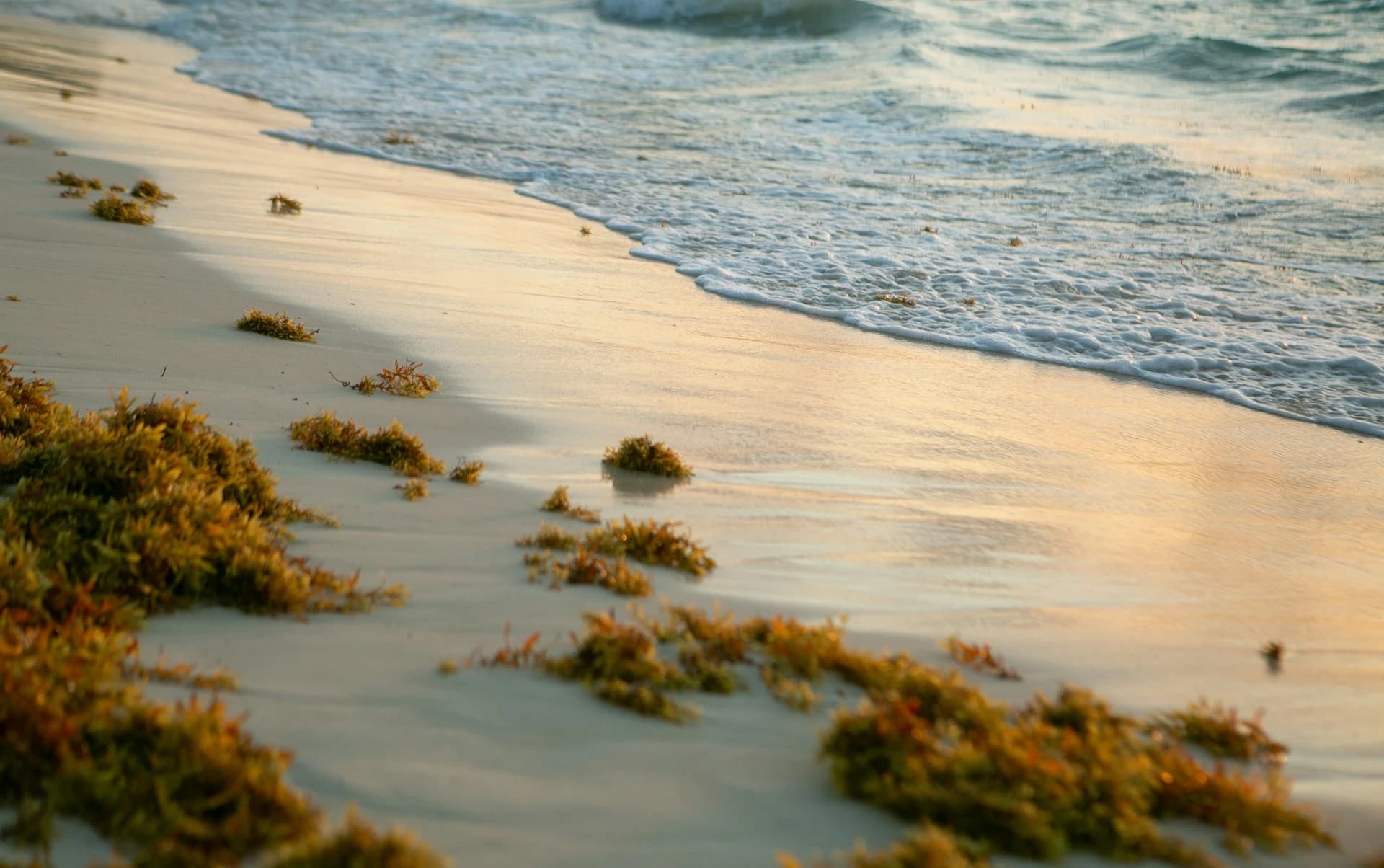
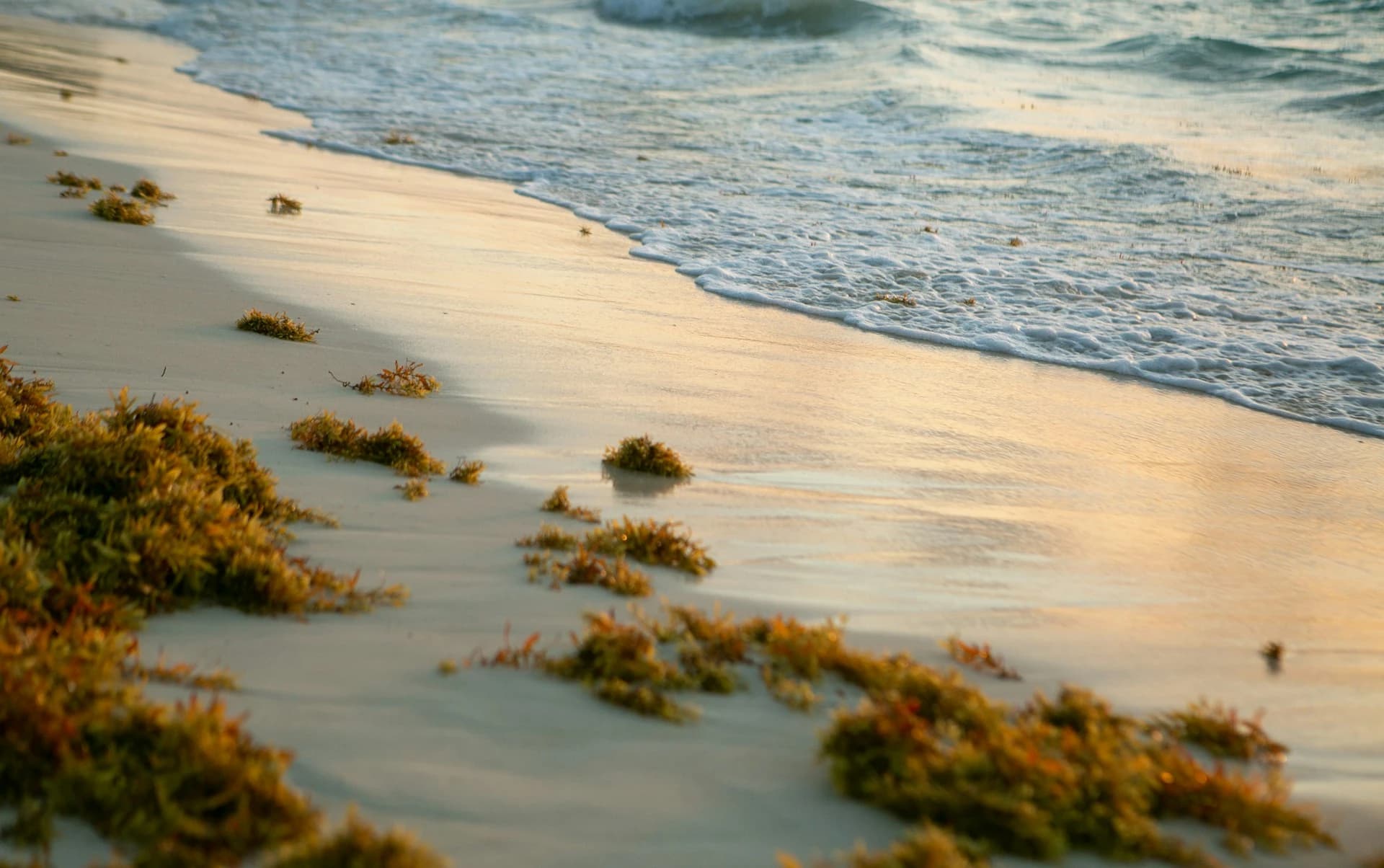
The eastern, Caribbean-facing shore (Chen Rio, Punta Morena, Playa Bonita) and the southern tip at Punta Sur take the open-Atlantic rafts head-on and collect the most sargassum on the island. These are mostly wild, wave-exposed stretches you visit for the dramatic scenery, a beach bar, or the Punta Sur park rather than for swimming, so the seaweed here matters far less to a typical beach day.
Cozumel Sargassum Month by Month
This calendar tracks the west coast, where the beaches and beach clubs are, with notes on the rest of the island. Because the developed side is so well protected, its levels stay low even when the regional season peaks; the bigger swings happen on the east coast.
| Month | West Coast Level | Island Notes |
|---|---|---|
| January | Minimal | Clean dry-season conditions; an occasional cold front can push a little seaweed around |
| February | Minimal | Among the cleanest water in the region |
| March | Minimal | Usually clean; the east coast begins to see the first arrivals late month |
| April | Minimal to low | West coast stays clear; the east coast builds |
| May | Low | East coast moderate; west coast usually still clear |
| June | Low | Regional peak; the east side is heavy, the west coast stays mostly clear with occasional patches in a heavy year |
| July | Low | Regional peak continues; the west coast is far cleaner than the mainland across the channel |
| August | Low | Peak easing late; west coast mostly clear |
| September | Minimal to low | Easing; the island returns to clean |
| October | Minimal | Clearing into the dry season |
| November | Minimal | Clean; the cold-front season starts, so brief pushes are possible |
| December | Minimal | Clean through the holidays |
ℹ️ Levels are for the west coast and shift with wind and currents. Even when sargassum does reach the developed side, crews clear it quickly, so it rarely stays for long. Check live conditions close to your dates.
2026 Cozumel Sargassum Forecast
2026 is a heavy sargassum year across the Mexican Caribbean. The University of South Florida's Optical Oceanography Lab, which tracks the bloom by satellite, recorded the Great Atlantic Sargassum Belt at a record 37.5 million tons in 2025 and reported it growing further into 2026, flagging the season as a potential record for the region. The mainland beaches across the channel have felt it through the summer peak.
Even so, Cozumel remains one of the better bets on the coast. The island's position just outside the main flow path means the west coast rides through the peak that hits Playa del Carmen and Tulum hard, and any seaweed that does reach the developed side is usually a light, cleared-and-gone patch rather than the daily landings the open mainland sees. Mexico has also made its sea-to-shore collection program permanent and year-round, with Navy vessels and offshore barriers intercepting rafts before they land. Our take: in a record year, manage expectations rather than cancel plans. Cozumel's west coast is still the clean-water move, just with a slightly higher chance of the occasional patch than in a quiet year.
Cozumel vs the Mainland for Sargassum
If avoiding seaweed is a priority, Cozumel has a real edge over the mainland Riviera Maya, and a large one over Playa del Carmen and Tulum. The reason is the same orientation story: the mainland towns face the open Caribbean head-on, with Tulum's exposed coast and no offshore reef making it the hardest-hit major destination in the region. Cozumel's developed west coast, sheltered behind the island, sits at the opposite end of that spectrum.
What we consistently see is travelers basing in Playa del Carmen and treating a Cozumel day trip as their sargassum insurance: a 45-minute ferry reaches the clean west-coast beaches when the mainland is covered. If you want the protection for your whole trip rather than a single day, staying on the island itself is the stronger play. For the full side-by-side, our Cozumel vs Playa del Carmen comparison breaks it down, and our Playa del Carmen sargassum guide covers the mainland side beach by beach.
What to Expect and How It Is Cleared
When sargassum does reach Cozumel, what to expect is the same as anywhere on the coast: floating offshore and freshly arrived it is a harmless golden-brown weed, but once it lands and bakes in the sun it decomposes within a day or two and gives off the sulfur, rotten-egg smell. None of this affects deeper offshore water, so the reef, the dive sites, boat tours, and the ferry crossing are unaffected; the impact is limited to the shoreline, and mostly to the east coast at that. A Cozumel catamaran tour or a parasailing flight runs in clear water no matter what is on the sand.
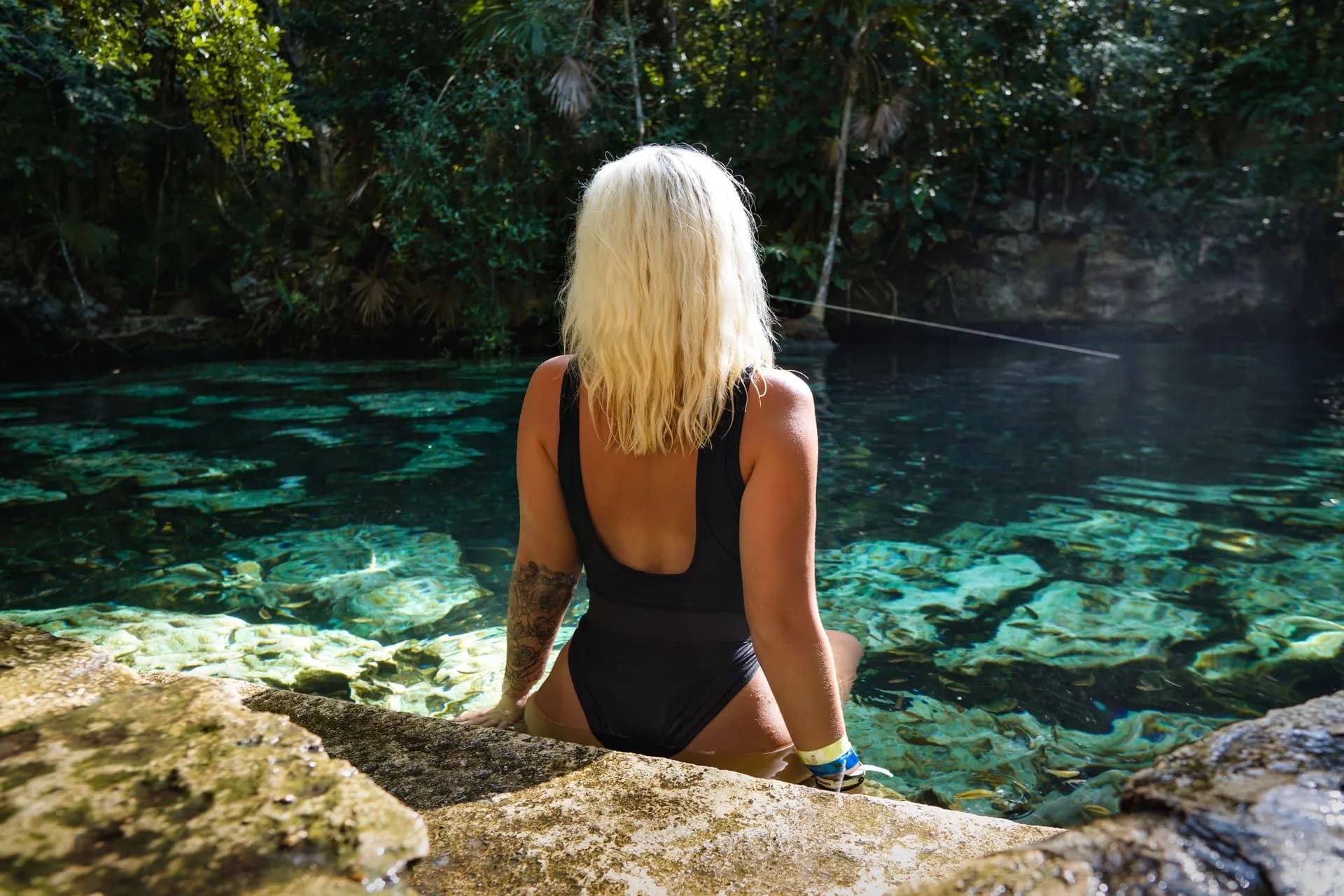
The difference on Cozumel is how rarely it lands on the beaches you use, and how fast it is cleared when it does. The beach clubs and hotels on the west coast rake their own stretches, and the light patches that do arrive are gone quickly. Most people don't realize the issue on the developed side is usually a single cleared-and-gone patch rather than weeks of accumulation, which is a completely different experience from the daily peak-season landings on the open mainland coast. Water-based activities stay clean regardless: the reef snorkeling and diving Cozumel is famous for run in clear offshore water no matter what is on the sand, and even the island's Cenote Jade tour swims in freshwater that sargassum never touches.
From Our Experience
What we consistently see is that Cozumel is the answer to a sargassum problem rather than a victim of one: when the mainland beaches are covered, the island's west coast is the single most reliable way to still get a clean, calm swim, which is why we keep a Cozumel day in almost every Riviera Maya plan during the peak months.
How to Plan Your Cozumel Trip Around Sargassum
- Spend your beach time on the west coast: the south-coast beach clubs and the town and northwest beaches all face the protected side and stay clearest, and our best Cozumel beach clubs guide ranks them all. The east coast is for scenery, not swimming, so the seaweed there rarely affects a typical day.
- Use Cozumel as a clean-water day trip: if you are staying in Playa del Carmen during the June-to-August peak, a 45-minute ferry to a west-coast beach club is the most reliable way to find a clean beach when the mainland is covered.
- For full-trip protection, stay on the island: basing on Cozumel rather than the mainland gives you the protected beaches every day instead of one.
- Travel in the clean season if you can: November through April is reliably clearest, with December through February the safest bet.
- Water days are always clean: reef snorkeling, diving, and boat trips depart into clear offshore water, so a beach report never needs to change those plans.
- Swap the beach for freshwater on a heavy day: the island's Cenote Jade and the inland cenotes across on the mainland have no sargassum at all.
- Check live conditions one to two weeks out: dated beach photos and satellite outlooks close to your trip are far more accurate than the seasonal average.
How to Track Cozumel Sargassum Before You Go
Because conditions change week to week, check live, dated information close to your trip rather than relying on the seasonal average. A few sources work well together:
- Satellite outlooks: the University of South Florida Optical Oceanography Lab publishes regular sargassum outlook bulletins for the Atlantic and Caribbean, which show how much is offshore and where it is headed.
- West-coast beach photos: regional sargassum-monitoring sites and Facebook groups post same-day, dated photos from Cozumel's beaches and beach clubs, which is the closest thing to standing on the sand yourself.
- Beach club and hotel social media: the west-coast beach clubs and island hotels often show the actual beach in the past few days.
Cross-checking a satellite outlook against same-week west-coast photos gives the most accurate read. For the head-to-head with the mainland, our Cozumel vs Playa del Carmen sargassum guide sets the two side by side.
Frequently Asked Questions
Does Cozumel have sargassum?+
Cozumel gets far less sargassum than the mainland. Every beach, beach club, and dive site sits on the west coast, which faces the sheltered channel and is among the most reliably seaweed-free water in the Mexican Caribbean. The exposed east coast does collect sargassum, but that is a wild, wave-exposed side you visit for scenery rather than swimming, so the beaches you actually use stay among the cleanest on the coast.
Which side of Cozumel has sargassum?+
The east coast, which faces the open Caribbean, collects most of the sargassum. The west coast, where San Miguel, the piers, the hotels, and all the beach clubs are, faces the sheltered channel toward the mainland and stays clear. Since all the swimming and diving happens on the west side, the seaweed on the east coast rarely affects a normal trip.
When is sargassum season in Cozumel?+
The regional sargassum season runs roughly April to October and peaks June to August, with November to April the cleanest window. On Cozumel, the bigger seasonal swings happen on the exposed east coast; the developed west coast stays low even during the regional peak, seeing only occasional light patches that clear quickly.
Is Cozumel a good place to escape sargassum from Playa del Carmen?+
Yes, it is the classic move. The passenger ferry from Playa del Carmen reaches Cozumel in about 45 minutes and runs all day. When the mainland beach is heavy, a Cozumel west-coast beach club is the most reliable clean-water backup, and the reef snorkeling and diving run in clear water regardless of what is on the sand.
Which Cozumel beaches stay clear of sargassum?+
The whole west coast. That includes the south-coast beach clubs like Mr. Sanchos and Paradise Beach, the Palancar and El Cielo snorkel areas, and the beaches around San Miguel and the piers. All of them face the sheltered channel and stay among the cleanest water in the region, even during the summer peak.
Does sargassum affect diving and snorkeling in Cozumel?+
No. Sargassum is a shoreline issue, and Cozumel's reef sits in clear offshore water on the protected west side, so diving and snorkeling trips run normally regardless of what is on the beach. The island is one of the world's top dive destinations precisely because that water stays clear, and boat departures are unaffected by beach conditions.
Affiliate note: Some links on this page are affiliate links. If you book through them, we may earn a small commission at no additional cost to you.