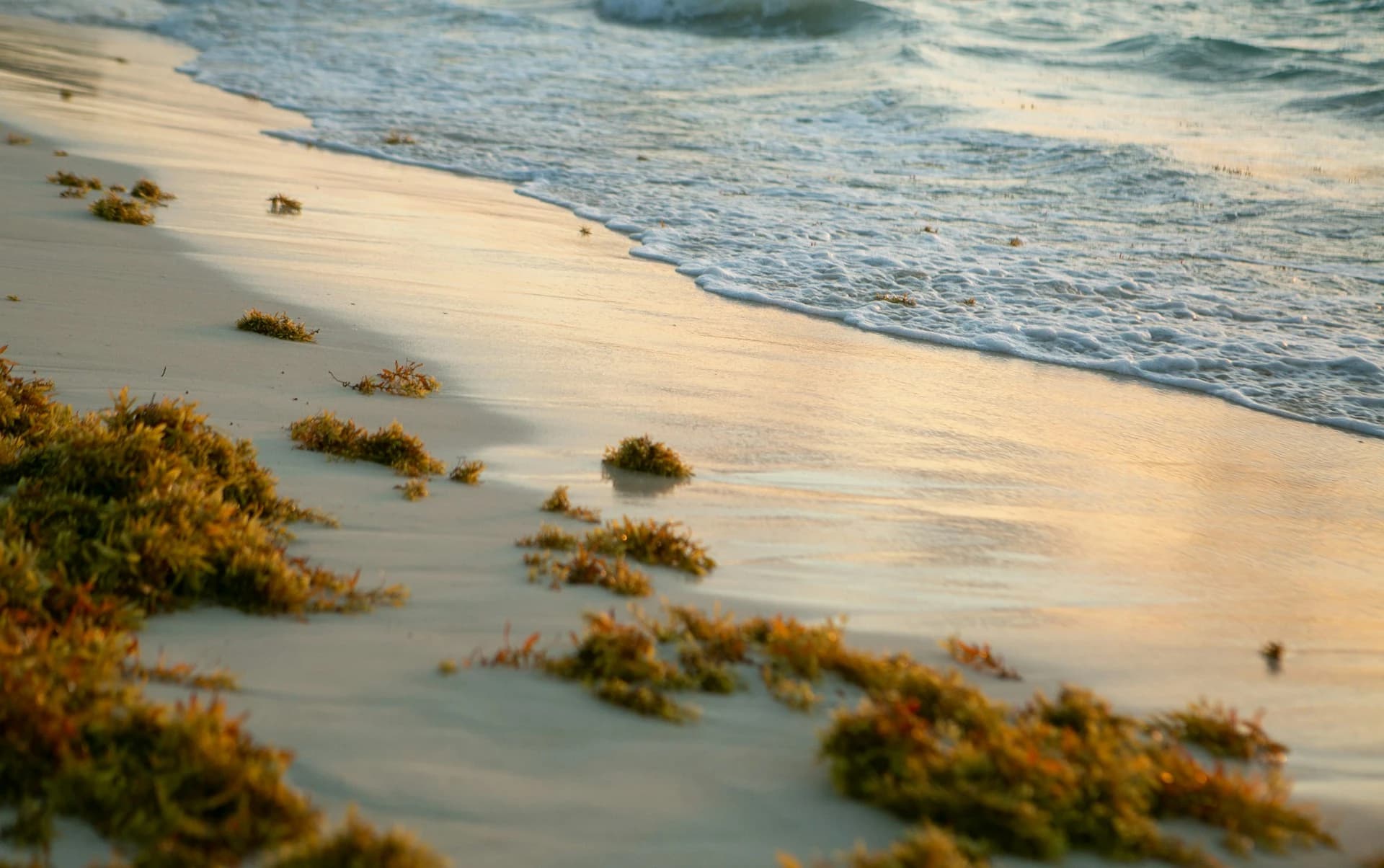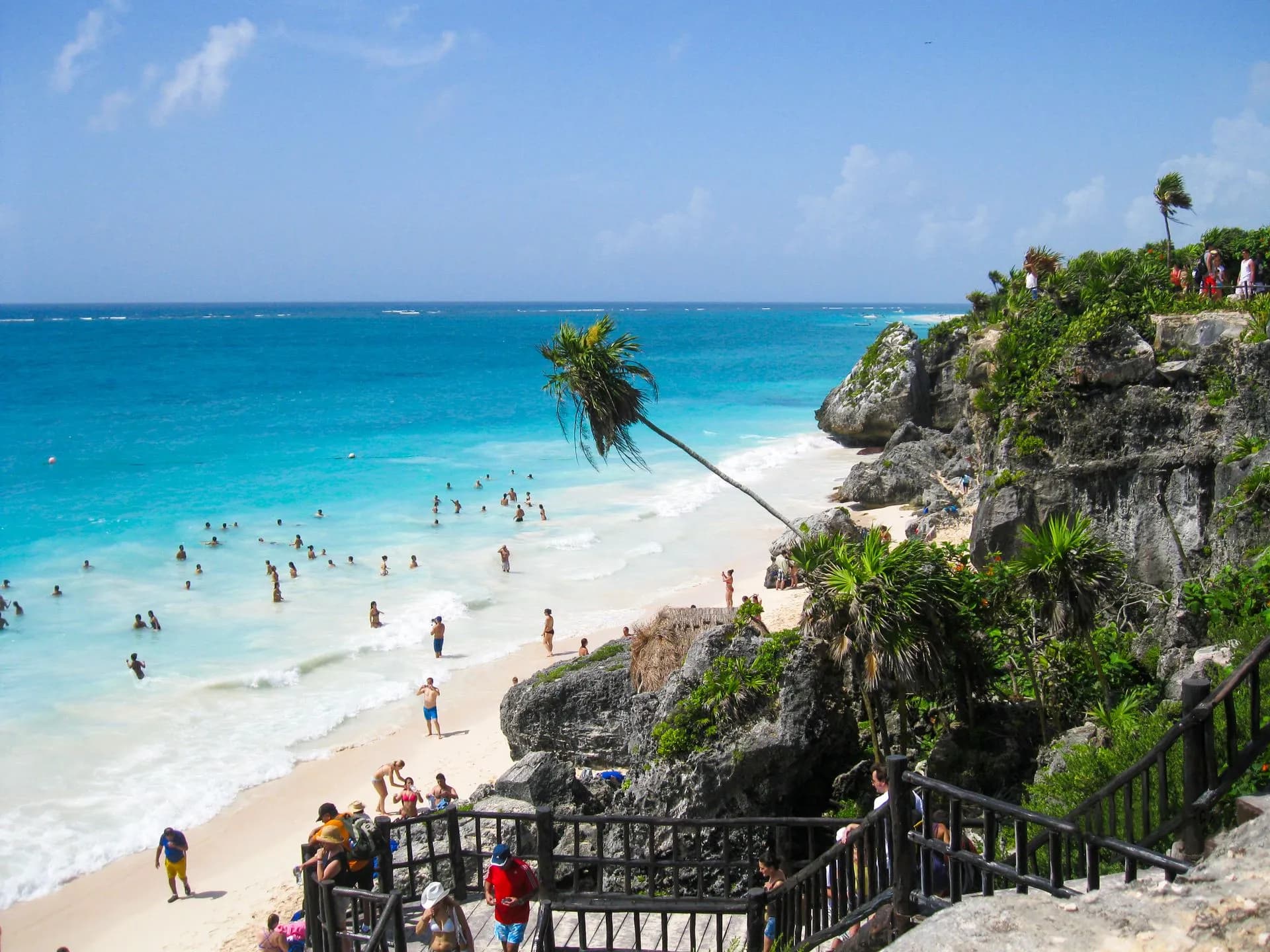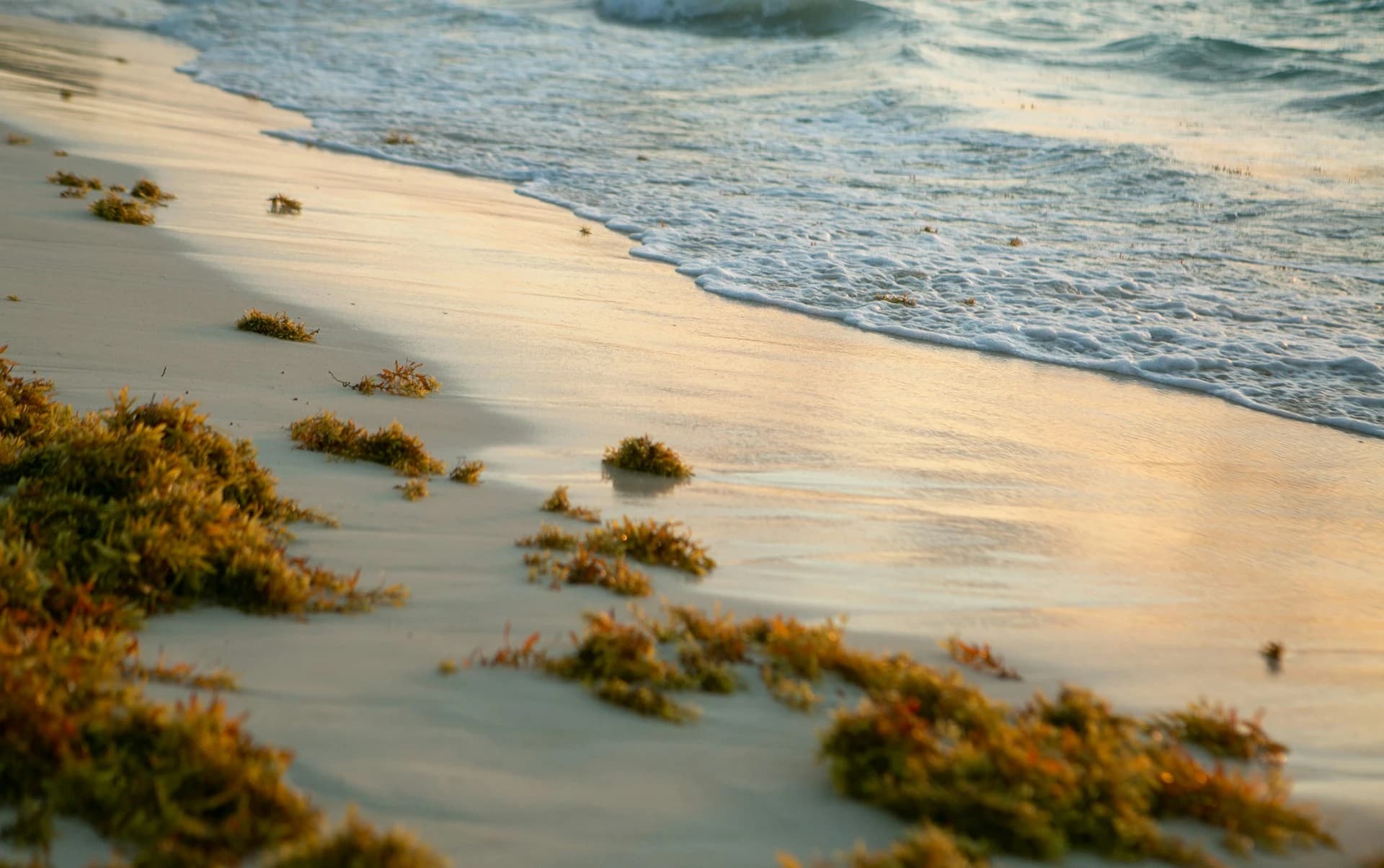
Tulum gets more sargassum than Playa del Carmen and clears it slower. This guide compares the two, then focuses on what actually matters: the best sargassum-proof tours and day trips to book when the beach is covered.
What You Should Know
- Tulum gets the heavier sargassum of the two. Its long, open, south- and east-facing beach has no offshore reef or island to break up incoming rafts, so it consistently records the heaviest accumulation of any major destination on the coast. Playa del Carmen is second-worst among the big Riviera Maya towns, but a clear step below Tulum.
- The season is the same for both: minimal November to April, ramping through May, and peaking June to August, with June and July usually the worst. A record-level year like 2026 shifts the whole curve up for both towns.
- The bigger difference is cleanup and escape logistics. Playa del Carmen runs one of the busiest municipal cleaning operations on the coast and sits 45 minutes from clean-water Cozumel; Tulum's beach zone is longer, more spread out, and slower to clear, with its cleanest escapes being inland cenotes rather than a quick clean beach.
- Sargassum is a shoreline problem only. Reef snorkeling, cenote tours, catamaran trips, and the Cozumel ferry all run normally from either town regardless of what is on the sand.
Tulum vs Playa del Carmen: Which Has Worse Sargassum?
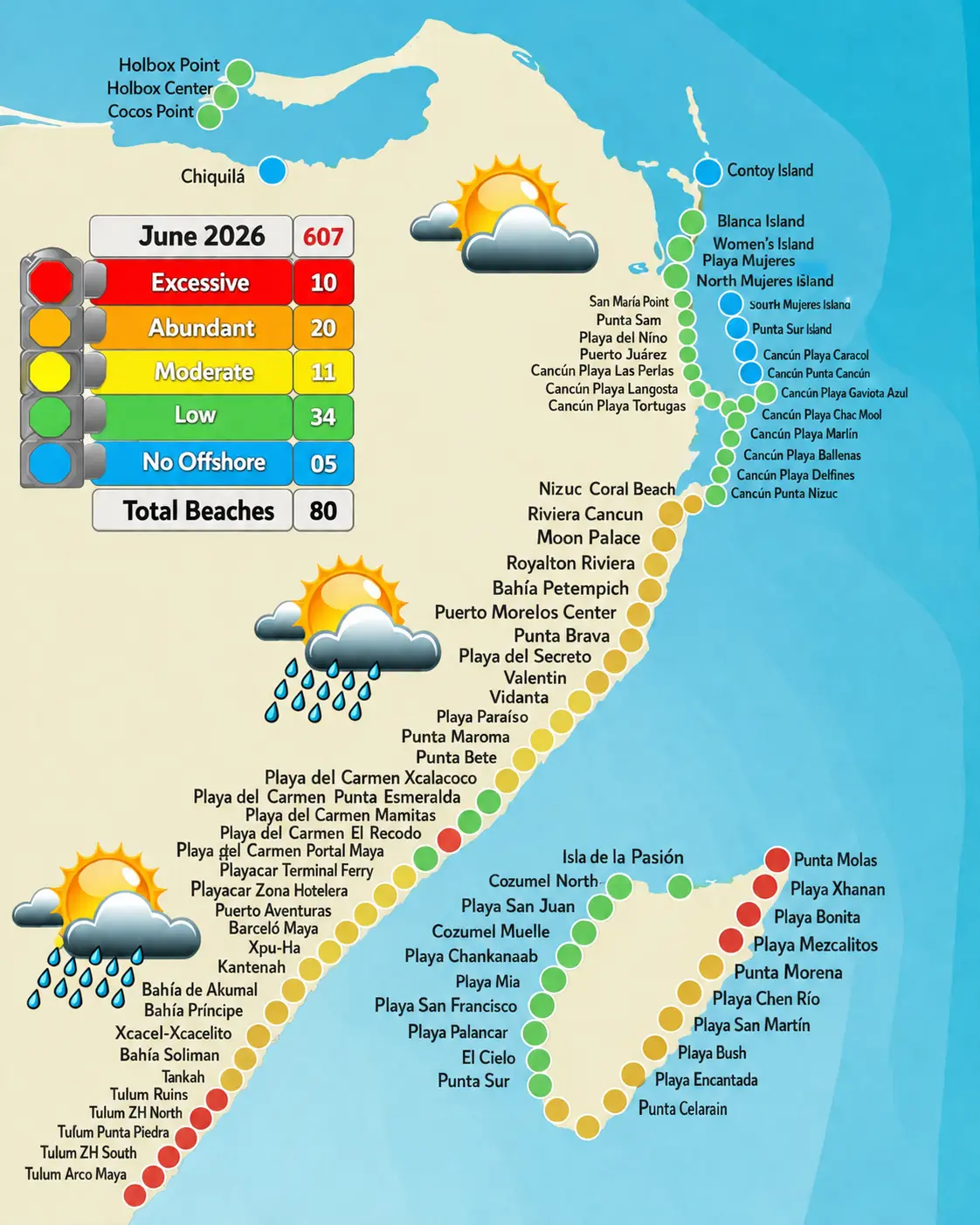
Tulum gets significantly more sargassum than Playa del Carmen because its long, exposed coastline traps more seaweed and cleanup is slower. Playa del Carmen still sees heavy seaweed in summer, but faster cleanup operations and easy access to Cozumel make it the better beach base during the June-to-August peak. Either way, the fix on a covered-beach day is the same: switch to a sargassum-proof tour like a cenote swim, Chichén Itzá, reef snorkeling, or a Cozumel day trip.
If you are choosing between Tulum and Playa del Carmen and sargassum is the deciding factor, the short answer is that Tulum gets it worse. Both towns face the open Caribbean and both see real seaweed in the summer peak, but three things stack against Tulum: its long, straight, south- and east-facing beach catches the full brunt of the incoming currents, there is no barrier reef or island close offshore to break up the rafts before they land, and its spread-out beach zone is harder to clear with heavy machinery than Playa del Carmen's compact tourist stretch. Tulum consistently records the heaviest accumulation of any major destination the regional trackers follow.
That does not make Playa del Carmen clean. It sits second among the major Riviera Maya towns, ahead of Cancún's protected Hotel Zone and well ahead of sheltered Cozumel and Isla Mujeres, but behind Tulum. What we think tips the practical decision toward Playa in a heavy year is not the raw seaweed volume, it is the escape logistics: Playa is 45 minutes by ferry from Cozumel's clean west coast and surrounded by inland cenotes and eco-parks, so a covered-beach morning is easy to turn into a clear-water afternoon. For the wider regional context, our Cancún sargassum season guide sets out how the whole coast compares, and our Playa del Carmen sargassum guide covers that town in depth.
Here is how the two compare against the rest of the coast for sargassum risk and summer beach quality:
| Destination | Sargassum Risk | Beach Quality in Summer |
|---|---|---|
| Cancún (north Hotel Zone) | Moderate | Good |
| Playa del Carmen | High | Variable |
| Tulum | Very High | Poor |
| Cozumel (west coast) | Very Low | Excellent |
| Isla Mujeres (Playa Norte) | Very Low | Excellent |
World Wonder Discovery (Chichén Itzá Small Group Day Trip)
When the beach is covered, the best move is inland, and Chichén Itzá is the standout. This Tulum-departure small-group day trip includes all site admissions and taxes, a restaurant lunch, a swim at the quieter Cenote Xux Ha, and a walk through Valladolid. It is completely unaffected by sargassum and carries by far the highest review count of any Tulum-based day trip.
Book NowBest Tours When Sargassum Is Bad
This is the part that actually saves a trip. Sargassum is a shoreline problem, so the fix on a covered-beach day is simply to book something that does not depend on the beach. In our experience, the travelers who enjoy the Riviera Maya in the summer peak are the ones who keep a couple of these on the itinerary from the start rather than scrambling when the seaweed lands. All of the options below run clean regardless of what is on the sand, and each works from both Tulum and Playa del Carmen.
Our take: lead with an inland day (a cenote swim or Chichén Itzá) and an on-the-water day (reef snorkeling or a Cozumel catamaran). Those four cover the worst beach stretches with the experiences most people rate as trip highlights anyway.
Most Popular Tours
Tulum vs Playa del Carmen Sargassum: Head to Head
The two towns share the same season and the same underlying bloom, so the differences that matter for a trip are about degree, geography, and how easily you can escape a bad beach day. Here is the side-by-side:
| Factor | Tulum | Playa del Carmen |
|---|---|---|
| Overall sargassum level | Very high, worst of the major towns | High, second-worst |
| Coast orientation | Long open south/east-facing beach, no reef offshore | East-facing open coast, no close reef |
| Peak months | June to August (June/July worst) | June to August (June/July worst) |
| Clean season | November to April | November to April |
| Cleanup | Slower; long, spread-out beach zone, lighter machinery | Faster; busy municipal crews and Navy on a compact stretch |
| Nearest clean beach escape | Limited nearby; inland cenotes are the go-to | Cozumel west coast, ~45-min ferry |
| Sargassum-free swimming | Cenotes and offshore reef trips | Cozumel, cenotes, Xcaret/Xel-Há coves, reef trips |
ℹ️ Both towns swing week to week with wind and currents, and cleaned hotel or beach-club stretches always fare better than unstaffed ends. Treat this as the baseline, not a guarantee for any single day.
Month-by-Month: How the Two Towns Track
Because both towns ride the same regional bloom, their month-by-month curves look almost identical in shape. The difference is level: in any given month Tulum tends to run one step heavier than Playa del Carmen, and it holds seaweed longer once it lands. The clean window for both is November through April; the worst is June and July.
| Month | Tulum | Playa del Carmen |
|---|---|---|
| January | Minimal | Minimal |
| February | Minimal | Minimal |
| March | Low, first rafts possible late | Low |
| April | Moderate, building | Low to moderate |
| May | High, can land in volume | Moderate to high |
| June | Very high (peak) | High (peak) |
| July | Very high (peak) | High (peak) |
| August | Very high, easing late | High, easing late |
| September | Moderate to high | Moderate |
| October | Low to moderate | Low to moderate |
| November | Minimal | Minimal |
| December | Minimal | Minimal |
ℹ️ Levels are seasonal averages. A heavy-bloom year like 2026 shifts both columns up, and individual weeks vary with the wind. Check live conditions close to your dates. Planning around January's clean beaches? Our Tulum in January guide and Riviera Maya in January guide cover the year's most reliable window.
Why Tulum Gets Hit Harder Than Playa del Carmen
The gap between the two towns comes down to geography and cleanup capacity, not luck. Three factors stack against Tulum:
- Coast orientation: Tulum's beach is a long, straight, south- and east-facing shore that sits square in the path of the currents carrying sargassum in from the Atlantic. Playa del Carmen faces east onto the same open water, but Tulum's angle catches more of the incoming flow.
- No offshore break: neither town has an island or close barrier reef to intercept rafts before they land, but Tulum's fully exposed stretch has nothing at all to slow the seaweed down. This is the same reason nearby Akumal also ranks among the worst-hit beaches on the coast.
- Slower cleanup: Tulum's hotel zone is a long, narrow, environmentally protected strip where heavy machinery is restricted and beaches are spread out, so crews clear it more slowly than Playa del Carmen's compact, machinery-friendly central beach and its busy municipal and Navy operation. Most people don't realize the protected-beach rules that make Tulum feel wild are the same ones that slow its sargassum cleanup.
Based on how the two towns track season after season, that means when a big raft arrives, Tulum both receives more of it and holds it longer. Playa del Carmen can look heavy in the morning and noticeably better by afternoon on a cleaned stretch; Tulum's quieter, unstaffed ends can stay covered for days.
The 2026 Outlook for Both Towns
2026 is a heavy, possibly record, sargassum year across the Mexican Caribbean, and it affects both towns. The University of South Florida's Optical Oceanography Lab, which tracks the bloom by satellite, recorded the Great Atlantic Sargassum Belt at a record 37.5 million tons in 2025 and reported it growing further into 2026, with record May levels across much of the Caribbean and unusually early arrivals confirmed as far back as January and March. Authorities have estimated that up to roughly 130,000 tons could reach Quintana Roo's beaches over the season.
A record year does not mean either beach is unusable every day, but it does mean larger and more frequent landings through the June-to-August peak, with cleanup crews at times struggling to keep pace, and Tulum feels that pressure first and longest. Our take for 2026: if you want a summer beach base, Playa del Carmen is the safer pick of the two because a clean-water day is always 45 minutes away by ferry, whereas Tulum in the peak months is best treated as a ruins-and-cenotes destination with the beach as a bonus. Outside June through August, and especially November through April, both towns are far more reliable. For the satellite data behind these forecasts, the University of South Florida Optical Oceanography Lab publishes regular outlook bulletins.
Sargassum-Free Escapes Near Each Town
This is where the practical decision is really made. Both towns sit near clean water, but Playa del Carmen's escapes are faster and more varied, which is a big part of why it handles a heavy year better than Tulum.
From Playa del Carmen
- Cozumel's west coast (~45-min ferry): the single best beach-day escape on the coast. The island's developed west side faces away from the incoming sargassum and stays clean essentially year-round.
- Cenotes (15 to 45 min inland): freshwater sinkholes with zero sargassum, ever, and a completely different landscape.
- Xcaret and Xel-Há (10 to 30 min): eco-park coves that are cleaned constantly, so their swimming areas stay usable when the open beaches do not.
From Tulum
- Cenotes (the go-to): Tulum sits in the heart of cenote country, with dozens of freshwater swimming spots minutes inland. On a heavy beach day this is the obvious move, and it doubles as one of the region's best experiences in its own right. Our Tulum cenote tour guide covers the best ones.
- The ruins and Cobá: a covered-beach day is a natural day for the clifftop ruins and Cobá, neither of which cares about the seaweed.
- Offshore reef and boat trips: a Tulum boat tour or reef snorkel departs into clear offshore water; sargassum is a shoreline problem, not an offshore one.
- A Cozumel day is possible but longer: reaching the clean west-coast beaches means driving to Playa del Carmen first, so it is a full-day commitment from Tulum rather than a quick escape. The main tradeoff is that Tulum trades a slower beach escape for being right on top of the region's best cenotes and ruins.
The theme is that Playa del Carmen's cleanest beach escape (Cozumel) is close and fast, while Tulum's best sargassum-free options are inland cenotes and archaeology rather than an easy clean beach. If a clear beach specifically is what you want on a bad day, we'd give Playa the edge; if cenotes and ruins fill that gap for you, Tulum is fine. For a sheltered clean beach, the regional gold standard is Playa Norte on Isla Mujeres (see our Isla Mujeres sargassum guide).
Which Should You Choose in Sargassum Season?
Here is how we'd weigh the two for the summer peak, when sargassum is actually a factor:
- Choose Playa del Carmen if a beach day is important: you get the busier cleanup operation, a walkable town with beach clubs that clean their own stretches, and the fastest clean-water escape on the coast in Cozumel. Most guests weighing the two find it the more forgiving base in a heavy year.
- Choose Tulum if you are there for the ruins, cenotes, and atmosphere: Tulum's draw was never really the swimming beach anyway. If your plan is centered on the archaeological site, cenote diving, and the jungle-boho scene, the beach seaweed matters far less, and you can pick a hotel that runs its own cleaning crew for the days you do want sand.
- Either works outside the peak: from November to April both towns have clean, reliable beaches, and the choice comes down to vibe and logistics rather than sargassum.
If your trip is specifically a beach comparison rather than a broader Tulum-vs-Playa decision, our Playa del Carmen vs Tulum snorkeling guide weighs the two for water clarity and reef access as well.
From Our Experience
What we consistently see is that the travelers who enjoy either town in the summer peak are the ones who came with a plan B: they picked a hotel that cleans its own beach, kept a cenote day and a reef or Cozumel day on the itinerary, and treated the town beach as a bonus rather than the whole trip. The ones who booked Tulum in July expecting pristine white sand every morning are the ones who left disappointed.
How to Plan Around Sargassum in Either Town
- Travel November to April if the beach is the point: both towns are reliably clearest then, with December through February the safest bet. The June-to-August peak is when sargassum is heaviest in both.
- Lean Playa del Carmen for a summer beach base: the faster cleanup and the 45-minute Cozumel ferry make it the more forgiving choice when you want clear sand on demand.
- Lean Tulum for ruins, cenotes, and scene: if the beach is secondary, Tulum's heavier seaweed matters less and its inland escapes are outstanding.
- Book a hotel or beach club that cleans its own beach: in both towns, a covered day versus a clear one often comes down to the specific stretch in front of your property. Confirm the beach-cleaning program before booking.
- Keep clean-water days on the itinerary: a cenote day works from either town, and a Cozumel day is quick from Playa and a full day from Tulum.
- Do not cancel water tours over a beach report: reef snorkeling, catamaran, and diving trips depart into clear offshore water and run normally regardless of the shoreline.
- Check live conditions one to two weeks out: dated beach photos and satellite outlooks close to your trip are far more accurate than any seasonal average.
How to Track Conditions Before You Go
Because both towns change week to week, check live, dated information close to your trip rather than relying on the seasonal average. A few sources work well together:
- Satellite outlooks: the University of South Florida Optical Oceanography Lab publishes regular sargassum outlook bulletins for the Atlantic and Caribbean, showing how much is offshore and where it is headed.
- Daily dated beach photos: regional sargassum-monitoring sites and Facebook groups post same-day photos from specific Tulum and Playa del Carmen beaches, which is the closest thing to standing on the sand yourself.
- Hotel and beach-club social media: a property's recent posts and the latest guest reviews often show the actual beach in the past few days.
Cross-checking a satellite outlook against same-week beach photos for the specific town gives the most accurate read, and it tells you whether to weight your itinerary toward cenotes and Cozumel in advance. For the regional context, our Cancún sargassum season guide covers the whole coast. Deciding when to go? See our best time to visit Tulum guide for a month-by-month breakdown. Heading to Tulum in the seaweed season? See our Tulum sargassum guide for month-by-month levels and the best sargassum-free things to do.
Frequently Asked Questions
What should I do in Tulum or Playa del Carmen when the beach has sargassum?+
Switch to something that does not depend on the beach. The best sargassum-proof options work from both towns: an inland cenote swim, a Chichén Itzá day trip, reef snorkeling, or a Cozumel catamaran day. A Chichén Itzá small-group tour is our top pick because it is completely unaffected by seaweed and doubles as one of the region's headline experiences. All of these run clean regardless of what is on the sand.
Is sargassum worse in Tulum or Playa del Carmen?+
Tulum. Its long, open, south- and east-facing beach has no offshore reef or island to break up incoming rafts and is cleared more slowly than Playa del Carmen's compact central stretch, so Tulum consistently records the heaviest sargassum of any major Riviera Maya town. Playa del Carmen is second-worst, a clear step below Tulum but heavier than Cancún's Hotel Zone.
When is sargassum worst in Tulum and Playa del Carmen?+
Both share the same season: minimal from November to April, ramping through May, and peaking June to August, with June and July usually the worst. September and October ease off, and the November-to-April window is reliably clean in both towns. A record-level year like 2026 shifts the whole curve up.
Which is a better base in sargassum season, Tulum or Playa del Carmen?+
For a summer beach base, Playa del Carmen is the safer pick because its cleanup is faster and Cozumel's clean west coast is a 45-minute ferry away. Choose Tulum if your trip is centered on the ruins, cenotes, and scene rather than the swimming beach, since the seaweed matters less then and its inland cenote escapes are excellent.
How bad is sargassum in 2026 for the Riviera Maya?+
2026 is a heavy, possibly record, year. The Great Atlantic Sargassum Belt hit a record 37.5 million tons in 2025 and grew further into 2026, with record May levels and unusually early arrivals in January and March. Authorities have estimated up to roughly 130,000 tons could reach Quintana Roo's beaches over the season, and Tulum, on the most exposed stretch, feels it first and longest.
Can I still swim in clean water near Tulum or Playa del Carmen in summer?+
Yes. Sargassum is a shoreline problem only, so offshore reef snorkeling, catamaran trips, and diving run normally from both towns. Inland cenotes have no sargassum at all and are the easiest clean-water swim from Tulum, while Playa del Carmen adds Cozumel's west coast and the Xcaret and Xel-Há eco-park coves within a short trip.
Does sargassum cancel tours in Tulum or Playa del Carmen?+
No. Sargassum affects the beach shoreline, not deeper offshore water, so boat trips, reef snorkeling, the Cozumel ferry, catamaran tours, and cenote tours all depart and run normally regardless of what is on the sand. The main impact is aesthetic: the beach looks and smells off on a heavy day, but the water tours and inland spots are unaffected.
Affiliate note: Some links on this page are affiliate links. If you book through them, we may earn a small commission at no additional cost to you.