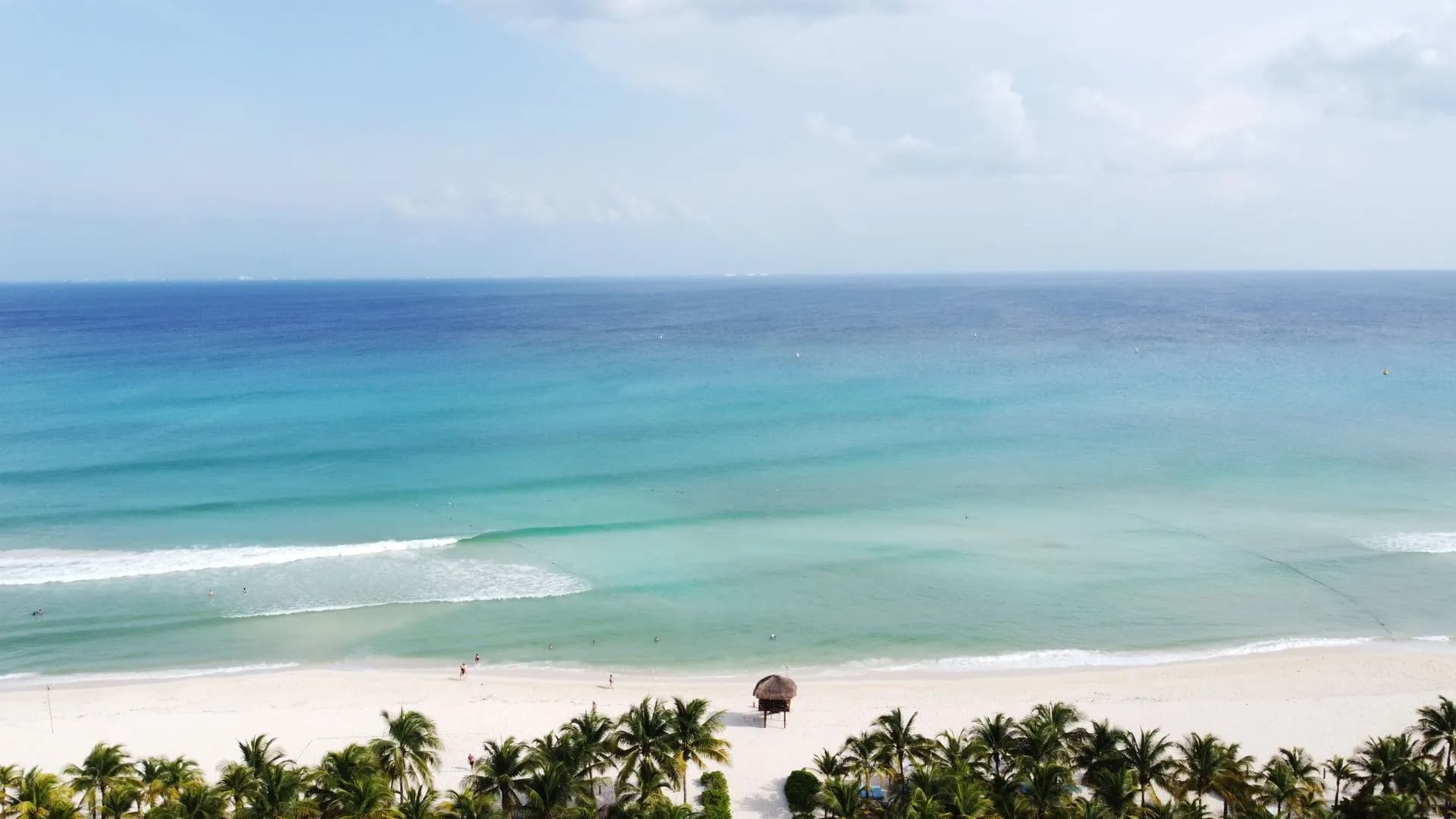
January is one of the most reliably pleasant months in Playa del Carmen: dry weather, clear water for Cozumel diving and cenotes, no sargassum, and zero hurricane risk. The tradeoffs are peak-season hotel prices in the first week and occasional cold fronts that pass in 24 to 48 hours. Here is what to actually expect.
What You Should Know
- January is dry season in Playa del Carmen: daytime temperatures of 24 to 28°C (75 to 82°F), very little rain, no sargassum on the beaches, and zero hurricane risk. It is one of the most reliably comfortable months to visit.
- Cold fronts (nortes) pass through 2 to 4 times per month, each bringing 1 to 2 days of overcast skies, wind, and choppy seas before clearing. The Cozumel ferry crossing gets rougher on norte days; the weeks between fronts are calm and clear.
- Whale shark tours are not available in January. The season runs June through September only. What January offers instead is the year's best water visibility for Cozumel diving, cenote swims, and reef snorkeling.
- Hotel prices in the first week of January sit at their annual peak from holiday demand. From mid-January onward, rates soften noticeably. The third week is the best value window within peak season.
Playa del Carmen in January: The Honest Picture
⭐ Best January week for Playa del Carmen: the third week. Holiday crowds have thinned, hotel prices have dropped from their New Year's peak, and the dry-season weather is at its most reliable for the Cozumel crossing and cenote days.
| Factor | January Rating |
|---|---|
| Weather | 10/10 — dry, mild, comfortable all day |
| Crowds | 7/10 — peak early Jan; manageable from Jan 11 |
| Prices | 5/10 — peak season; softer from mid-month |
| Beaches | 9/10 — no sargassum; clean, calm shoreline |
| Diving & Snorkeling | 10/10 — peak Cozumel and cenote visibility |
| Sargassum | 10/10 — none |
| Whale Sharks | 0/10 — not available (season: June–September only) |
| Families | 8/10 — great conditions; all ages; book ahead in peak season |
| Couples | 9/10 — clear beaches; Fifth Avenue dining; quieter than March |
💰 Average January hotel prices (downtown Playa / Playacar, 4-star):
Early Jan (1–10): ~$300/night · Mid Jan (11–25): ~$190/night · Late Jan (26–31): ~$170/night
Rough mid-range estimates; Playa has more boutique and condo options than Cancún, so rates vary widely by property and booking lead time.
| Month | Crowds | Prices | Weather | Beaches | Overall |
|---|---|---|---|---|---|
| December | 3/10 | 1/10 | 9/10 | 9/10 | 6 (early Dec: 9) |
| January | 7/10 | 5/10 | 10/10 | 9/10 | 8 |
| February | 7/10 | 5/10 | 10/10 | 9/10 | 9 |
Yes, Playa del Carmen is excellent in January, and for most travelers it is among the best months of the year to visit. Dry-season conditions mean comfortable daytime temperatures, almost no rain, calm seas on most days, and beaches clear of sargassum. The activity calendar is fully open: Cozumel diving, cenote swims, snorkeling, archaeology day trips to Tulum and Chichén Itzá, sunset catamarans, and every land-based tour run without weather complications.
The honest caveats are specific and manageable. First, cold fronts. Nortes are short-lived weather systems that roll through the Yucatán Peninsula several times a month in winter, bringing 24 to 48 hours of wind, clouds, and rough seas before clearing. The Cozumel ferry runs in heavier swell on norte days and boat tours get cancelled; good operators reschedule without penalty. If your trip is short, one norte could affect your dive or ferry day. If your trip is a week or longer, it is unlikely to cost you more than a day of boat activity. Second, pricing. The first week of January sits at the top of the calendar: hotels charge peak rates through roughly January 10 as holiday demand tapers. From mid-January onward, rates are still high compared to summer but meaningfully lower than the first week.
In our view, January is the right month for travelers who want the Riviera Maya at its best weather without the summer heat, humidity, or sargassum risk. It is a particularly strong month for Cozumel diving, cenote swimming in clear water, outdoor archaeology, and beach days without worrying about seaweed. The one thing January cannot offer is whale sharks. If that experience is your main reason for the trip, plan for June through September instead.
Playa del Carmen Weather in January: Temperature, Cold Fronts & Sea Conditions
| Metric | January |
|---|---|
| Avg High | 27°C (81°F) |
| Avg Low | 20°C (68°F) |
| Water Temp | 25–26°C (77–79°F) |
| Rain Days | ~5 |
| Humidity | Moderate |
| Wind | Moderate (norte season) |
| Hurricane Risk | None (season runs June–November) |
Temperature and Humidity
January is the coolest month in Playa del Carmen by a meaningful margin compared to the summer peak. Daytime highs typically reach 24 to 28°C (75 to 82°F), with moderate humidity making outdoor activity comfortable throughout the day without the midday heat wall that defines June through September. Evenings drop to 19 to 21°C (66 to 70°F), which feels genuinely cool after dark; a light jacket or layer is worth packing for evenings and cold-front days. Caribbean Sea temperature sits around 25 to 26°C (77 to 79°F) in January, warm enough for comfortable snorkeling without a wetsuit, though divers and some snorkelers prefer a thin wetsuit or rash guard (historical averages via Mexico's Servicio Meteorológico Nacional).
Rain and Cold Fronts (Nortes)
January is in the Riviera Maya's dry season. Average monthly rainfall is low, around 50mm, and most days see no rain at all. The main weather variable in January is cold fronts, known locally as nortes. These are pressure systems that push down from North America, arriving 2 to 4 times per month during winter. When a norte arrives, expect a shift from clear skies to overcast conditions, stronger onshore winds, and choppy water along the east-facing Playa coastline. Most nortes last 24 to 48 hours. After they pass, conditions return quickly to clear skies and calm water. The impact on tours is real but contained: boat-based tours (Cozumel diving, catamaran, reef snorkeling) and the passenger ferry to Cozumel run rougher or get cancelled on active norte days, while land tours (ATV, cenotes, Chichén Itzá) run regardless of weather. We'd confirm your operator's cancellation terms before booking any boat tour in January.
Sea Conditions and Visibility
Between cold fronts, January has some of the calmest and clearest sea conditions of the year on the Riviera Maya. Water visibility for diving and snorkeling is at its annual peak in dry season. Cozumel, a 30 to 45 minute ferry from the Playa del Carmen pier and one of the world's top drift-diving destinations, regularly sees 25 to 40 metres of visibility in January. Cenotes inland are spring-fed and stay glass-clear year-round, but they pair best with the dry-season days when surface trails are not muddy. Calm mornings before any afternoon wind picks up are the best window for the ferry and for snorkeling; most boat operators depart early for this reason.
| Month | Weather | Sargassum Risk | Whale Sharks | Prices | Best For |
|---|---|---|---|---|---|
| January | Dry, mild, nortes possible | None | Not available | High early, softer mid-month | Cozumel diving, cenotes, archaeology |
| February | Dry, mild | None | Not available | High | Romantic getaways, beach stays |
| March | Dry, warming | Starting | Not available | Highest (spring break) | Spring breakers; avoid if you want calm |
| June–Sept | Hot, humid, storms possible | High | Peak season | Lower | Whale shark experience, budget travel |
| November | Dry, mild | Low | Not available | Low | Best value dry season |
| December | Dry, busy | None | Not available | Highest | Holiday travel |
Crowds and Prices in January: What to Expect
January spans two meaningfully different periods in terms of crowds and pricing, divided roughly around January 10.
Early January (January 1–10)
The first week of January is an extension of the Christmas and New Year's rush. Hotels run at high occupancy from holiday travelers on longer stays, and Fifth Avenue (Quinta Avenida) is at its busiest. This is the most crowded and most expensive window of the January period. If your flexibility allows it, arriving after January 10 produces a noticeably better experience at lower cost.
Mid-January (January 11–25)
This is the best window within peak season. Holiday traffic has cleared, hotel rates have softened from their early-January high, and the town settles into a calmer rhythm without losing its full operational status. All activities, restaurants, and tours are running. From what we see in booking patterns and availability data, we'd call January 15 through 25 the best combination: reliable dry weather, manageable crowds, and lower prices than the first week without crossing into spring break territory in March.
Late January (January 26–31)
Crowd levels are moderate and pricing is broadly consistent with mid-January. Some hotels begin adjusting rates upward in anticipation of February Valentine's Day demand. The weather window remains excellent throughout.
Hotel Pricing in January
January hotel rates run noticeably higher than summer (June through August) for equivalent rooms. The gap narrows in mid-January once the holiday premium fades. Playa generally undercuts the Cancún Hotel Zone for comparable mid-range properties, with more boutique and condo-style options. For travelers focused on dry-season conditions at better value, November is the stronger month: similar weather, fewer crowds, and lower rates. If you are weighing where to base, our Cancún airport to Playa del Carmen transfer guide covers getting down here from the airport.
Is January the Best Month to Visit Playa del Carmen?
January is among the best months, but it is not automatically the winner. The three strongest dry-season months for Playa del Carmen are January, February, and November, and they trade off on price, sea conditions, and crowds rather than on weather, which is excellent across all three. Here is the short version.
| Factor | January | February | November |
|---|---|---|---|
| Weather | Dry, mild | Dry, mild | Dry, mild (post-rainy transition) |
| Cold fronts (nortes) | Most frequent (2–4) | Fewer than January | Just starting; occasional |
| Sargassum | None | None | Low to minimal |
| Crowds | High early, eases mid-month | Steady, Valentine's bump | Lowest of the three |
| Prices | Peak early, softer mid-month | High (Valentine's week) | Lowest of the three |
| Best for | Cozumel diving, archaeology, beaches | Calmest seas, couples | Best value dry season |
The biggest difference between the three is not weather but sea state and price. January has the most cold fronts of the year, so while the visibility between nortes is the best of the calendar, you also have the highest chance of a windy day disrupting the Cozumel crossing or a reef dive. February settles into the calmest dry-season rhythm with fewer fronts, which is why we'd lean toward it for couples and for anyone whose trip centers on diving and boat days. November delivers nearly the same dry-season weather with the lowest crowds and prices of the three, with the only caveat being that the rainy season has just ended and the first nortes are starting to appear.
Our take: we'd book January if you want the year's clearest underwater visibility and the most reliable beach conditions and don't mind peak-season pricing in the first week. We'd choose February for the calmest seas and a romantic trip, and November for the best value without giving up much weather. For the full year-round picture, see our Playa del Carmen sargassum guide for how beach conditions shift month to month.
Whale Sharks in January: Are They Available?
No. Whale shark season on the Mexican Caribbean runs June through September, with peak aggregations in July and August. January is outside the season window entirely. The feeding aggregation that forms north of Isla Mujeres, where Playa del Carmen tours run to, is a warm-season phenomenon tied to fish spawn cycles; it is simply not present in January.
What January does offer instead is the best conditions of the year for the Riviera Maya's signature underwater experiences. Cozumel diving is at its annual peak: the drift dives along the Palancar and Colombia reefs benefit from 25 to 40 metres of dry-season visibility and calm crossings between nortes. Cenote tours run in clear, cool spring water year-round, and the dry-season days make the jungle access easier. Reef and Akumal turtle snorkeling has its clearest water of the year. Most people don't realize Cozumel visibility peaks in the cool dry months, not summer; the reef looks noticeably sharper in January clarity.
If a whale shark experience is the primary reason for your trip, plan for June through September and see our Playa del Carmen whale shark tour guide for operators and pricing. If you are flexible on the wildlife activity and prioritize reliable weather, clear water, and beach quality, January is the stronger overall package.
Sargassum in January: What to Expect
Sargassum risk in January is very low to none. The Atlantic sargassum bloom that affects Caribbean beaches typically peaks from May through August, driven by warm water and currents that transport floating seaweed toward the Yucatán coast. In January, water temperatures are at their annual minimum and the seasonal current pattern is not delivering significant sargassum loads to Playa del Carmen or the wider Riviera Maya.
This matters more in Playa than in Cancún. Playa's beaches face east directly into the open Caribbean, so in the summer high season they tend to catch more sargassum than Cancún's north-facing Hotel Zone beaches. In January, that geography works in your favor anyway: the town's beaches, Playacar, and the nearby coves are generally in their best condition, with clean shoreline and clear water. If beach quality is a top priority and summer sargassum uncertainty concerns you, January is the clearest window of the year.
We'd still recommend checking real-time beach conditions in the week before arrival. The University of South Florida Optical Oceanography Lab posts weekly sargassum satellite updates year-round, and our Playa del Carmen sargassum guide covers the season month by month and which beaches stay clearest. In January, these consistently show minimal to no offshore accumulation near the Riviera Maya.
The Best Activities in Playa del Carmen in January
January is the strongest month for outdoor and water-based activities in Playa del Carmen. The full activity calendar is open, and dry-season conditions genuinely improve the experience for most of them.
| Activity | January Rating | Best Time of Day | Notes |
|---|---|---|---|
| Cozumel Diving | 10/10 | Morning | Best visibility of the year; calm crossings between nortes |
| Chichén Itzá Day Trip | 10/10 | Early morning | Best weather of the year for this exposed site; still go early |
| Tulum Day Trip | 10/10 | Early morning | Cool, dry; only an hour south of Playa |
| Cenote Tours | 9/10 | Morning | Glass-clear spring water; easy dry-season jungle access |
| Snorkeling & Akumal Turtles | 9/10 | Morning | Peak visibility; go before afternoon winds build |
| ATV & Cenote Combo | 9/10 | Morning | Cool enough for any departure slot, not just the earliest |
| Catamaran & Reef Cruise | 9/10 | Late morning | Clear skies between nortes; Maroma and reef stops |
| Horseback Riding | 8/10 | Morning | Comfortable in mild dry weather; jungle and beach routes |
| Fifth Avenue Food Tour | 8/10 | Evening | Pleasant dry evenings; full vendor activity in peak season |
| Whale Shark Tour | N/A | Not available | Season: June–September only |
Activities That Are Strongest in January
- Cozumel Diving: January is the standout month. Cozumel's drift dives are world-famous, and dry-season visibility of 25 to 40 metres along Palancar, Colombia, and Santa Rosa Wall is the best of the year. The ferry from the Playa pier is 30 to 45 minutes; on calm days between nortes the crossing is smooth and the reefs are at their clearest. We'd book dive days early in your trip so a norte gives you room to reschedule.
- Chichén Itzá Day Trip: January is the best month of the year for this tour. The archaeological zone has almost no natural shade, and summer heat at the site is genuinely punishing. In January, morning temperatures sit around 24 to 26°C with a breeze, so you can explore the full complex without racing the heat clock. Tours still depart early; even in January we'd take the earliest departure to reach the site before the tour buses fill the plazas.
- Tulum Day Trip: Tulum is only about an hour south of Playa, making it the easiest ruins day on this list. The cliff-top site is fully exposed to the sun, so January's cool, dry conditions allow a genuinely comfortable visit. Most tours pair the ruins with a cenote swim, Akumal turtles, or the Cobá pyramid.
- Cenote Tours: The Riviera Maya's cenotes are spring-fed and clear year-round, but January's dry-season days make the jungle access easier and the contrast between cool cave water and mild surface air comfortable rather than shocking. A strong choice on a norte day, since most cenotes are sheltered or partially covered.
- Snorkeling and Akumal Turtles: Reef and Akumal Bay snorkeling has its clearest water of the year in January. Book a morning departure and you will almost certainly have flat water and good visibility before the afternoon wind builds.
Year-Round Activities With January-Specific Notes
- Catamaran and Reef Cruises: Running year-round. January skies between nortes are clear and the boat rarely rocks on calm days. If a norte is in the forecast, operators may cancel or reschedule proactively. We'd book this for a confirmed-clear day rather than locking it to a fixed date.
- ATV and Cenote Combos: Mild January temperatures mean this tour works well at any available departure time, not just the earliest. The cenote swim at the end remains the highlight; jungle shade matters less than in summer.
- Horseback Riding: Jungle and beach rides are comfortable in mild dry weather, with none of the summer humidity that tires both riders and horses. Morning rides are best before any afternoon wind.
- Fifth Avenue Food Tours: Evening street food and taco crawls along Quinta Avenida. January evenings are dry and comfortable for walking, with high vendor activity during peak season. A good norte-day option since it is street-level rather than on the water.
More January Activities Worth Knowing About
These activities do not yet have their own dedicated guides on this site, but they are popular and well-established in January.
Cozumel Island Day Trip
Cozumel is a 30 to 45 minute ferry from the Playa del Carmen pier, with departures roughly every hour. January is one of the best months to go: clear water, calm crossings between nortes, and the island's reefs at peak visibility. A full day covers diving or snorkeling, a rented Jeep or scooter loop of the wilder east coast, the town of San Miguel, and a beach club on the leeward side. Even non-divers get a lot from a Cozumel day in January; the snorkeling off the southwest reefs is excellent.
Three Kings Day (January 6)
January 6 is Día de Reyes, a major Mexican holiday. In Playa del Carmen and the Riviera Maya, local markets and the town squares away from Fifth Avenue hold small celebrations with rosca de reyes (a ring-shaped sweet bread with a hidden figurine inside) and family gatherings. It is not a tourist event, but if your dates include January 6, the Colonia neighborhoods inland from the tourist strip offer a genuine look at a Mexican holiday tradition. Some operators run reduced schedules on the holiday; confirm bookings in advance if a key activity falls on January 6.
Xcaret, Xel-Há and Xplor Parks
The Xcaret group of eco-parks sits just south of Playa del Carmen and runs year-round. January dry-season conditions make them more comfortable than the summer heat: underground rivers, snorkeling lagoons, and the evening Xcaret México Espectacular show are all easier without midday humidity. These are full-day commitments and sell tickets directly; book online ahead in peak season for better pricing and entry.
Parasailing and Water Sports
Parasailing, jet ski, and paddleboard rentals operate year-round from beach concessions along the Playa shoreline and at Playacar. January dry-season mornings bring calmer seas and better visibility from the air. These are walk-up activities; morning is the better window before any afternoon wind on the open Caribbean side. Any beach concession or hotel activity desk can book directly.
Independent Cenote Visits
Cenote water stays around 24 to 25°C (75 to 77°F) year-round regardless of surface conditions. Several of the best cenotes (Chaak Tun, Cristalino, Jardín del Edén) are a short drive or colectivo ride from Playa and can be visited independently without a tour. In January the mild surface air makes the cool water refreshing rather than shocking, and the dry-season trails are easy to walk. Our cenote tour guide covers the guided options and what to bring.
Tulum and Riviera Maya Day Trips
January dry-season conditions make the full range of Riviera Maya day trips practical without heat fatigue: Akumal (snorkeling with sea turtles), the Cobá jungle ruins, and the Sian Ka'an biosphere are all more comfortable in January than in summer. If you are building a multi-day itinerary from Playa, January is the month where you can realistically schedule back-to-back inland or coastal days without the midday heat forcing a long afternoon rest.
From Our Experience
What we consistently see with January trips is that travelers who plan one flexible cenote or Fifth Avenue day as a norte contingency come away happier. Nortes are short and rarely cancel more than one day of boat activity or one Cozumel crossing; having a sheltered backup for that window removes the frustration from an otherwise excellent travel month.
Tips for Visiting Playa del Carmen in January
- Book Cozumel diving early in your trip: January visibility is the best of the year, but nortes can scrub a crossing. Scheduling dives in the first few days leaves room to reschedule before you fly out. Confirm the operator reschedules without penalty on rough-sea days.
- Book Chichén Itzá and Tulum well ahead: January is peak season, and the best operators fill 2 to 3 weeks out. Both sites are far more enjoyable arriving at opening with a guide than joining the midday crowds. Tulum is the shorter day from Playa; Chichén Itzá is a longer inland trip, so confirm pickup times.
- Confirm your boat operator's norte policy before booking: reputable diving, catamaran, and ferry-linked operators track cold fronts and reschedule without penalty when seas are unsafe. Ask about this explicitly before paying. It is the single most important thing to verify for any boat-based January booking.
- Pack a light layer for evenings and norte days: 19 to 21°C evenings feel noticeably cool on Fifth Avenue, and norte days with wind make the coast feel colder than the air temperature suggests. A light sweater or zip layer is genuinely needed on some January evenings.
- Arrive after January 10 if pricing matters: early January carries a holiday premium on hotels that clears by mid-month. If your dates are flexible and you are sensitive to rates, waiting until January 11 or later produces meaningfully better value within the same dry-season weather window.
- Keep a norte-proof backup day: cenotes, the Xcaret-group parks, a Fifth Avenue food tour, and indoor experiences all run fine on windy, overcast days when the Cozumel ferry and reef boats are rough. We'd slot one of these as a flex day rather than booking every day on the water.
- Chemical sunscreen is banned at reef and cenote sites year-round: Per CONANP regulations for protected zones, operators require mineral reef-safe sunscreen. Bring your own; local options are inconsistently available and expensive.
- Visiting at a different time of year? Our Playa del Carmen in February guide covers the calmest dry-season month, with fewer cold fronts and Valentine's-week context. For the summer whale shark season and how heat and sargassum change the trip, see our Playa del Carmen whale shark tour guide, and our Playa del Carmen sargassum guide covers how seaweed varies month to month.
How We Put This Guide Together
The Cancun Trip Insider team built this guide from operator data, seasonal availability records, cold-front frequency data from Mexico's Servicio Meteorológico Nacional, and verified traveler review patterns across all major January activity categories in Playa del Carmen and the wider Riviera Maya. January is among the most weather-stable months in the calendar, but we prioritized accurate framing of cold-front frequency, the Cozumel crossing, and pricing realities over promotional language: every claim about weather, crowds, and seasonal timing reflects documented patterns. This guide was reviewed and updated in June 2026. January conditions are generally consistent year to year; we recommend confirming specific tour availability and operator scheduling in the weeks before your trip. Every activity linked here has its own dedicated guide with operator comparisons and real review data.
Frequently Asked Questions
Is Playa del Carmen good in January?+
Yes. January is one of the most reliably pleasant months to visit Playa del Carmen. Dry-season conditions bring comfortable temperatures (24 to 28°C / 75 to 82°F), very little rain, clear water with the year's best visibility for Cozumel diving and cenotes, and no sargassum on the beaches. The main considerations are peak-season hotel prices in the first week and occasional cold fronts that bring 1 to 2 days of wind before clearing. The third week of January offers the best combination of reliable weather, manageable crowds, and softer rates.
What is the weather like in Playa del Carmen in January?+
January is the Riviera Maya's dry season. Daytime highs typically reach 24 to 28°C (75 to 82°F) with moderate humidity, comfortable for activity all day. Evenings drop to 19 to 21°C (66 to 70°F); a light layer is useful after dark. Rain is low, around 50mm for the month. The main weather variable is cold fronts (nortes), which arrive 2 to 4 times per month and bring 1 to 2 days of wind and rougher seas before clearing.
Are whale sharks available in Playa del Carmen in January?+
No. Whale shark season on the Mexican Caribbean runs June through September only. The feeding aggregation north of Isla Mujeres that Playa tours visit is a warm-season phenomenon and is not present in January. What January offers instead is the year's best water visibility for Cozumel diving, cenote swims, and reef snorkeling.
Is sargassum a problem in Playa del Carmen in January?+
No. Sargassum is a warm-season phenomenon that peaks from May through August. In January, the risk is very low to none. Playa's east-facing beaches catch more seaweed than Cancún in the summer high season, but in January the beaches, Playacar, and nearby coves are generally in their best condition: clean shoreline and clear water. January is the most reliable window of the year for beach quality.
Is January expensive in Playa del Carmen?+
The first week of January sits at the top of the annual pricing calendar from holiday demand. Rates soften meaningfully from around January 11 onward. January is still notably more expensive than summer (June through August), when rates run lower for equivalent rooms. Playa generally undercuts the Cancún Hotel Zone for comparable mid-range stays, and November offers similar dry-season weather at lower prices for budget-focused travelers.
What is the best week to visit Playa del Carmen in January?+
The third week of January (roughly January 15 to 25) offers the best combination: holiday crowds have cleared, hotel rates have dropped from their early-January peak, and the dry-season weather is at its most reliable for the Cozumel crossing. Avoid the first week if pricing and crowds matter; mid-month through late January gives you peak-season weather at relative value.
What activities are best in Playa del Carmen in January?+
Cozumel diving is the standout, with the year's best visibility along the Palancar and Colombia reefs. Chichén Itzá and Tulum day trips are at their best, since the exposed sites are far more manageable in dry-season weather than summer heat. Cenote swims, reef and Akumal turtle snorkeling, catamaran cruises, and ATV combos all run well. The only activity unavailable in January is whale shark tours, which run June through September only.
What are cold fronts (nortes) in Playa del Carmen?+
Nortes are cold pressure systems that push down from North America during winter, arriving on the Riviera Maya 2 to 4 times per month from November through March. When a norte arrives, expect overcast skies, stronger onshore winds, and choppy seas along the east-facing coast. Most last 24 to 48 hours before clearing. The Cozumel ferry and boat tours run rougher or get cancelled on active norte days; land tours and cenotes run regardless. Reputable operators track fronts and reschedule without penalty.
Affiliate note: Some links on this page are affiliate links. If you book through them, we may earn a small commission at no additional cost to you.