July is the month Akumal's two defining forces collide: peak sea turtle nesting on the sand and the heaviest sargassum of the year in the bay. This guide covers the weather, the crowds, the prices, the turtle calendar, and how to plan a July trip around the seaweed.
What You Should Know
- July is the collision month in Akumal: sea turtle nesting hits its annual peak on the sand at exactly the time sargassum is heaviest in the bay, so the town is at its most rewarding and its most frustrating in the same week.
- The turtle snorkeling still works. Green turtles graze the bay's seagrass beds year-round and surface weed does not normally move them, but morning conditions in the water are generally best, particularly before the midday crowds arrive, which makes an early start the highest-value decision of a July trip.
- July is low season for pricing, at roughly $200 a night for mid-range lodging, but it is not low season for crowds: European and North American school holidays tend to fill the bay's managed entry points from mid-month onward.
- Guided turtle snorkeling is barred on Mondays, a conservation rest day, though independent snorkelers can enter before 10am. Any other day, reviewers describe 10am to 2pm as queuing among dozens of people.
Akumal in July: What to Expect
⭐ Best July window: usually the first ten days. Sargassum is heavy all month, but crowds tend to be lighter before the mid-July school-holiday wave, hotel rates generally sit at their softest, and nests laid in mid-May typically start hatching around then. The last two weeks usually bring the same seaweed with more people in the water.
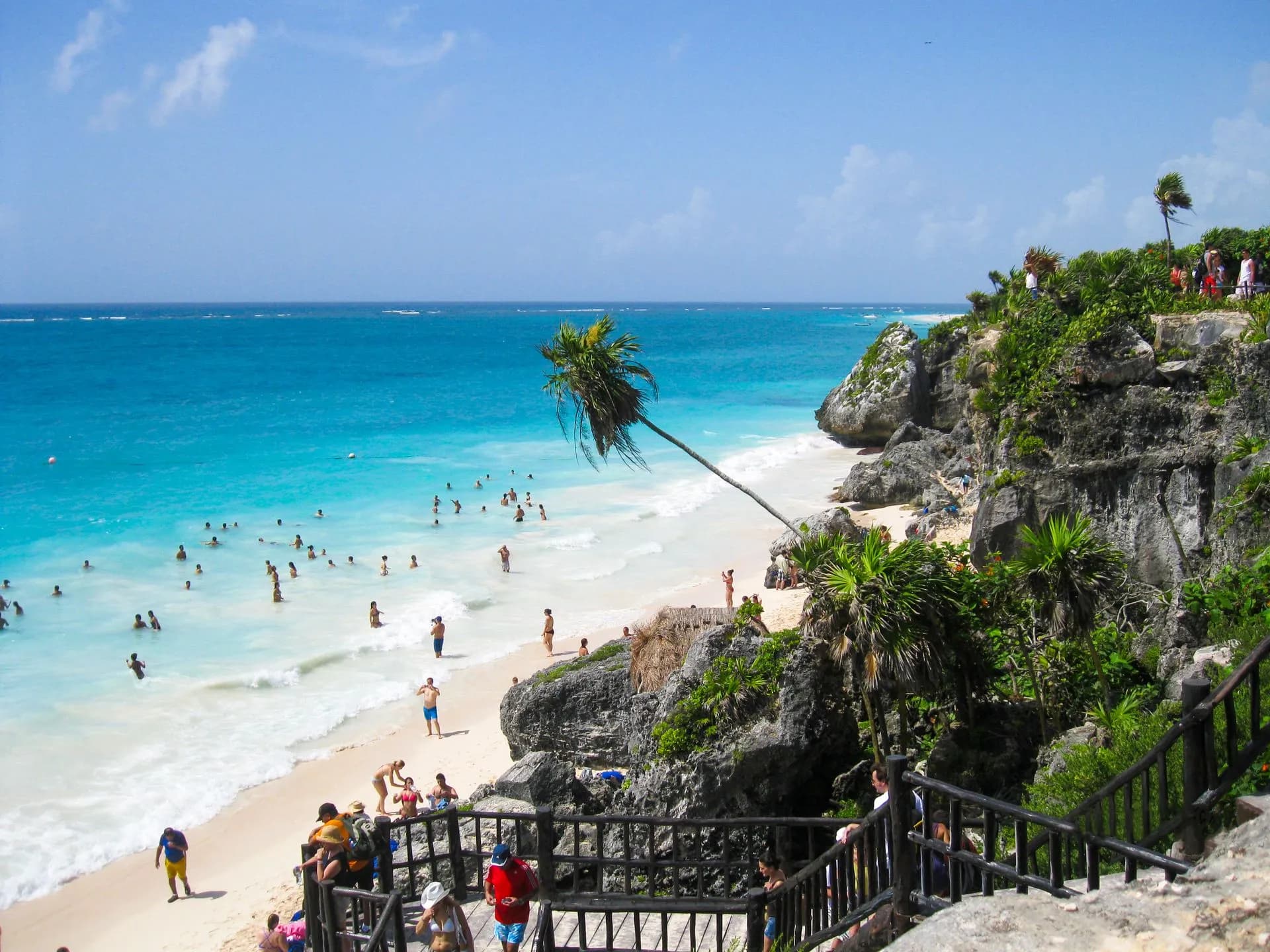
July in Akumal is a month of sharp tradeoffs rather than a straightforwardly good or bad one. Sea turtle nesting is at its height, the whale sharks are offshore, and lodging is about as cheap as it gets. The costs are the sargassum, in a bay whose geography holds what it catches, and the heat and humidity. Whether that adds up to a good trip depends almost entirely on what you came for.
| Factor | July Rating |
|---|---|
| Weather | 6/10 · hot and humid; brief, heavy afternoon storms |
| Crowds | 5/10 · quiet early, busy from mid-month |
| Prices | 8/10 · summer low, the year's softest rates |
| Beaches | 3/10 · sargassum at its annual worst |
| Turtle Snorkeling | 8/10 · turtles reliable; go before 9am |
| Cenotes | 10/10 · cool, clear, and the best heat escape |
| Sargassum | 2/10 · the worst month of the year here |
| Families | 7/10 · shallow bay and school-holiday timing, but hot |
| Couples | 5/10 · warm water and wildlife; humid, busy, weedy sand |
💰 Average July hotel prices (Akumal, mid-range):
Boutique hotels and condos: ~$165/night · Mid-range and villa rentals: ~$200/night · All-inclusive resorts: ~$340/night
Rough mid-range estimates; rates vary considerably by property, by which bay it sits on, and by booking lead time.
Who July suits. We'd give July the edge for anyone whose trip is built around the water rather than the sand: turtle snorkelers, cenote divers, and whale shark travelers all get the best month of the year, at the lowest prices of the year. We'd lean toward a different month for anyone whose mental picture of Akumal is a quiet stretch of white sand, because that is the one thing July reliably cannot deliver. The biggest difference between a good July trip here and a disappointing one is not luck with the seaweed; it is whether the itinerary depended on the beach in the first place.
Hidden Cenote Swim: Snorkeling, Sea Turtles & Beachside Lunch
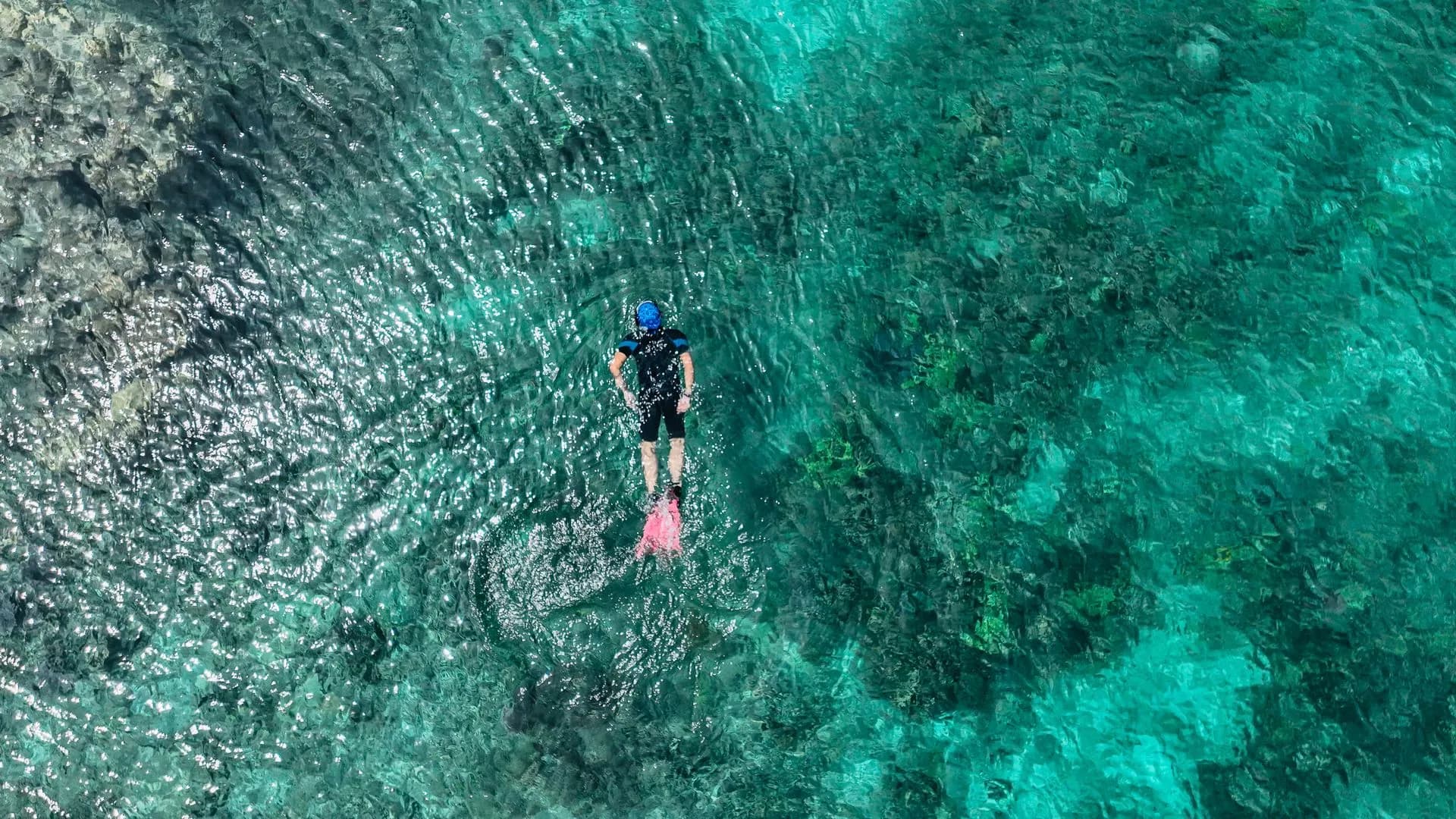
In July this is the combination we'd book first, because it pairs the two things the month is actually good for. You get the Akumal turtle snorkel, which peak nesting season makes as reliable as it gets, and a cenote swim that doubles as the best relief from July heat and humidity on the coast. It also hedges the one real risk: if the bay is heavy on your date, the freshwater half of the day is untouched by it.
Book NowBest Things to Book in Akumal in July
July rewards booking the water and skipping the sand. These are the options that hold up in the month's heat and seaweed, with prices and ratings as listed.
| Tour | Why It Works in July | Price | Rating | Full Guide & Book |
|---|---|---|---|---|
| Turtle snorkel & cenote | Peak turtle season plus a cool freshwater swim | From $119 | 4.8 (1,376) | Guide · Check availability |
| Private Akumal turtle snorkel | Flexible start time, so you can hit the clear 8am water | From $40 | 4.7 (124) | Guide · Check availability |
| Full-day ruins, cenote & turtles | Ruins early, cenote at midday when the heat peaks | From $130 | 4.8 (1,326) | Guide · Check availability |
| Private turtle & cenote tour | Sets its own pace around the afternoon storms | From $274 | 5.0 (283) | Guide · Check availability |
| Swim with sea turtles | Short, cheap, easy to slot into a clear morning | From $45 | 4.6 (452) | Guide · Check availability |
ℹ️ Prices, ratings, and review counts were reviewed by our team in August 2026 and are shown as listed. Confirm current pricing and the local turtle-care fee, which several operators collect in cash on the day, before booking. Two things to expect in the water: life jackets are mandatory in the guided turtle zone, and a minimum-distance rule applies to the turtles, commonly cited as somewhere between 3 and 4.5 metres (10 to 15 feet). Most operators also offer a paid photo package on the day, which reviewers mention often enough that it is worth deciding in advance whether you want it.
Akumal Weather in July
| Metric | July |
|---|---|
| Avg High | 31°C (88°F) |
| Avg Low | 24°C (75°F) |
| Water Temp | 29°C (84°F) |
| Rain Days | ~12, mostly brief afternoon storms |
| Humidity | High (around 81%) |
| Wind | Low |
| Hurricane Risk | Low to moderate (season runs June to November) |
Temperature and Humidity
July highs sit around 31°C (88°F) with overnight lows near 24°C (75°F), which sounds manageable until you factor in humidity averaging about 81%. That combination is what actually shapes a July day here: the air feels heavier than the thermometer suggests, shade matters more than usual, and midday on an exposed beach or an unshaded ruin site is genuinely draining. What typically happens is that visitors front-load the day, get in the water early, and treat the hours from noon to four as time for a cenote, a long lunch, or the pool.
Rain Pattern
July brings roughly 125mm of rain across about twelve days, but the shape of it matters more than the total. These are short, heavy afternoon convective storms rather than all-day grey: they build through the afternoon, break hard for thirty to ninety minutes, and clear. Mornings are typically bright. That pattern is why morning-first planning works so well in July, and why an afternoon cenote or cave tour is a safer bet than an afternoon boat trip.
Sea and Outdoor Conditions
Water temperature averages around 29°C (84°F), warm enough that wetsuits are unnecessary and long snorkels are comfortable. Wind is generally light, so the bay itself stays calm and the offshore reef is diveable most days. The caveat is visibility rather than temperature: heavy sargassum sitting in the shallows can cloud the inshore water even when the offshore reef is clear. Hurricane season is open from June, though July sits at the lower end of the risk curve, with September the genuine peak.
Crowds and Prices in Akumal in July
July is a low-price, medium-crowd month, and the two halves of it behave differently enough to be worth planning around.
- July 1 to 10: usually the quietest and cheapest stretch of the month. North American school holidays have started but most European ones have not, so the bay's entry points tend to stay manageable and rates sit near their annual floor.
- July 11 to 20: the build. European family travel arrives, villa and condo occupancy climbs, and the managed turtle-snorkel entry points start queuing by mid-morning.
- July 21 to 31: typically the busiest stretch of the summer. Both school-holiday waves overlap, morning snorkel slots tend to fill, and last-minute villa availability in the better bays thins out.
On price, July is one of the two cheapest months of the year in Akumal, alongside August. Mid-range lodging runs around $200 a night, boutique hotels and condos closer to $165, and the all-inclusive resorts around $340. For comparison, February, the peak dry-season month, runs well over double that at the top end. Our take: the money you save in July is real, but you are buying it with the beach, so it is only a good trade if the beach was never the point.
Book the morning turtle snorkel further ahead than you would in a quiet month. From mid-July, the early slots that get you into the clearest water are the first to go, and those are precisely the ones worth having. For how the whole corridor prices out this month, see our Riviera Maya in July guide.
Sea Turtle Season in Akumal in July
July is the heart of the nesting season, and it is the strongest single reason to accept everything else July throws at you. Akumal's nesting season runs roughly May 1 through October 31, and July sits at its peak: green turtles (Chelonia mydas) and loggerheads (Caretta caretta) come ashore at night to nest on the same beaches that hold the day's sargassum. The Centro Ecológico Akumal, which has run the local conservation and research programme since 1995, patrols the beaches through the season, records and protects nests, and runs public hatchling releases.
The part most visitors miss is that July is also when the first hatchlings appear. Eggs laid in mid-May start emerging after 45 to 60 days of incubation, which puts the earliest releases right at the start of the month and builds from there. So a July trip can plausibly include both halves of the cycle: nesting females at night and hatchlings making their run to the water. Releases are organised by the ecological centre rather than bookable as a tour, so ask locally about timing once you arrive.
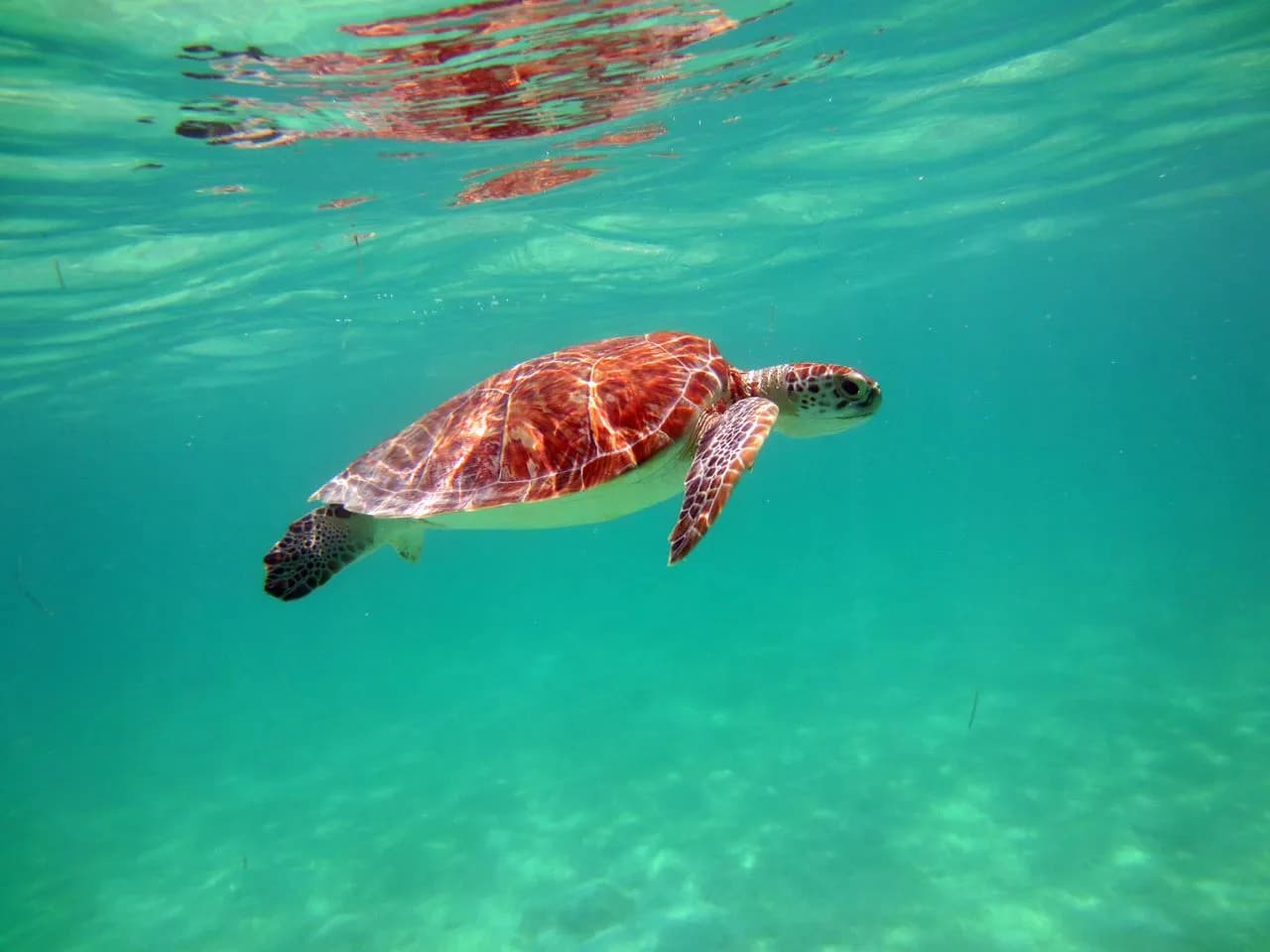
The daytime turtle snorkeling in the bay is a separate thing and runs regardless. The green turtles grazing the seagrass beds are resident foragers, not the nesting females, and they are there year-round. In our view the nesting overlap is the real July bonus rather than the main event: you come for the snorkel, and the nesting season is what makes the evenings on the sand worth staying up for. Our Akumal snorkeling tour guide covers the daytime operators and entry points in detail.
We wouldn't choose this for a quiet, solitary wildlife encounter, and July is the month where that matters most. Reviewers consistently describe the middle of the day in the bay as queuing among dozens of other snorkelers, closer in feel to a school trip than a private swim. The workaround is structural rather than lucky: guided tours are barred on Mondays as a conservation rest day, and independent snorkelers can enter before 10am that morning, which is the quietest the bay gets all week.
Two rules matter more in July than any other month. Keep well back from nesting females and marked nests, and use no white light on the beach at night: hatchlings orient by the brightest horizon, and a phone torch pointed the wrong way sends them inland.
Sargassum in Akumal in July
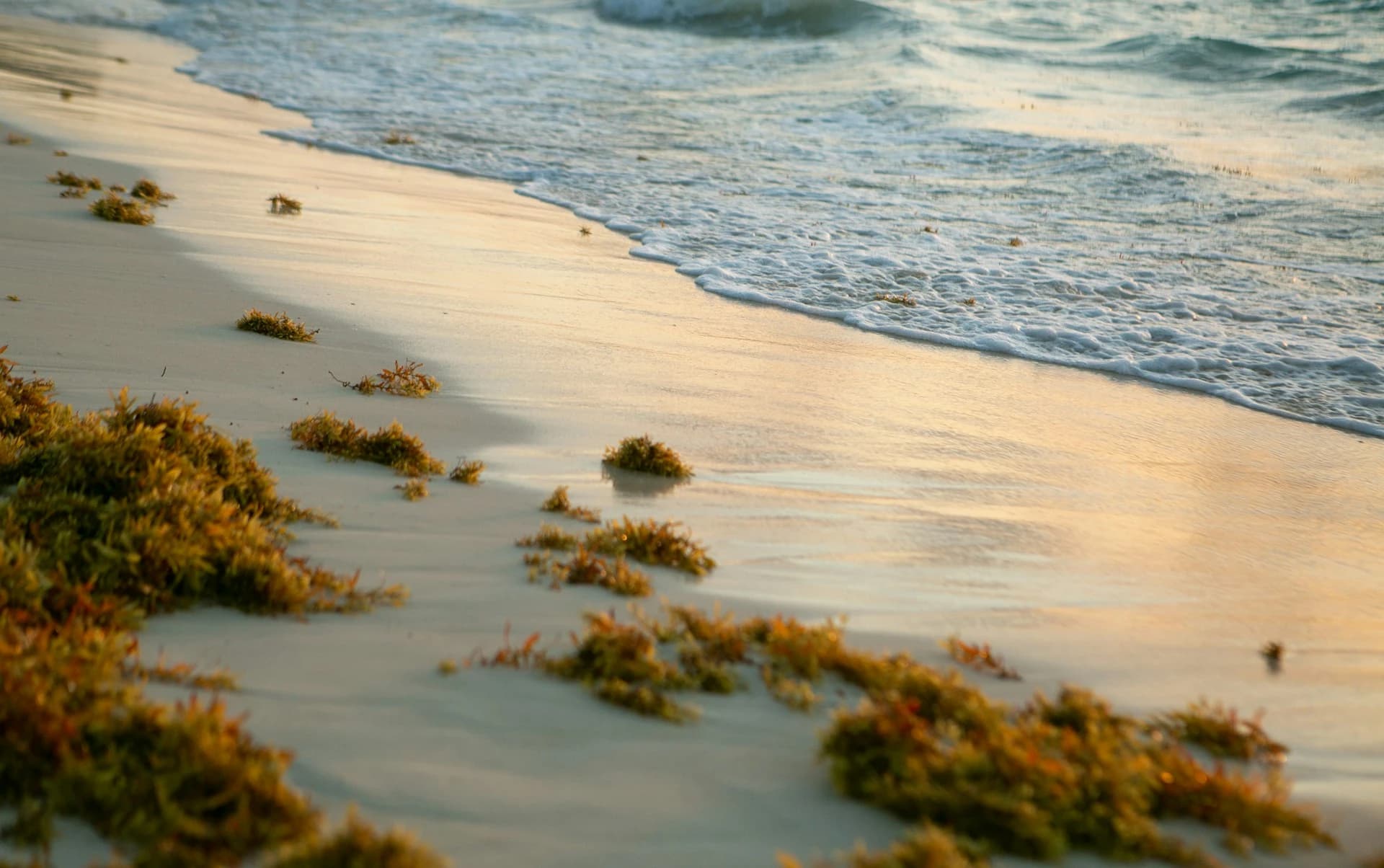
July is typically Akumal's worst month for sargassum, and the bay's shape tends to make it worse here than the regional average suggests. Akumal Bay is semi-enclosed, bounded by rocky headlands and partly fronted by reef. The reef intercepts a share of the incoming rafts, but the enclosure then holds whatever gets through, because a bay exchanges far less water than an open beach where the next swell carries some of it back out. A heavy July arrival can therefore sit in the shallows for days rather than hours.
The practical response has three parts. First, timing, and it helps to separate two things that move in opposite directions. The sand is usually at its worst first thing, because the weed accumulates overnight and the crews have not yet worked it. Conditions in the water run the other way: visibility and crowd levels are generally best early, and the bay gets noticeably busier from around 10am as the tour groups arrive. An early start therefore means walking past more weed on the beach to reach better conditions once you are in. Second, location: Yal-Ku Lagoon two kilometres north is a brackish inlet that sees very little of it, and the rocky ironshore stretches at North Akumal accumulate less than the sandy crescents. Half Moon Bay, by contrast, is the worst-affected stretch of all. Third, substitution: the cenotes inland are freshwater and completely outside the weed's reach in any month.
We think the tradeoff is straightforward. July gives you the turtle season at its height and prices near their floor, and charges you the beach for it. Travelers who plan around that come away happy; travelers who booked a beach holiday and discovered the seaweed on arrival do not. Our full Akumal sargassum guide covers the month-by-month pattern, the bay-by-bay differences, and the live trackers worth checking before you travel.
Best Things to Do in Akumal in July
| Activity | July Rating | Best Time of Day | Notes |
|---|---|---|---|
| Cenote swim or dive | 10/10 | Midday | Cool, clear, and the best escape from peak heat |
| Whale shark tour | 10/10 | Early morning | Peak season offshore; departs up the coast |
| Akumal turtle snorkel | 8/10 | 8 to 9am | Turtles reliable; clearest water before the crowds |
| Yal-Ku Lagoon | 9/10 | Morning | Clear when the bay is not; calm and shallow |
| Reef diving | 7/10 | Morning | Warm water, light wind; inshore visibility varies |
| Sian Ka'an lagoon | 7/10 | Morning | Unaffected by seaweed; afternoon storms possible |
| Tulum ruins | 5/10 | At opening | Fully exposed clifftop site; brutal by 11am in July |
| Hatchling release | 8/10 | Dusk | Seasonal and unscheduled; ask locally on arrival |
| Beach lounging | 3/10 | — | The month's weak point; sargassum at its annual worst |
Build the day around the heat, not the itinerary
The single most useful July habit is inverting the normal schedule. Water first thing while it is clear and cool, an inland cenote or cave through the worst of the midday heat, and something covered or flexible in the late afternoon when the storms build. Most guests find that a July day planned this way feels comfortable, while the same activities in a different order feel exhausting. One pattern we noticed in reviews of the ruins combos: guests repeatedly describe roughly an hour at the exposed clifftop site as plenty in this heat, which is worth checking against any itinerary that budgets more.
Lean on the cenotes
Dos Ojos is a short drive south, Taj Mahal sits just north near Xpu-Ha, and Aktun Ha is inland on the Tulum to Cobá road. All are freshwater, all sit at a constant cool temperature that feels startling after a humid morning, and none of them are touched by what is happening on the coast. In July they stop being a side trip and become the backbone of the week. From what we've seen in reviews, the cenote half of these combo days is what guests single out as the highlight far more often than the turtle swim itself, which is worth knowing if you assumed the turtles were the reason to book. See our Tulum cenote tour guide for the full set of options.
Other Things Worth Doing in July
- Evening beach walks during nesting season: the sand is quiet after dark and nesting activity peaks in July, though red light only and a respectful distance are non-negotiable.
- Xel-Há and Xcaret: both are a short drive and both are built around freshwater and sheltered inlets, which makes them far more July-proof than an open beach day.
- Aktun Chen: a cave and underground river park minutes from Akumal, entirely indoors in effect, and a reliable answer to an afternoon storm.
- Reef diving off the ironshore: the shore-entry sites at the northern end reach clear water quickly and skip the weediest inshore stretches.
- Cooking and mezcal evenings in Tulum: a good use of the hours when the heat has broken and the beach is not an option anyway.
- Airport logistics: Akumal sits about 90km south of Cancún airport, roughly a 75 to 80 minute drive. Our Cancún airport to Akumal transfer guide covers the options.
From Our Experience
What we consistently see is that July separates people by what they booked for rather than by luck. The travelers who came for turtles, cenotes, and whale sharks get the best month of the year at the lowest prices of the year, while the ones who pictured empty white sand are the ones who leave disappointed, and no amount of checking trackers changes that. The bay is a working snorkel destination in July, not a lounging beach.
Tips for Visiting Akumal in July
- Be in the water by 8 or 9am: expect the sand to look its worst at that hour, since the weed lands overnight, but conditions in the water are generally best early and the crowd curve is the sharper reason. From roughly 10am to 2pm the bay gets busy enough that reviewers say it takes the edge off, so an early slot buys a different day rather than just a cleaner beach.
- Book morning snorkel slots ahead from mid-July: once both school-holiday waves overlap, the early slots go first, and those are the ones worth having.
- Treat the cenotes as the main plan, not the backup: in July they solve the heat and the seaweed at once, and they are world-class in their own right.
- Ask your rental specifically who cleans its beach: Akumal has no single town-wide operation, so the answer differs between the main bay, Half Moon Bay, and the southern gated communities. Treat a vague answer as a real signal.
- Pack for humidity, not just heat: quick-dry clothing, a second pair of shoes, and reef-safe mineral sunscreen, which is required around the turtle zones.
- Red light only on the beach after dark: July is peak nesting, and white light disorients both nesting females and hatchlings.
- Carry cash for the turtle-care fee: reported amounts vary, commonly somewhere between $15 and $35 per person depending on the operator and whether a boat circuit is included, so it is a real line item for a family rather than a rounding error. We'd confirm the figure before booking, because a recurring complaint is being charged more on arrival than the amount quoted.
- Visiting at a different time of year? Our Akumal sargassum guide covers the full month-by-month seaweed calendar, and our Riviera Maya in July guide sets July in the context of the whole corridor.
- Looking at August instead? Our Akumal in August guide covers a month that splits in half, where the last ten days rather than the first are the window to aim for.
How We Selected These Tours
The Cancun Trip Insider team built this July guide around the two things that actually decide an Akumal trip in midsummer: whether an activity survives peak sargassum, and whether it works in 31°C heat at 81% humidity. Tours that depend on the shoreline scored lower; water-based and freshwater options scored higher. Every tour listed is a verified listing from a highly rated operator, with ratings and review counts shown as published. We passed over listings with thin review volume, unclear turtle-zone permissions, or vague pickup arrangements, all of which matter more in a crowded month. The selection spans short beach snorkels, cenote and turtle combinations, full-day ruins trips, and private options with flexible start times, so an early-morning plan is possible at any budget.
Frequently Asked Questions
Is Akumal good in July?+
It depends what you came for. Sea turtle nesting is at its height, the whale sharks are offshore, and it is one of the two cheapest months, so July works well for anyone whose trip is built around the water. It is also the heaviest month for sargassum and the most humid of the year, which makes it a poor choice for a beach-lounging holiday.
What is the weather like in Akumal in July?+
Hot and humid. Highs average around 31°C (88°F) with lows near 24°C (75°F) and humidity around 81%, which makes the heat feel stronger than the numbers suggest. Expect roughly 125mm of rain across about twelve days, almost all of it in short, heavy afternoon storms rather than all-day rain. Sea temperature averages a very warm 29°C (84°F).
Can you see sea turtles in Akumal in July?+
Yes, and July is the best month for it. The green turtles grazing the seagrass beds in Akumal Bay are resident year-round, so the daytime snorkel runs as normal. July is also the peak of the nesting season, which runs roughly May through October, and the first hatchlings from May nests start emerging after 45 to 60 days of incubation.
Is sargassum bad in Akumal in July?+
Typically yes, July is usually the worst month of the year here. Akumal's semi-enclosed bay traps what lands, so a heavy arrival can sit in the shallows for days rather than being carried back out. Plan around it: go in the water before 9am when the overnight accumulation is being cleared, use Yal-Ku Lagoon and the North Akumal ironshore as alternatives, and keep cenote days in the itinerary.
Is July expensive in Akumal?+
No, it is one of the two cheapest months alongside August. Mid-range lodging runs around $200 a night, boutique hotels and condos closer to $165, and all-inclusive resorts around $340. February, the peak dry-season month, costs well over double at the top end. The saving is real, but you are trading the beach for it.
What is the best week to visit Akumal in July?+
The first ten days. Sargassum is heavy all month regardless, but crowds are noticeably lighter before the mid-July European school-holiday wave, hotel rates sit at their annual floor, and nests laid in mid-May begin hatching around then. The final ten days are the busiest stretch of the summer with the same seaweed.
What activities are best in Akumal in July?+
Cenotes rate highest, because they solve the heat and the seaweed at once and are world-class in their own right. Whale shark tours are at peak season offshore, the Akumal turtle snorkel is reliable if you go between 8 and 9am, and Yal-Ku Lagoon stays clear when the bay does not. Beach lounging and the exposed Tulum ruins rate lowest.
Is there hurricane risk in Akumal in July?+
Some, but July sits at the lower end of the curve. Atlantic hurricane season runs June through November, and risk rises steadily through the season to peak in September. July storms are usually short afternoon convective downpours rather than tropical systems, though it is still worth booking flexible rates and keeping an eye on forecasts closer to travel.
Affiliate note: Some links on this page are affiliate links. If you book through them, we may earn a small commission at no additional cost to you.