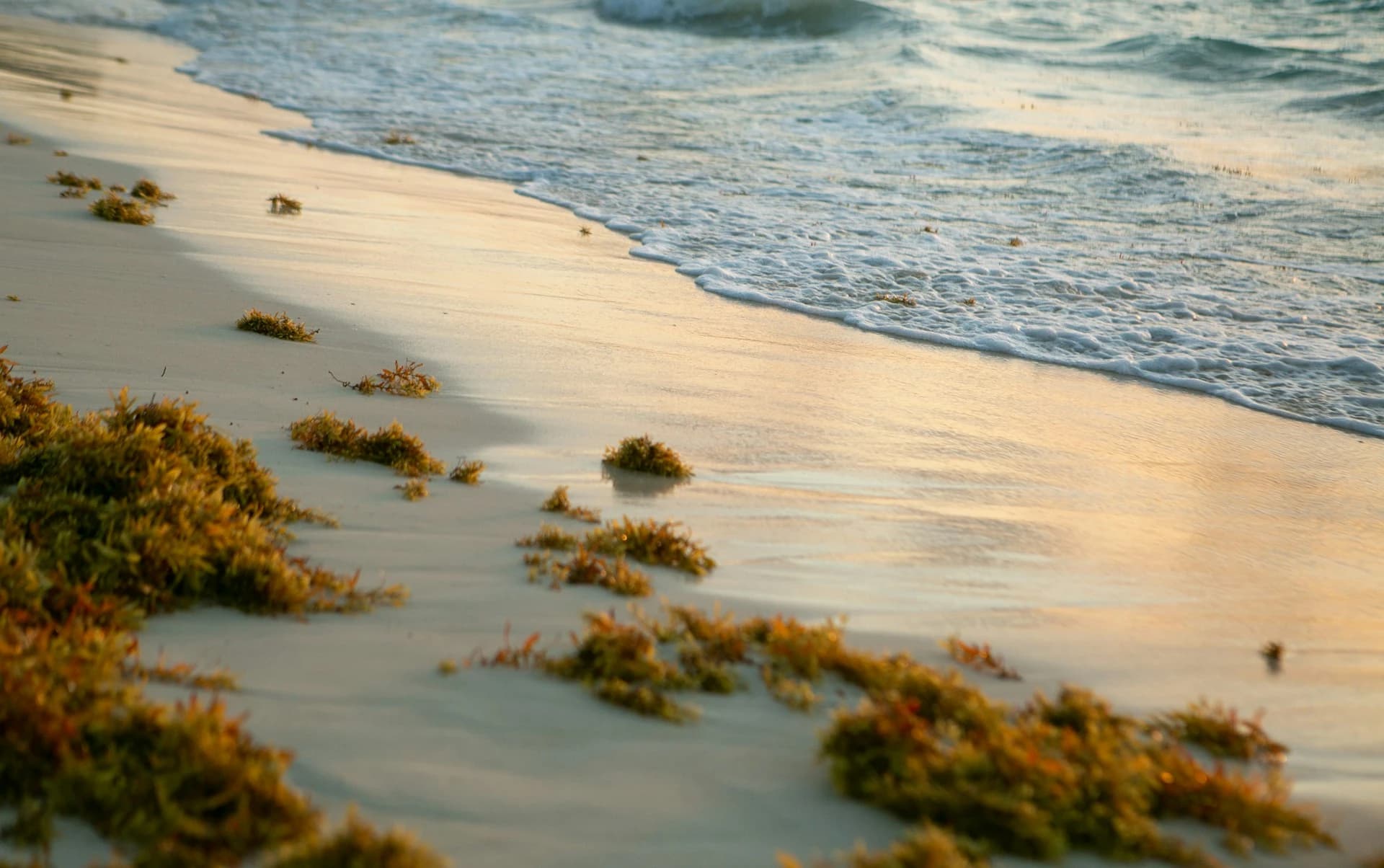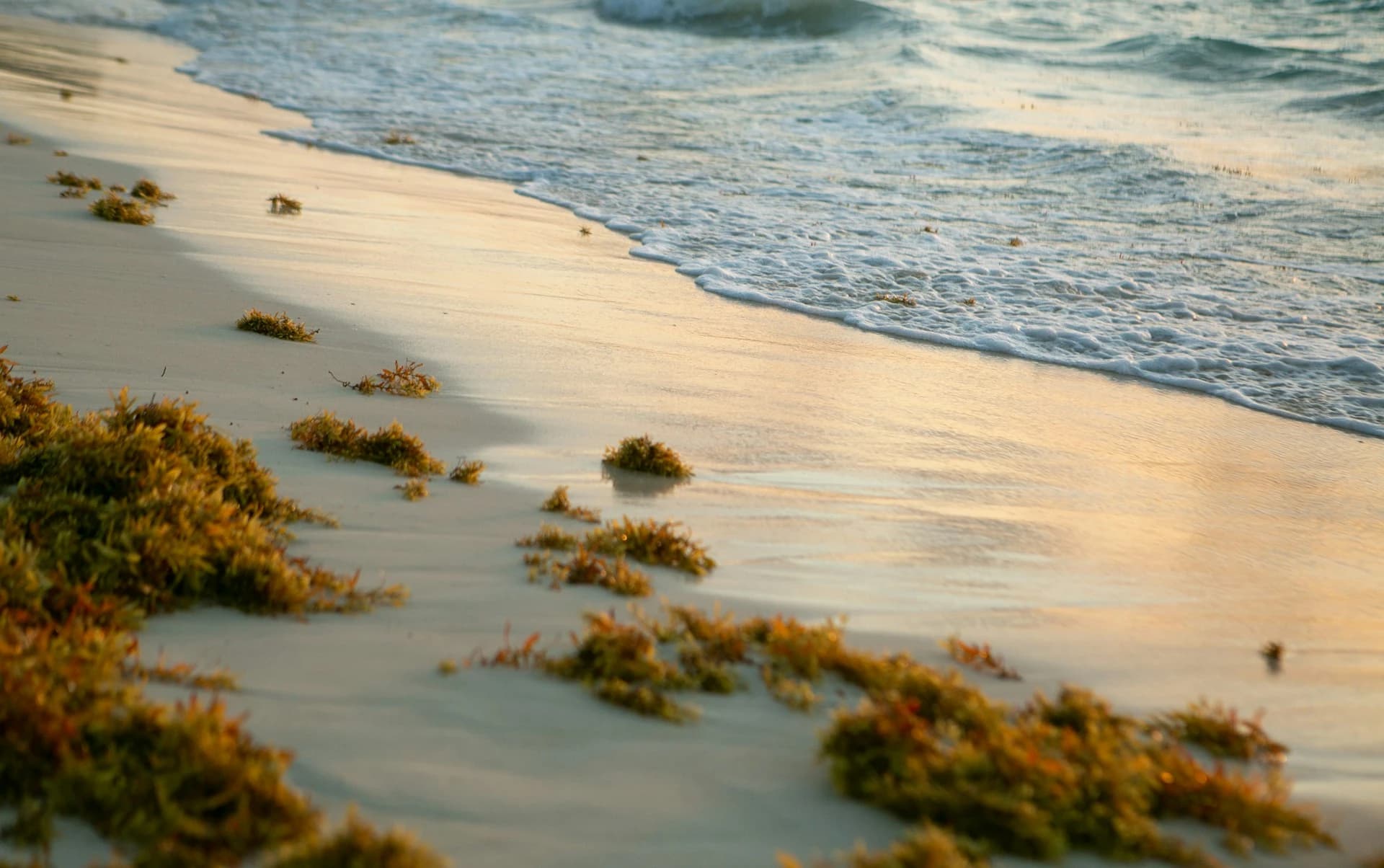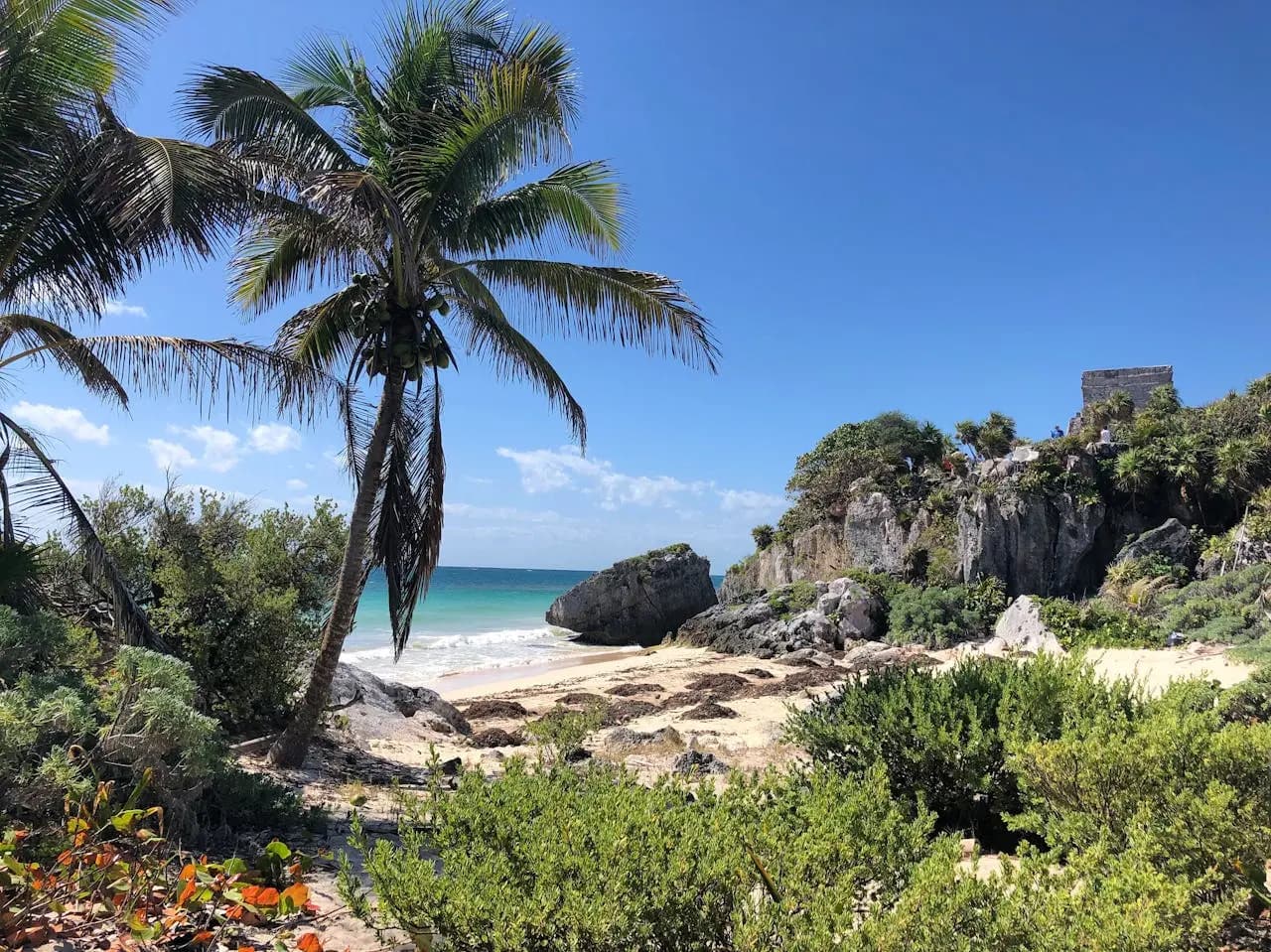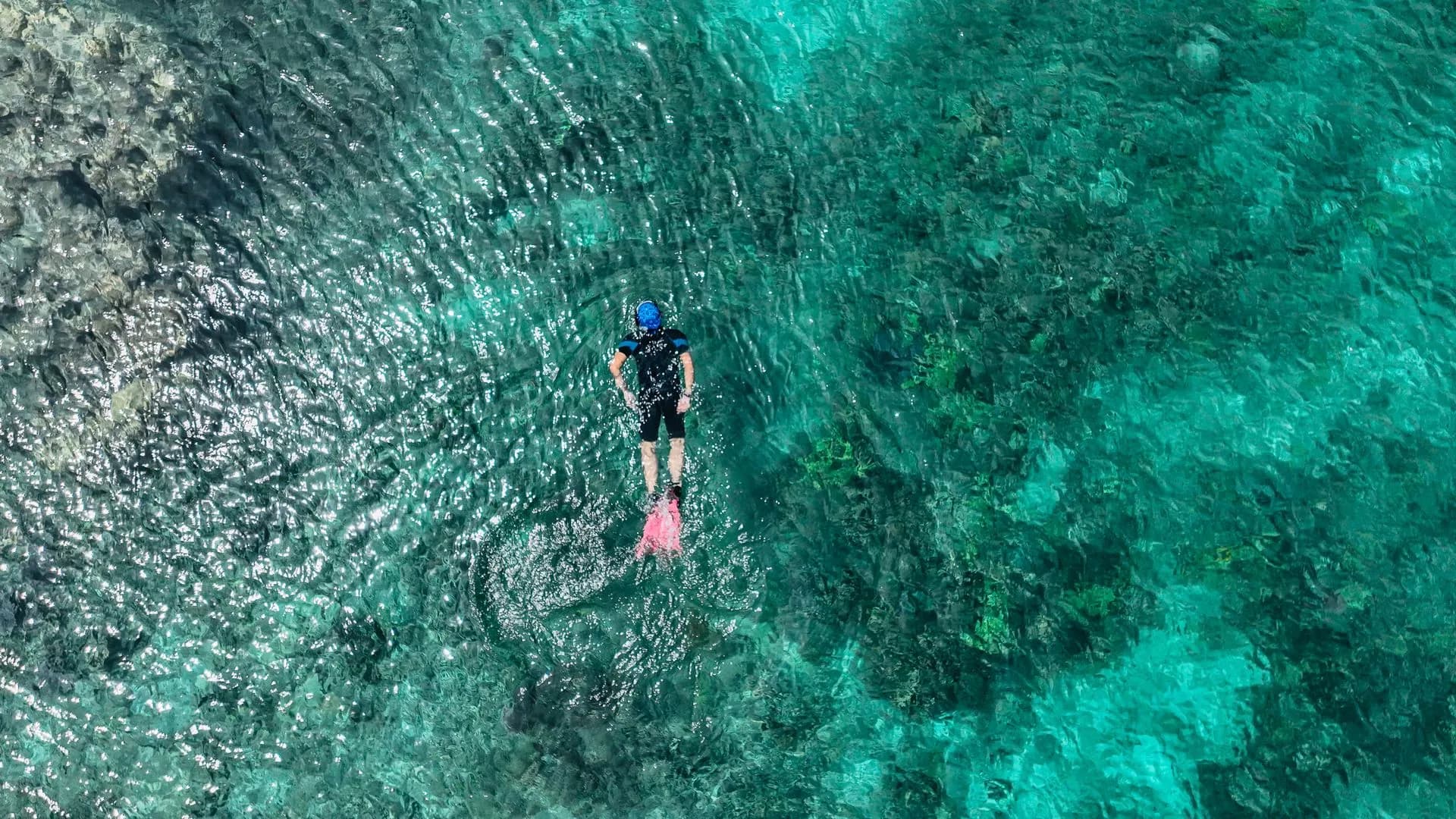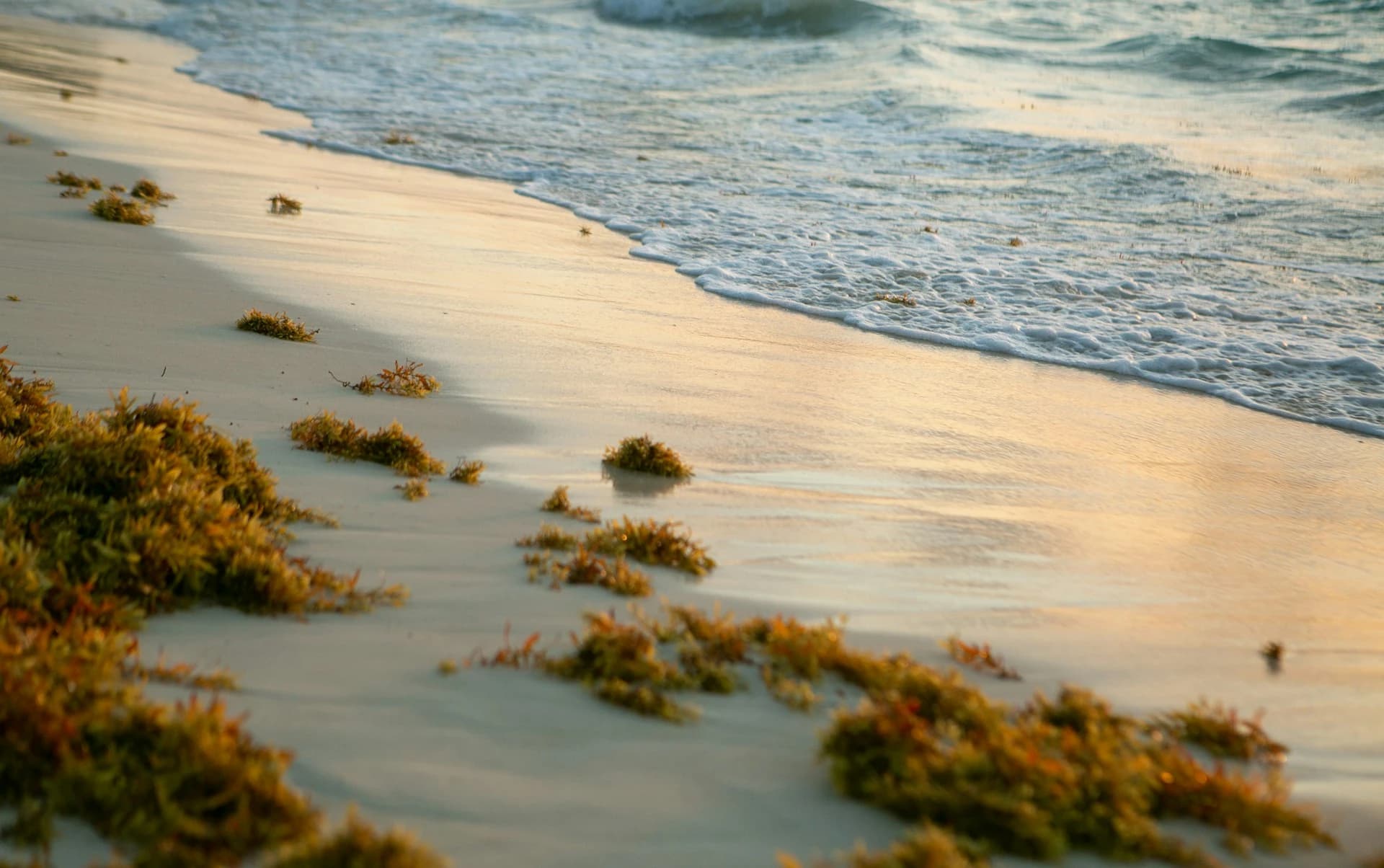
Akumal Bay is semi-enclosed and partly fronted by reef, which slows sargassum coming in but also traps it once it lands. This guide covers which Akumal beach gets the least seaweed, the month-by-month pattern, the 2026 outlook, and why the turtle snorkeling runs anyway.
What You Should Know
- Akumal Bay is semi-enclosed and partly fronted by reef, which is a mixed blessing: the reef slows some incoming rafts, but the curved, headland-bounded bay then holds what does get in for longer than an open beach where the next swell carries it back out.
- The town also sits far enough south that the rafts tend to reach it earlier in the season than Cancún, and its worst months (roughly June to August) line up with neighbouring Tulum, the hardest-hit destination on the coast.
- The stretches vary a lot within a few kilometres. Half Moon Bay to the north has been the worst-affected corner for years and now runs a community-funded floating barrier; Yal-Ku Lagoon, two kilometres north, is a brackish lagoon that sees very little of it.
- The turtle snorkeling is the thing most people come for, and it generally continues through the season. Green turtles graze the seagrass beds in the bay year-round, and shoreline weed does not usually move them off those beds, though morning visits before about 9am get the clearest water.
Does Akumal Get Sargassum?
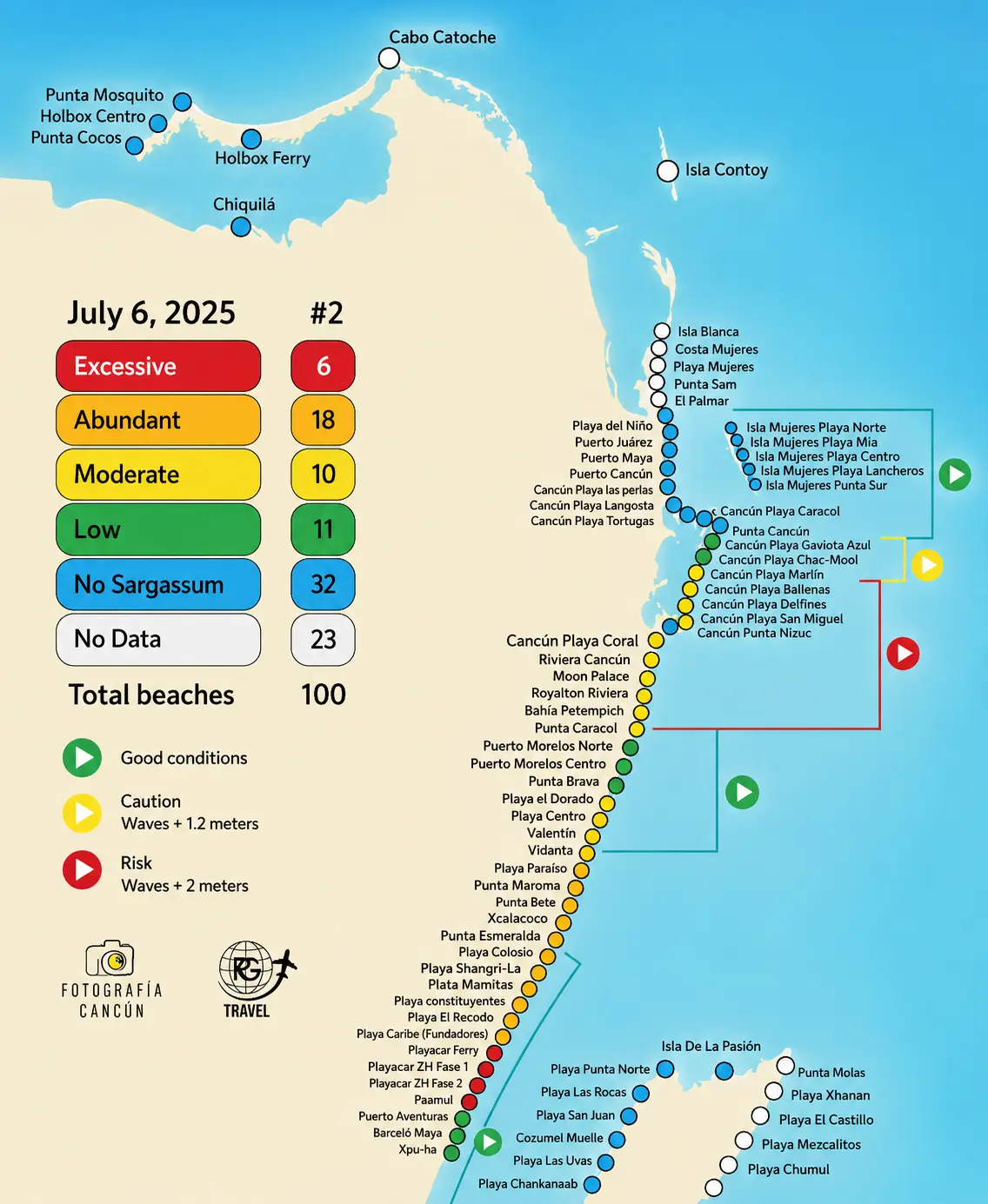
⭐ The short answer: Yes, and more than the numbers suggest. Akumal Bay's partial reef cover slows incoming sargassum, but the curved, headland-bounded bay traps what lands, so a single heavy arrival can sit in the bay for days. The clean season is November to April; June to August is the peak.
Does Akumal get sargassum? Yes, and its geography cuts both ways in a manner that surprises people who booked it expecting a sheltered cove. The main bay is semi-enclosed, wrapped by rocky headlands at each end and partly fronted by reef, which does intercept a share of the rafts drifting in from the Atlantic. The catch is that the same enclosure works against you once the weed is inside: on an open beach like Tulum's, a landing gets reworked and partly carried back out by the next set of waves, whereas in a bay it settles into the shallows and needs to be physically hauled off. The town's southerly position on the coast also means the first arrivals of the year tend to reach it before they reach Cancún.
The honest framing is that this is a high-risk stretch of coast that happens to have unusually good escape routes on its doorstep. In the summer peak it tracks close to Tulum, the worst-affected major destination on the Riviera Maya, and well behind the sheltered west-facing beaches of Isla Mujeres, Cozumel, and Holbox. What makes it still worth booking is that its signature draw, snorkeling with wild green turtles on the bay's seagrass beds, usually continues through the season, and Yal-Ku Lagoon and the cenote systems inland are clear-water swims within minutes. For how the whole coast compares, our Cancún sargassum season guide sets out the regional picture, and our Tulum sargassum guide covers the neighbouring stretch.
Here is how Akumal compares to the rest of the coast for sargassum risk:
| Destination | Sargassum (Seaweed) Risk |
|---|---|
| Isla Holbox (Gulf-facing) | Very Low |
| Isla Mujeres (Playa Norte) | Very Low |
| Cozumel (west coast) | Very Low |
| Cancún | Moderate |
| Puerto Morelos | Moderate |
| Playa del Carmen | High |
| Akumal | High |
| Tulum | Very High |
Hidden Cenote Swim: Snorkeling, Sea Turtles & Beachside Lunch
This is the day we'd book first in the summer peak, because it hedges the beach entirely. You get the Akumal turtle snorkel, which sargassum does not stop, paired with a cenote swim in cool freshwater that has no seaweed at any time of year. If the bay happens to be heavy on your date, the cenote half still delivers, and it is the highest-review-volume option that combines both.
Book NowWhat to Do in Akumal When the Beach Has Sargassum
The useful thing about this stretch is that almost none of its highlights are beach-lounging. The turtles graze in the water, not on the sand, the cenote systems inland are freshwater, and Yal-Ku Lagoon sits outside the drifting weed's path. On a heavy week, these are the bookable days that still work.
| Thing to Do | Why It Beats the Beach | Price | Rating | Full Guide & Book |
|---|---|---|---|---|
| Turtle snorkel & cenote | Turtles stay in the bay; cenote is freshwater | From $119 | 4.8 (1,376) | Guide · Check availability |
| Tulum ruins, turtles & cenote | Clifftop ruins and a cenote, both away from the shore | From $129 | 4.9 (2,085) | Guide · Check availability |
| Private Akumal turtle snorkel | Cheapest way into the bay; guide reads conditions | From $40 | 4.7 (124) | Guide · Check availability |
| Full-day ruins, cenote & turtles | Only a short window is on the shoreline | From $130 | 4.8 (1,326) | Guide · Check availability |
| Private turtle & cenote tour | Flexible timing, so you can go early for clear water | From $274 | 5.0 (283) | Guide · Check availability |
ℹ️ Prices, ratings, and review counts were reviewed by our team in August 2026 and are shown as listed. Because the weed is a shoreline problem, the tours above generally depart and run as normal even when the sand is heavy, though operators can adjust an itinerary in extreme conditions. Confirm current pricing and any local turtle-care fee before booking.
Yal-Ku Lagoon
Two kilometres north of Akumal Bay, Yal-Ku is a brackish lagoon where fresh groundwater meets the sea in a sheltered inlet. Because it is not exposed to the open ocean surface currents that carry sargassum, it stays clear when the bay does not, and the mix of fresh and salt water draws an unusual range of fish. It is the single most reliable clear-water swim within walking or short-taxi distance of Akumal, and worth keeping in reserve for a heavy morning.
The cenotes on Akumal's doorstep
The town sits directly on top of one of the densest cave systems in the world. Dos Ojos is a short drive south, Taj Mahal (Tajma-Ha) is just north near Xpu-Ha, and Aktun Ha sits inland on the Tulum-Cobá road. All are freshwater sinkholes with no ocean connection, so none of the drifting weed reaches them in any month, including the July and August peak. For a full rundown of the options, see our Tulum cenote tour guide.
Akumal Sargassum Today
🌊 Current assessment (late August 2026): The 2026 season peaked in June and July and has begun to recede, though the decline has been slower on the southern half of the coast where Akumal sits. Quintana Roo had collected 106,848 tons statewide as of mid-August, with roughly 150,000 tons projected by year end against 94,000 tons in all of 2025. Akumal and neighbouring Tulum remain among the more affected stretches, with dozens of southern beaches still on red alert, so expect visible accumulation on most days easing through September and October.
Latest beach photos: for same-day, dated photos, live satellite tracking, and a webcam view of Akumal Bay itself, use the live sources listed in the tracking section below. Same-week photos from your specific beach or hotel are the most reliable read.
Last reviewed: August 2026. We update this assessment periodically; conditions can change within a few days, so confirm close to your travel dates. If you are checking Akumal sargassum today for a specific date, the live trackers are more accurate than any seasonal average.
🔎 How we assess sargassum: We monitor official satellite reports (the University of South Florida Optical Oceanography Lab), Quintana Roo state and Mexican Navy collection updates, dive shop and hotel reports from the bay itself, and on-the-ground observations across the Riviera Maya. We review conditions regularly because they can change within days, so we always recommend confirming live reports close to your travel dates.
Akumal Seaweed vs Sargassum: Same Thing
If you are searching for Akumal seaweed, or Akumal algae, that is the same thing as sargassum: the terms get used interchangeably for the brown macroalgae that drifts across the Atlantic and washes onto Caribbean beaches. Whichever word you use, the timing, the beaches, and the advice on this page are identical. One local wrinkle worth knowing: the bay also has natural seagrass beds in the shallows, which is exactly what draws the green turtles in. Seagrass is a permanent, healthy part of the bay, not sargassum, and photos of the bay's dark patches underwater are often showing that rather than a seaweed problem.
Why Akumal Bay Traps Sargassum
Most guides on the subject frame reef and bay protection as an unqualified good. This is the case where that framing breaks down. The bay is semi-enclosed, bounded by rocky points at both ends and partly fronted by reef, and the reef genuinely does intercept a share of the rafts drifting in. But a bay is a collection basin as well as a shelter. On an open, straight beach like Tulum's, a landing gets churned by the next swell and a meaningful portion is carried back offshore. Inside a curved bay with limited water exchange, what arrives stays put in the shallows until someone physically hauls it out.
That trapping effect is why local conditions can lag the regional trend by several days in both directions. When a satellite outlook shows the offshore rafts clearing, the bay often still holds the previous week's arrival. The flip side is that the same enclosure keeps the water calm and shallow, which is precisely why the turtles graze here and why the snorkeling is beginner-friendly. Add the southerly position on the coast, which puts it in the path of the first arrivals of the year before Cancún sees them, and you get a destination that is more exposed than its sheltered-cove appearance suggests.
Which Akumal Beaches Get the Least Sargassum?
Akumal is not one beach. It is a string of five bays running roughly ten kilometres from Yal-Ku Lagoon in the north down to Aventuras in the south, and on any given day conditions differ noticeably between them. This is the most useful local knowledge on this page: if the main bay is buried, a fifteen-minute move can change your day.
| Area | Sargassum Risk | Why |
|---|---|---|
| Yal-Ku Lagoon | Minimal | Brackish inlet, little open-ocean exposure |
| North Akumal (ironshore) | Lower | Rocky shore, current patterns carry weed past |
| Akumal Bay (main turtle bay) | Moderate to high | Traps what lands, but cleaned daily |
| Jade Bay | High | Open continuation of the bay, residential cleanup only |
| Half Moon Bay | Highest | Crescent shape funnels and holds incoming rafts |
| South Akumal / Aventuras | Varies | Gated communities, cleanup differs property to property |
Yal-Ku Lagoon
Yal-Ku is the reliable one. It is a sheltered brackish lagoon where fresh groundwater surfaces and meets the sea, around two kilometres north of the main bay, and because it sits outside the ocean surface currents that transport the weed it sees very little of it. Calm, clear, and shallow, it usually works as a snorkel or kayak swim on days when nothing on the open coast does.
North Akumal and the Half Moon Bay ironshore
The rocky ironshore stretches at the northern end tend to accumulate less than the sandy crescents, because current patterns carry weed past rather than depositing it. There is less beach to lie on here, but on a heavy week it is often where the water is cleanest for getting in.
Akumal Bay
The main turtle bay is the one everyone means by "Akumal Beach," and it holds up better than its reputation suggests, mostly because it is worked hardest. The dive shops and managed entry points at Tsuuk Park, Akumal Dive Center, and Akumal Dive Shop have an obvious commercial interest in a swimmable bay, and municipal Zofemat crews clear it too. It still traps weed, but it also gets cleared faster than the residential stretches either side.
Half Moon Bay
Half Moon Bay, immediately north, has been the worst-affected corner for years. Its tight north-facing crescent funnels incoming rafts in and then holds them, and property owners there have described recent seasons as the worst on record. It is largely residential, so there is no municipal crew: cleanup depends on individual owners and the community's own arrangements, which is why the floating barrier described below exists. If you are booking a rental, this is the stretch to ask the most pointed questions about.
Jade Bay, South Akumal and Aventuras
The southern bays are quiet gated communities of villas and condos on the far side of Punta Sur, with the reef close in at Jade Bay. Conditions here come down entirely to whether your specific property runs a cleaning crew, and there is no reliable town-wide average to fall back on. As everywhere on this coast, a diligently raked private stretch can be clear while the unstaffed sand next door is not.
Akumal Sargassum Month by Month
Here is the typical pattern. Treat it as the baseline: a heavy-bloom year like 2026 shifts the whole curve up and stretches the season at both ends. The clean window is November through April; June through August is the peak. Note that the bay-trapping effect means a bad week here often lingers a few days past the regional trend.
| Month | Typical Level | What to Expect |
|---|---|---|
| January | Minimal | Clean dry-season sand and the year's best water clarity |
| February | Minimal | Among the cleanest months; barriers usually go in late month |
| March | Low to moderate | First arrivals possible; Akumal often sees them before Cancún |
| April | Moderate | Season builds; often still good early, heavier by late month |
| May | Moderate to high | Ramps up quickly; the bay starts holding what lands |
| June | High (peak) | Heavy landings; cleanup crews at full stretch |
| July | High (peak) | Worst of the year, and peak turtle nesting at the same time |
| August | High | Peak continues, often easing in the last week or two |
| September | Moderate | Declining through the month, still variable day to day |
| October | Low to moderate | Beaches recovering; the bay can hold remnants later than open coast |
| November | Minimal | Clean again; one of the best months for the bay |
| December | Minimal | Clean through the holidays with calm, clear water |
ℹ️ Levels are seasonal averages, not forecasts. Akumal tracks close to Tulum in the peak and can lag the regional trend by a few days because the bay holds what it catches. Check live conditions close to your dates.
2026 Akumal Sargassum Forecast
2026 is a record year across the Mexican Caribbean, and this is the stretch of coast taking the largest share. The Great Atlantic Sargassum Belt, tracked by satellite at the University of South Florida's Optical Oceanography Lab, reached a record in 2025 and grew further into 2026, with the mass distributed across the Atlantic reported as the highest ever recorded. Quintana Roo had collected 106,848 tons by mid-August 2026, with roughly 150,000 projected by year end against 94,000 tons in all of 2025, and the state's response has been the earliest and largest in its history. The Mexican Navy (SEMAR) has deployed oceanic, coastal, and amphibious collection vessels, and roughly 11,000 of the 16,000 metres of containment barrier purchased for the season were installed as of August, with the full 16 kilometres targeted for 2026.
The season also started unusually early, with sargassum reaching Quintana Roo shores as early as January 2026 and arriving in staggered waves through the summer. Akumal itself recorded what local boat owners described as the largest single landing they had seen, in mid-March, when the bay filled overnight and left vessels landlocked until volunteers and municipal Zofemat crews cleared it. Anti-sargassum barriers had been installed in February that year but strong winds delayed completion.
Our take for the rest of 2026: the peak has passed, but this is the slower-clearing southern half of the coast, so treat September as still variable and October as the first month worth planning beach time around. If you are booking for the summer of 2027, assume the bay performs like Tulum rather than like a sheltered cove, pick lodging that cleans its own frontage, and build the itinerary around the turtle snorkel, Yal-Ku, and the cenotes. For the satellite data behind these forecasts, the University of South Florida Optical Oceanography Lab publishes regular outlook bulletins.
Does Sargassum Affect the Akumal Turtle Snorkeling?
This is the question that actually decides most Akumal trips, and the answer is reassuring: usually not much. Green turtles graze the seagrass beds inside the bay year-round, and shoreline weed does not normally move them off those beds. Sightings stay frequent through July and August, which is also the peak of the local nesting season, so the heaviest months and the most turtle activity coincide. What changes on a heavy day is comfort and visibility rather than whether the turtles are there. The honest caveat is that this holds for a typical heavy day, not every day: after a very large arrival sits in the bay for a stretch, visibility can drop far enough that a morning in the water is genuinely disappointing, and some operators will reschedule.
The practical adjustment is timing. Sargassum accumulates overnight, so the bay is at its worst before about 9am and improves through the morning as currents shift and cleanup crews work. Arriving at 8 to 9am puts you in the water as the beach is being cleared, when clarity is usually best and the crowds are smallest, which is also the standard advice for the turtle snorkel in any season. Heavy mats sitting for days can degrade water quality by blocking light and depleting oxygen, which is a genuine concern for the seagrass and the reef over time, but it is not something that stops a morning snorkel. Our Akumal snorkeling tour guide compares the operators and entry points in detail.
How Akumal Manages Sargassum
Akumal's response is split across three layers, and the middle one is unusual. Offshore, the Mexican Navy (SEMAR) runs collection vessels and floating containment barriers along the Quintana Roo coast, coordinated through a joint state sargassum monitoring centre that models Caribbean currents by satellite to predict where the rafts will land. On the sand, Akumal falls under Tulum municipality, not Solidaridad, so it is Tulum's Zofemat crews who clear the main bay and place disposal containers, backed by the dive shops and beach clubs who need a swimmable bay to operate.
The distinctive piece is at Half Moon Bay, where the residential community funds and runs its own defence. A floating barrier of netted buoys is anchored across the bay, with the nets hanging only around four feet deep so marine life passes underneath while surface weed is held and pushed away by the current. It is operated by EcoProteccion Akumal, a Mexican non-profit, on a fee-for-service basis for the beachfront lots in the worst-affected zone, and is configured to deflect roughly two thirds of the incoming weed away from that stretch. Barriers are installed seasonally, typically ahead of spring, and removed when storms are forecast.
What this means for booking is straightforward: there is no single town-wide standard. The main bay gets municipal and commercial attention, Half Moon Bay gets a community barrier plus whatever individual owners arrange, and the southern gated communities are entirely property by property. Ask any rental or hotel directly what their sargassum arrangement is for the dates you are travelling, and treat a vague answer as a real signal.
From Our Experience
What we consistently see is that Akumal disappoints the people who booked it as a quiet beach hideaway and rewards the people who booked it for the turtles. The bay is a working snorkel destination first, and in the summer peak the sand is often a place you walk across rather than lie on. Travelers who kept Yal-Ku and a cenote day in the plan, went into the water before 9am, and asked their rental exactly who cleans the frontage are the ones who came away happy.
How to Plan Your Akumal Trip Around Sargassum
- Travel November through April if the sand matters: that window is reliably clear, with December through February the safest bet. June, July, and August are the heaviest and track close to Tulum.
- Go in the water before 9am: sargassum accumulates overnight and the bay is at its worst first thing, then improves as currents shift and crews clear the sand. Early is also when visibility is best and the turtle snorkel is least crowded.
- Pick your bay, not just the town: Yal-Ku Lagoon sees very little of it, the North Akumal ironshore accumulates less, and Half Moon Bay is the worst-hit stretch. A fifteen-minute move can change your day entirely.
- Ask your rental who cleans the beach: Akumal has no single town-wide operation, so the answer differs between the main bay, Half Moon Bay, and the southern gated communities. Get a specific answer before booking.
- Do not cancel the turtle snorkel over a beach report: the turtles graze the seagrass year-round and shoreline weed rarely moves them off those beds. Sightings stay frequent even through the July peak, though a heavy week can cut visibility.
- Keep a cenote day in reserve: Dos Ojos, Taj Mahal, and Aktun Ha are all minutes away and sit beyond the reach of the drifting weed in any month, which makes them the most dependable clear-water swim on a bad week.
- Budget for the local turtle-care fee: several Akumal snorkel operators collect a conservation fee on the day in cash, separate from the tour price, with reported amounts commonly between $15 and $35 per person depending on the operator and what is included. Confirm the figure when you book: a recurring complaint is being charged more on arrival than the amount quoted.
- Check live conditions one to two weeks out: dated photos and the bay webcam close to your trip are far more accurate than any seasonal average, especially here where the bay holds what it catches.
- Travelling in July? Our Akumal in July guide covers the worst sargassum month of the year alongside peak turtle nesting, July weather, crowds, and the summer-low hotel rates.
- Travelling in August? Our Akumal in August guide covers a heavy month that often eases in its final week, alongside hatchling season and peak hurricane risk.
- Travelling in September? Our Akumal in September guide covers the month the seaweed finally eases, set against the wettest weather and peak hurricane risk of the year.
- Travelling in October? Our Akumal in October guide covers the month the seaweed drops back to low levels and the sand is the cleanest it has been since spring.
- Travelling in November? Our Akumal in November guide covers the start of the clean season, when the beach is among the cleanest of the year and nortes replace the seaweed as the variable.
- Travelling in December? Our Akumal in December guide covers the heart of the clean season, when the sand is as good as it gets and nortes rather than seaweed are the variable.
- Comparing the neighbouring town? Our Puerto Aventuras sargassum guide covers the sheltered marina a few kilometres north, which behaves very differently from an open bay.
How to Track Akumal Sargassum Before You Go
Because conditions change week to week, and because the bay can lag the regional trend, check live and dated information close to your trip rather than relying on the seasonal average. A few sources work well together:
- Satellite outlooks: the University of South Florida Optical Oceanography Lab publishes regular sargassum outlook bulletins for the Atlantic and Caribbean, showing how much is offshore and where it is headed.
- Bay webcams and daily photo reports: regional monitoring sites run a live view of the bay and post same-day dated photos, which is as close as you get to standing on the sand yourself.
- Dive shop and beach club social media: the operators at the bay's managed entry points post recent conditions because their business depends on them, and their photos are usually the most honest read available.
- Community and rental owner groups: the Half Moon Bay and North Akumal residential communities discuss conditions and barrier status publicly, which is useful if you are renting on those stretches.
- Official state and Navy updates: the Quintana Roo state government and the Secretaría de Marina publish collection tonnages, barrier deployments, and beach status through the season, which is the best source for how the year as a whole is tracking.
Cross-checking a satellite outlook against same-week photos from the bay gives the most accurate read, and it tells you in advance whether to weight the itinerary toward Yal-Ku and the cenotes. For the neighbouring stretch of coast, see our Tulum sargassum guide, and for the whole-coast picture our Cancún sargassum season guide.
Sources for the figures on this page
Every tonnage, measurement and date cited above comes from one of the following. We link them so you can check the numbers rather than take our word for them.
- Statewide collection totals (106,848 tons as of August 14, 2026): Riviera Maya News, reporting state figures.
- Year-end projection and 2025 comparison (roughly 150,000 tons projected for 2026 against 94,000 tons collected in 2025, and the June-to-July peak now receding): Mexico News Daily, August 2026.
- State response, monitoring and barrier deployment: the Quintana Roo state government and the Secretaría de Marina (SEMAR), both primary sources.
- The March 2026 Akumal Bay landing: Riviera Maya News, reporting local boat owners.
- The Half Moon Bay barrier: the Half Moon Bay community, which commissioned and funded it.
- Bloom size and seasonal outlook: the University of South Florida Optical Oceanography Lab, which publishes the satellite bulletins the regional forecasts are built on.
ℹ️ Figures are current as of our August 2026 review. Collection tonnages are cumulative season totals that keep rising, so a later figure does not mean conditions worsened. Where a number is a projection rather than a measurement, we have said so.
Frequently Asked Questions
Does Akumal get sargassum?+
Yes, and more than its sheltered appearance suggests. Akumal Bay is semi-enclosed and partly fronted by reef, which slows some incoming rafts but also traps what lands, since a bay has less water exchange than an open beach. The peak is roughly June to August, tracking close to Tulum, while November to April is reliably clean.
What are the worst months for sargassum in Akumal?+
June, July, and August are the heaviest, with July typically the worst. May is the ramp-up and can already be significant, and September stays variable as the season winds down. The cleanest stretch is November through April, with December, January, and February the safest bets. Akumal often sees the first arrivals of the year before Cancún does.
Does sargassum affect swimming with turtles in Akumal?+
Usually not much. Green turtles graze the seagrass beds inside the bay year-round, and shoreline weed does not normally move them off those beds, so sightings stay frequent even through the July peak. What changes is comfort and visibility. Go in the water between 8 and 9am, when the overnight accumulation is being cleared and clarity is at its best. After a very large arrival, visibility can drop enough that it is worth rescheduling.
Which Akumal beach has the least sargassum?+
Yal-Ku Lagoon, about two kilometres north of the main bay. It is a brackish inlet where groundwater meets the sea, outside the ocean currents that carry sargassum, so it stays clear when the coast does not. After that, the rocky ironshore stretches at North Akumal accumulate less than the sandy crescents. Half Moon Bay is consistently the worst-affected stretch.
How bad is sargassum in Akumal in 2026?+
2026 is a record year. Quintana Roo has collected over 106,000 tons statewide this season with roughly 150,000 projected by year end, against 94,000 in 2025, and Akumal sits on the harder-hit southern half of the coast. The peak passed in June and July, but the south has cleared more slowly, so September remains variable.
Is Akumal or Tulum worse for sargassum?+
Tulum is worse overall, because its long open coastline catches the full brunt of the Atlantic currents with nothing offshore to break up the rafts. Akumal is close behind. Its reef intercepts a share, but the enclosed bay then holds what gets through, so heavy weeks can linger a few days longer here than on Tulum's open sand.
Do the cenotes near Akumal have sargassum?+
No. Cenotes are inland freshwater sinkholes with no connection to the ocean surface currents that carry sargassum, so the drifting weed does not reach them in any month, including the July peak. Dos Ojos, Taj Mahal, and Aktun Ha are all a short drive from Akumal, which makes them the reliable clear-water swim when the bay is heavy.
Is there a sargassum barrier at Akumal?+
Yes, at Half Moon Bay. The residential community funds a floating barrier of netted buoys anchored across the bay, with nets hanging around four feet deep so marine life passes underneath while surface weed is held back. Operated by the non-profit EcoProteccion Akumal, it is configured to deflect roughly two thirds of incoming sargassum from the worst-affected stretch.
Affiliate note: Some links on this page are affiliate links. If you book through them, we may earn a small commission at no additional cost to you.