Cancun Trip Insider.
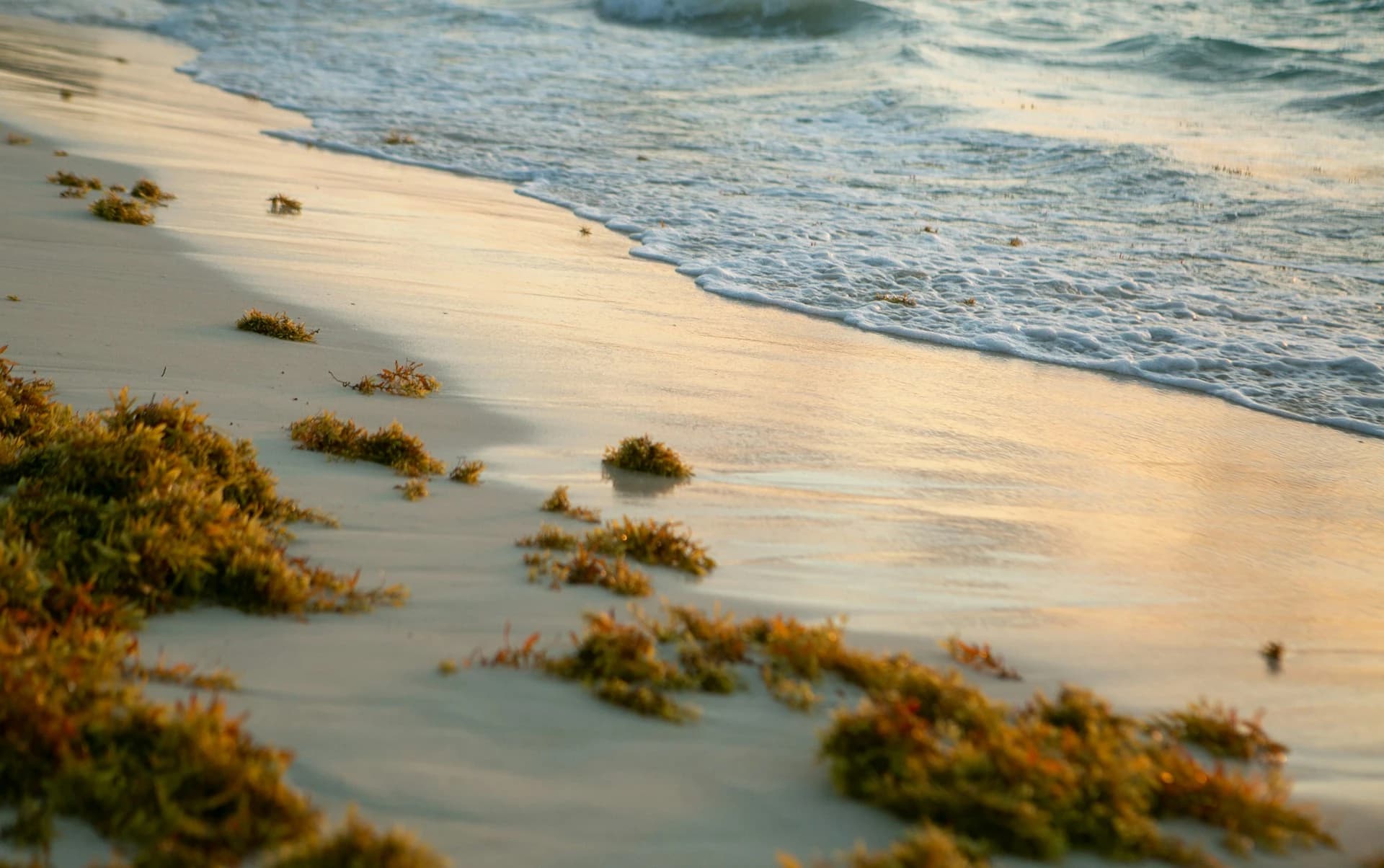
Sargassum seaweed washed up along a Caribbean beach in the Cancun Hotel Zone, Mexico
Travel Guide

Cancún Sargassum Season 2026: Month-by-Month Guide & Best Beaches

Written by: Cancun Trip Insider Team Content Last Updated June 2026 12 min read

Cancún's sargassum season runs roughly April to October and peaks June to August. This guide breaks down the season month by month, which beaches stay clearest, how resorts manage it, and how to track live conditions before your trip, with the 2026 outlook.

What You Should Know

  • Cancún's sargassum season runs roughly from April to October, with the heaviest seaweed landings typically from June through August; November to March is usually clean, though 2026 saw unusually early arrivals in January and March.
  • Location matters more than timing: the north Hotel Zone (Playa Caracol, Playa Langosta, Punta Cancún) faces the lagoon and north and stays far clearer than the open-Caribbean south Hotel Zone, while Isla Mujeres' Playa Norte and Cozumel are the most reliably sargassum-free beaches in the region.
  • Sargassum does not cancel most tours: boat trips depart into clean offshore water, so snorkeling, catamaran, and whale shark tours run normally even on heavy beach days; the main impact is the look and smell of the shoreline.
  • Major all-inclusive resorts run daily beach crews and offshore barriers; on the same stretch of coast, a resort that rakes its sand every morning can feel completely different from a budget hotel that does not.

What Is Cancún Sargassum Season?
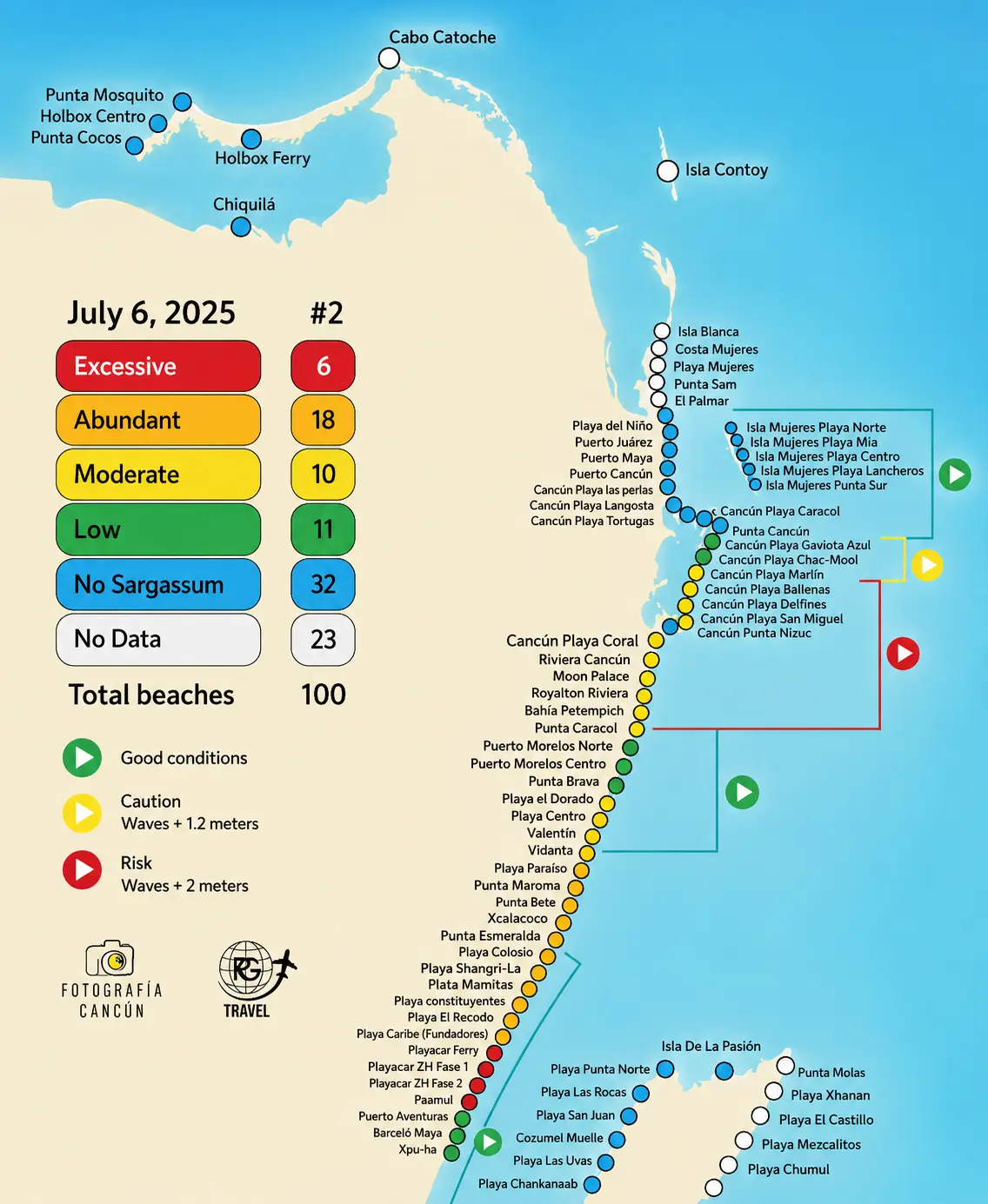
Sargassum conditions map of the Mexican Caribbean: beach-by-beach seaweed levels for Cancún, Playa del Carmen, Puerto Morelos, Isla Mujeres, Cozumel, and Holbox
Sargassum conditions map for Cancún, Playa del Carmen, Puerto Morelos, Isla Mujeres, Cozumel, and Holbox showing beach-by-beach seaweed levels across the Mexican Caribbean on July 6, 2025. Beaches are categorized from No Sargassum and Low to Moderate, Abundant, and Excessive accumulation, helping travelers identify the cleanest beaches and areas most affected by sargassum.

Cancún's sargassum season is the stretch of the year when large rafts of brown seaweed drift in from the Atlantic and wash up along the Caribbean coast. Sargassum is a free-floating algae that grows in the open ocean; since 2011 a vast bloom known as the Great Atlantic Sargassum Belt has stretched from West Africa to the Gulf of Mexico, and ocean currents push a share of it onto the beaches of Cancún, the Riviera Maya, and the wider Mexican Caribbean each year. Floating offshore and freshly arrived it forms golden-brown mats you can swim around; once it lands and decomposes on the sand, it darkens and gives off a sulfur, rotten-egg smell.

The season is predictable in broad strokes but variable week to week. It generally begins in April, builds through May, peaks from June to August, and eases through September and October before the beaches clear for the November-to-March dry season. How much arrives on any given day depends on wind, currents, and the size of that year's bloom, which is why two trips a week apart can look completely different. This guide covers the month-by-month pattern, which Cancún beaches stay clearest, how resorts and the government manage it, the 2026 outlook, and how to check live conditions before you travel. For the wider seasonal picture, our guide to the best time to visit Cancún weighs sargassum against weather, crowds, and prices month by month.

Cancún Seaweed Season vs Sargassum Season

If you have been searching for the Cancún seaweed season, you are looking for the same thing as the sargassum season: the two terms are used interchangeably. Sargassum is the specific type of brown seaweed that drifts in from the Atlantic and washes up on the beaches, so "Cancún seaweed" and "Cancún sargassum" describe the same phenomenon. Most travelers call it the seaweed problem in Cancún, while scientists, resorts, and local authorities use the precise name, sargassum.

Everything in this guide applies whichever term you use. The Cancún seaweed months line up exactly with the sargassum season: minimal from November to April, building through May, and peaking from June to August. The Cancún seaweed forecast for any given week comes from the same satellite data that tracks sargassum, covered in the 2026 outlook and tracking sections below. And the seaweed on Cancún beaches is concentrated on the open-Caribbean south Hotel Zone, while the north-facing beaches and Isla Mujeres stay clearest. In short, if you have read about a seaweed problem in Cancún, it is sargassum, and the timing, beaches, and planning advice are identical.

Cancún Sargassum Season Month by Month

Here is the typical sargassum pattern through the year. Treat it as the baseline, not a guarantee: a heavy-bloom year shifts the whole curve up, and individual weeks swing with the wind. The clean window is November through April; the peak is June through August.

Month Typical Level What to Expect
JanuaryMinimalUsually clean dry-season beaches; 2026 brought an unusual early patch, so check conditions
FebruaryMinimalAmong the cleanest beaches of the year
MarchLowGenerally clean, but the first rafts can appear late in the month (they did in 2026)
AprilLow to moderateSeason begins; often still good in early April, building later
MayModerate to highRamps up and can land in significant volume, especially late May
JuneHigh (peak)One of the two heaviest months; daily accumulation is common
JulyHigh (peak)Typically the heaviest month alongside June
AugustHigh, easing latePeak continues; often improves in the final week or two
SeptemberModerateEases through the month, but still present and variable
OctoberLow to moderateClearing as the dry season approaches
NovemberMinimalBeaches clean again; one of the best beach months of the year
DecemberMinimalClean through the holidays

ℹ️ Levels are seasonal averages. Conditions change week to week with wind and currents, so check live conditions close to your travel dates (see the tracking section below).

For month-specific detail, each of our month guides includes a current sargassum section: the peak months are covered in our Cancún in June, July, and August guides, while Cancún in November covers the clean post-season window.
2026 Cancún Sargassum Forecast

2026 is shaping up to be a heavy sargassum year. The University of South Florida's Optical Oceanography Lab, which tracks the bloom by satellite, recorded the Great Atlantic Sargassum Belt at a record 37.5 million tons in 2025 and reported the belt continuing to grow into 2026, with an estimated 28.9 million metric tons across monitored regions in May alone. Their outlook flags 2026 as a potential record year for the Mexican Caribbean, with arrivals running above average and starting earlier than usual, confirmed on parts of the coast as early as January and March.

For travelers, a heavy-bloom year does not mean every beach is buried every day. It means more frequent and larger landings during the June-to-August peak, and a higher chance of seaweed outside the usual window. Our take: the practical response is the same as any year, only more so. Favor the naturally protected north-facing beaches, choose a resort with an active beach-cleaning program, and check live conditions in the days before you travel. For the underlying satellite data, the University of South Florida Optical Oceanography Lab publishes regular sargassum outlook bulletins for the Atlantic and Caribbean.

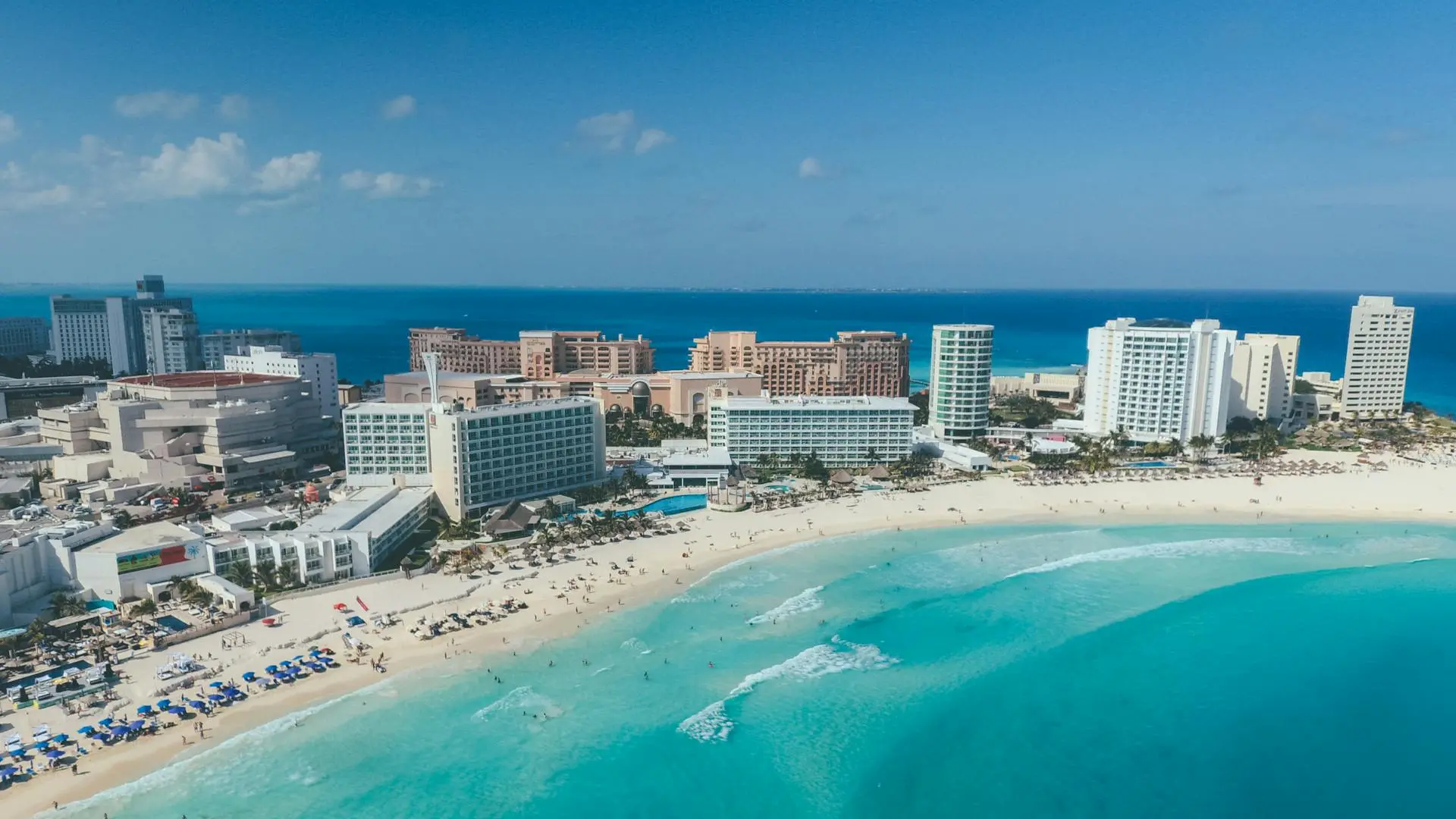
Sargassum is not evenly distributed. The single biggest factor is which way a beach faces: north- and lagoon-facing shores are sheltered from the incoming Atlantic rafts, while open-Caribbean, east- and south-facing beaches take the brunt. In a heavy year, choosing the right stretch of coast matters as much as choosing the right month.

Destination Sargassum (Seaweed) Risk
North Hotel Zone (Cancún)Low
South Hotel Zone (Cancún)High
Isla Mujeres (Playa Norte)Very Low
Cozumel (west coast)Very Low
Playa del CarmenHigh
TulumVery High

North Hotel Zone (clearest)

The north end of the Hotel Zone, including Playa Caracol, Playa Langosta, Playa Tortugas, and the Punta Cancún curve, faces north and the lagoon rather than the open Caribbean. This is the most naturally protected stretch in Cancún, and we'd make it our base in a heavy sargassum year, since the north-facing shore takes the least of the incoming seaweed, with the calmest water and the least accumulation.

South Hotel Zone (most affected)

The long southern strip, including the photogenic Playa Delfines, faces the open Caribbean head-on and collects the most sargassum during the peak months. The beaches are wide and beautiful when clear, but they are the first to show heavy landings when the rafts arrive.

Isla Mujeres: the clean-beach escape

Playa Norte on Isla Mujeres faces the sheltered western side of the island and is consistently among the most sargassum-free beaches in the entire region. We'd treat a ferry day trip to Playa Norte as the reliable fallback for a clean, calm swim on a bad beach day in Cancún. Our Isla Mujeres guide covers how to plan the day.

Beyond Cancún

Cozumel's west coast is sheltered by the island itself and usually stays clear. Playa del Carmen and especially Tulum sit on open, south- and east-facing coast with no offshore reef to break up incoming rafts, which makes Tulum the hardest-hit major beach destination in the region during peak season.

What Sargassum Is Actually Like on the Ground

Freshly arrived and floating, sargassum is a golden-brown weed that you can swim around; it is harmless to touch, though thick mats can hide tiny stinging organisms, so most people prefer not to wade through them. The real issue is on land. Once it piles up and bakes in the sun, it decomposes within a day or two and releases hydrogen sulfide, the rotten-egg smell that carries down the beach. Heavy accumulation also turns the shore-break water murky brown and makes wading in for a swim or a snorkel unappealing.

None of this reaches the deeper offshore water, which is why boat tours are unaffected. On a bad day the experience is aesthetic and olfactory rather than dangerous: the beach looks and smells off, but the resort pools, the offshore water, and the tours are all fine. The seaweed is also a natural part of the marine ecosystem, not pollution, which is part of why clearing it is a daily management task rather than a one-time fix. Most people don't realize the smell, not the sight, is usually the bigger downside: a thin band of weed photographs poorly, but the rotten-egg odor on a hot, heavy day is what actually keeps people off the sand.

How Cancún Manages Sargassum

Quintana Roo runs one of the most active sargassum-management operations in the Caribbean, and it works on three levels. Offshore, the Mexican Navy deploys sargasso-collecting vessels and kilometers of floating barriers, called booms, to intercept rafts before they reach the sand. On the beach, the state and municipalities run cleaning brigades that rake and haul away what lands. And at the property level, major all-inclusive resorts employ their own daily beach crews who clear their stretch each morning, often before guests are awake.

That last layer is why two hotels on the same beach can offer completely different experiences: a resort with dedicated crews can keep its sand clear on a day when an unstaffed beach next door is covered. If beach quality matters to you in a heavy year, we'd confirm the resort's cleaning program directly before booking. What matters more than a resort's star rating is whether it runs a daily beach crew, since a modest hotel with a diligent morning team can beat a luxury property without one on any given day. Our guide to the best all-inclusive resorts in Cancún notes which properties have the strongest beach operations, since the large, well-staffed resorts clear their beachfront fastest.

From Our Experience

What we consistently see is that travelers who treat sargassum as a location-and-logistics question rather than a yes-or-no question have the best trips: they book a north-end resort with a beach crew, keep one Isla Mujeres or boat day in the plan for guaranteed clean water, and check a live tracker the week before instead of worrying about the seasonal average months out.

How to Plan Your Cancún Trip Around Sargassum

  • If a pristine beach is the priority, travel in the clean season: November through April is reliably the clearest, with December through February the safest bet. Our Cancún in November guide covers the first clean post-season month.
  • Choose a north Hotel Zone hotel: the Playa Caracol to Punta Cancún stretch faces north and the lagoon, so it accumulates far less than the open-Caribbean south end.
  • Pick a resort with daily beach crews: in a heavy year this matters more than the exact location. Confirm the property clears its beach every morning before booking.
  • Keep a boat day or Isla Mujeres day in the plan: offshore water is unaffected, so a snorkeling tour or a ferry to Playa Norte guarantees clean swimming even on a heavy beach day.
  • Do not cancel tours over a beach report: snorkeling, catamaran, and whale shark trips depart into clear offshore water and run normally regardless of what is on the shoreline.
  • Use the resort pools on the worst days: a band of seaweed on the sand does not touch the pool deck, and most large resorts have several pools.
  • Check live conditions one to two weeks out: the seasonal average is a planning tool, but dated beach photos and satellite outlooks close to your trip are far more accurate.

Most Popular Tours

Loading tours…

How to Track Cancún Sargassum Before You Go

Because conditions change week to week, the best move is to check live, dated information close to your trip rather than relying on the seasonal average. A few reliable sources work together well:

  • Satellite outlooks: the University of South Florida Optical Oceanography Lab publishes regular sargassum outlook bulletins for the whole Atlantic and Caribbean, which show how much is offshore and where it is headed.
  • Daily dated beach photos: regional sargassum-monitoring sites and Facebook groups post same-day photos from specific stretches of the Hotel Zone, which is the closest thing to standing on the beach yourself.
  • Hotel social media and recent reviews: a property's recent posts and the latest guest reviews often show the actual beach in the past few days.

Cross-checking a satellite outlook against same-week beach photos gives the most accurate read. For month-by-month context to pair with the live data, our seasonal guides each carry a current sargassum section, and our best time to visit Cancún guide sets sargassum alongside the other factors that shape when to go.

Frequently Asked Questions

When is sargassum season in Cancún?+

Cancún's sargassum season runs roughly from April to October, with the heaviest seaweed landings typically from June through August. November through April is usually clean, with December, January, and February the most reliably clear. The exact timing shifts year to year with the size of the Atlantic bloom; 2026 saw unusually early arrivals in January and March.

What months have the least sargassum in Cancún?+

November through April are the cleanest months, and December, January, and February are the safest bets for a clear beach. These dry-season months also bring the most reliable weather, which is why late November through April is widely considered the best time to visit Cancún for beach quality.

Which Cancún beaches have the least sargassum?+

The north Hotel Zone (Playa Caracol, Playa Langosta, Playa Tortugas, and the Punta Cancún curve) faces north and the lagoon and stays the clearest in Cancún. Isla Mujeres' Playa Norte and Cozumel's west coast are the most reliably sargassum-free beaches in the wider region. The open-Caribbean south Hotel Zone, Playa del Carmen, and Tulum are the most affected.

Is sargassum dangerous?+

Sargassum itself is harmless to touch and is a natural part of the marine ecosystem, not pollution. The downsides are practical rather than dangerous: thick floating mats can hide tiny stinging organisms, and once the seaweed piles up and decomposes on the sand it releases hydrogen sulfide, the rotten-egg smell. People with respiratory sensitivities may find the smell bothersome on heavy days, but for most travelers it is an aesthetic and odor issue.

Does sargassum affect tours and activities in Cancún?+

No. Boat tours depart into clean offshore water that the seaweed does not reach, so snorkeling tours, catamaran cruises, whale shark trips, and island day trips run normally even on heavy beach days. The main impact of sargassum is limited to the shoreline, so there is no need to cancel water tours based on a beach report.

How bad will sargassum be in Cancún in 2026?+

2026 is forecast to be a heavy year. The University of South Florida's Optical Oceanography Lab recorded the Great Atlantic Sargassum Belt at a record 37.5 million tons in 2025 and reported it growing further into 2026, flagging the season as a potential record for the Mexican Caribbean with above-average, earlier-than-usual arrivals. A heavy year means larger, more frequent landings at the June-to-August peak, so favor north-facing beaches and a resort with an active beach-cleaning program.

Can you still swim in Cancún during sargassum season?+

Yes. Even at the peak you can swim in the resort pools, at the more protected north Hotel Zone beaches, on a boat tour in clear offshore water, or on a ferry day trip to Isla Mujeres' Playa Norte. Heavy sargassum makes shore entry on the open-Caribbean beaches unappealing on bad days, but it does not close the water, and major resorts clear their beachfront daily.

Affiliate note: Some links on this page are affiliate links. If you book through them, we may earn a small commission at no additional cost to you.

Other Popular Tours & Experiences You Might Like

Loading tours…