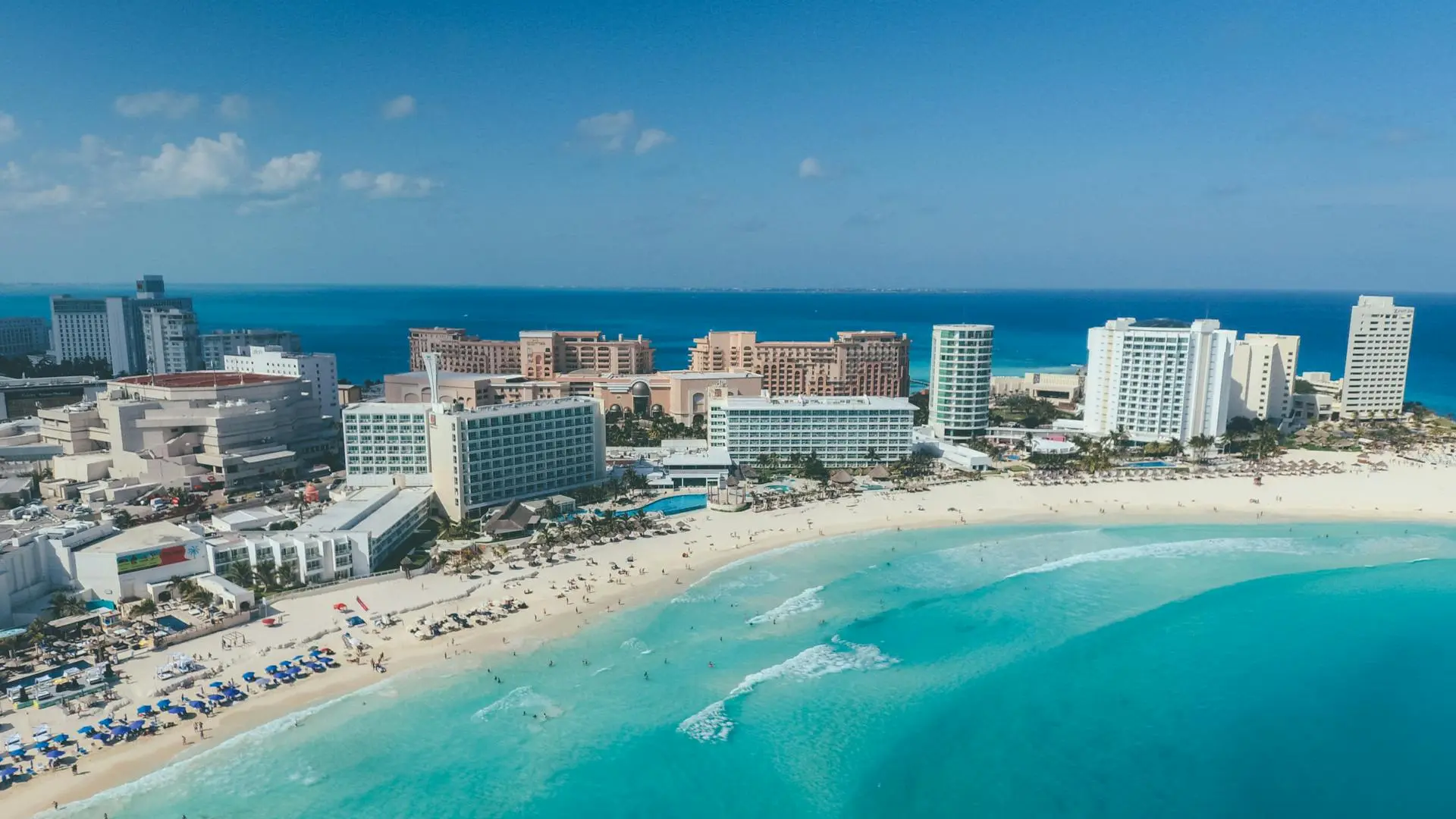
August combines peak whale shark season with the highest family crowds of summer. The late-August crowd drop as US schools resume is one of the most underrated windows in the Cancún calendar.
What You Should Know
- Whale shark season remains at peak through August: the aggregation north of Isla Mujeres maintains July-level concentrations through mid-to-late August before gradually dispersing toward the September season close. Sighting rates stay above 90% on permitted departures throughout the month.
- Late August (roughly August 18–31) is one of the most underrated windows in the Cancún calendar: US schools resuming causes a rapid demand drop while whale shark aggregations remain fully active. Travelers arriving from August 18 onward get peak wildlife conditions with 15 to 20% lower prices and noticeably quieter facilities than early August.
- August is the highest-crowd month of summer: early-to-mid August sees US and European families simultaneously in peak vacation mode, which is the busiest the Hotel Zone gets outside of Christmas and spring break. Whale shark tours fill 10 to 14 days ahead in this window.
- Sargassum shows its first meaningful improvement in the second half of August: late August and September typically see lower Hotel Zone accumulation than June and July, though it remains a factor on some southern beaches. Improvement is gradual, not sudden.
Cancún in August: The Honest Picture
⭐ Best August window: August 18–31. US school returns (typically August 18–25 for most districts) cause a rapid drop in Hotel Zone demand while whale shark aggregations remain fully active. Prices dip below early-August rates, facilities are noticeably quieter, and sargassum is often beginning to ease. If dates are flexible, late August is the best-value entry into peak whale shark conditions.
| Factor | August Rating |
|---|---|
| Weather | 6/10 — hot and humid, daily afternoon showers |
| Crowds | 5/10 — peak family crowds early month; drops late August |
| Prices | 8/10 — summer low but slightly above June and July; dips late August |
| Beaches | 5/10 — sargassum medium-high, beginning to ease in second half |
| Snorkeling & Diving | 8/10 — warm water, reef excellent, sargassum improving late month |
| Sargassum | 4/10 — medium-high early month; gradual improvement from mid-August |
| Whale Sharks | 9/10 — peak season continuing; season approaches close in mid-September |
| Families | 8/10 — peak family month, whale sharks excellent, beach planning still needed |
| Couples | 7/10 — whale sharks still peak, higher crowds than July, late August quieter |
💰 Average August hotel prices (Hotel Zone, 4-star all-inclusive):
Early August (1–17): ~$165/night · Late August (18–31): ~$145/night
Rough mid-range estimates; rates vary by property and booking lead time.
| Month | Crowds | Prices | Weather | Beaches | Overall |
|---|---|---|---|---|---|
| July | 6/10 | 9/10 | 6/10 | 4/10 | 9 ★ whale sharks |
| August | 5/10 | 8/10 | 6/10 | 5/10 | 8 ★ whale sharks |
| September | 10/10 | 10/10 | 4/10 | 7/10 | 7 |
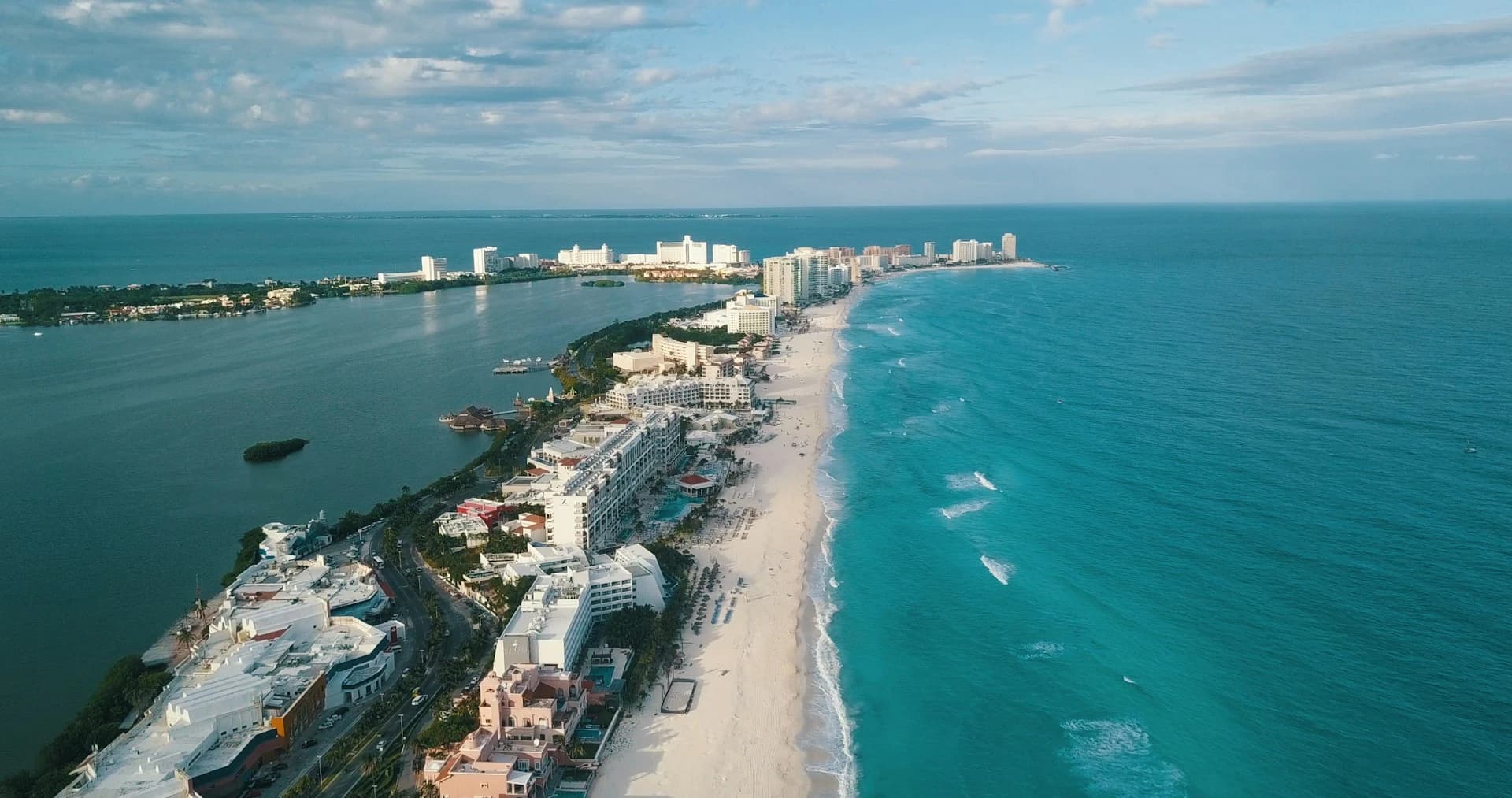
August is the month where Cancún's summer dynamic reaches maximum intensity before it begins to unwind. Early August packs the Hotel Zone with US and European families simultaneously, the busiest the destination gets outside of Christmas and spring break. And yet sitting inside that busy first half is the same peak whale shark season, the same summer low pricing, and the same warm water that makes July so compelling.
The late-August transition is what makes August worth understanding precisely. Around August 18 to 25, US school calendars cause demand to fall noticeably: hotel occupancy drops, restaurant queues shorten, and tour availability opens up. Whale shark aggregations do not respond to the school calendar; they remain fully active. The traveler who arrives on August 20 instead of August 5 pays less, encounters fewer crowds, and gets an identical whale shark experience.
We'd lean toward late August for travelers with flexible dates, and toward early August only if the specific school holiday window is fixed. The whale shark quality is the same throughout; the surrounding experience is meaningfully better in the second half of the month.
Most Popular Tours
Compare and Book the Top Cancún Tours in August
These are the six tours we shortlist for Cancún in August. Compare live options below, then book our August pick, the three hidden cenotes tour, directly.
Cancún Weather in August
Temperature and Humidity
August weather is functionally identical to July: daytime highs of 30 to 32°C (86 to 90°F) with high humidity and a feel-like temperature of 35 to 39°C in full midday sun. The heat pattern is the same; the daily structure that works in July works in August. Morning activities before 10 AM and on-water or underground experiences from midday onward remain the right approach.
Evenings are warm at 25 to 27°C with the sea breeze providing relief along the Hotel Zone. Unlike the gradual cooling that begins in October, August evenings are indistinguishable from July. Sunset and post-sunset hours are the most comfortable outdoor time of day.
Rain Pattern
August sits within the core of the wet season, with afternoon thunderstorms arriving on most days between 1 and 5 PM. The rain is typically intense but short (30 minutes to 2 hours) before clearing. Mornings remain predominantly clear, which is why whale shark departures, ruins tours, and outdoor activity operators consistently schedule around the morning window.
August can see heavier multi-hour rain events more frequently than July, particularly in the second half as the Atlantic storm season becomes more active. These are distinct from the brief afternoon showers: occasional slow-moving systems can bring a full overcast day with persistent rain. This is the exception rather than the rule in August, but it is worth noting as a difference from the more predictable July pattern.
Sea Conditions
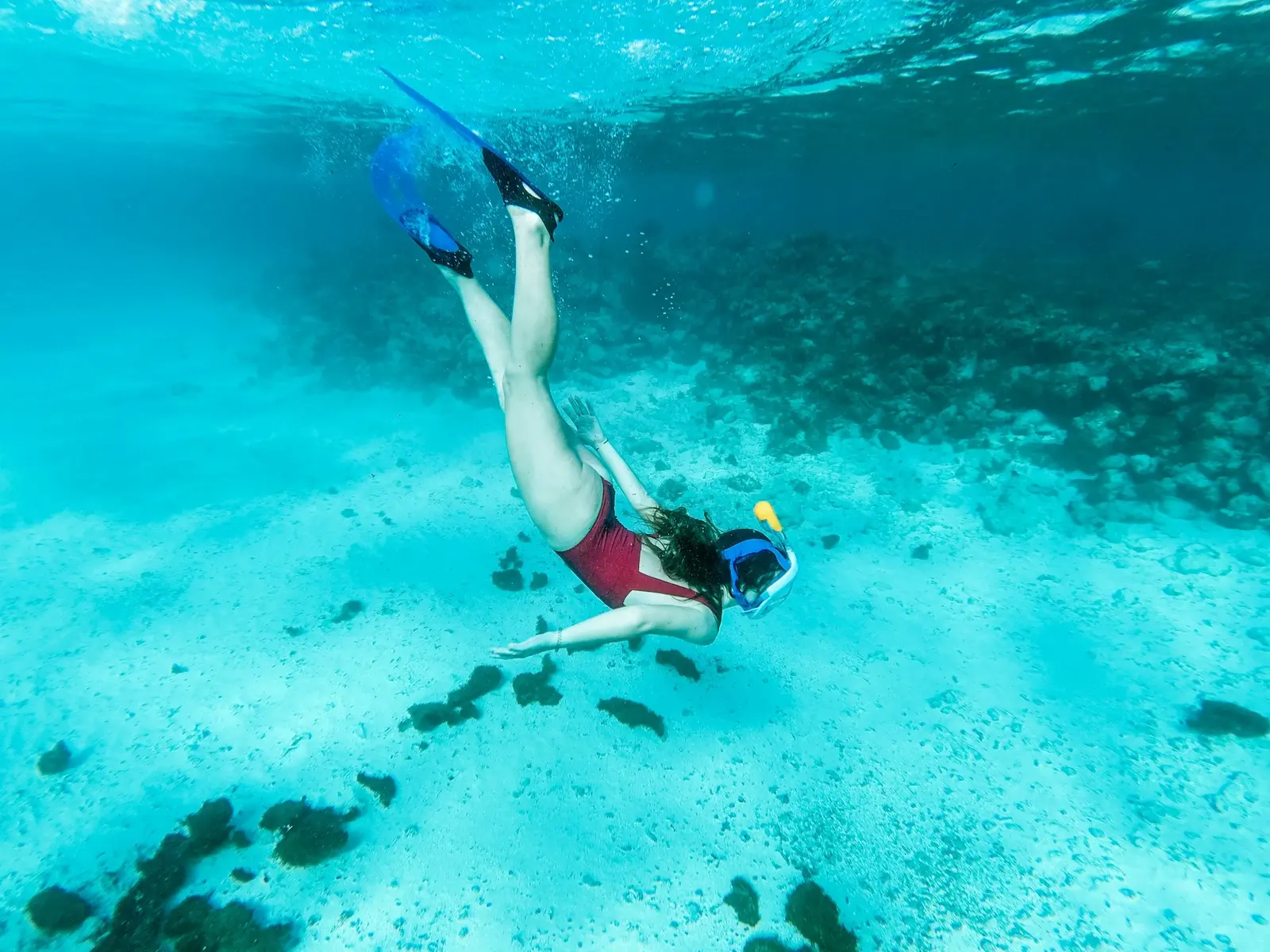
Sea temperature remains at 29 to 30°C throughout August, the warmest water of the year, shared with July. Morning conditions on the Caribbean side are calm and well suited to snorkeling and diving. Afternoon swells build with the daily weather pattern. Visibility at Cozumel and Puerto Morelos reef sites stays strong; as with July, sargassum floats on the surface rather than distributing through the water column, keeping reef-depth visibility excellent throughout the month.
Crowds and Prices in August
Early August is the single most crowded window of Cancún's summer. US families who could not travel in July (due to school camps, July 4 commitments, or later school-release dates) combine with European families in their peak summer holiday period. Hotel Zone occupancy in the first two weeks of August runs at its highest summer levels, activity operators book furthest ahead, and restaurants fill on weekday evenings as well as weekends.
The August 18 to 25 inflection point changes this rapidly. Most US school districts resume in this window; by August 20, occupancy has dropped measurably at major Hotel Zone properties and availability opens across tour departures. This is not a gradual seasonal drift, it is a sharp, calendar-driven shift driven by school schedules. Travelers who understand this and position their arrival in the August 18 to 31 window get a materially quieter Hotel Zone experience at prices that are often $20 to $30 per night lower than early August.
Pricing overall: early August runs roughly $160 to $175 per night for a 4-star all-inclusive, the highest point in the summer low tier, pushed up by peak family demand. Late August drops to $140 to $155 as demand falls. Both figures remain well below peak dry-season rates ($220 to $280 in January) and dramatically below spring break ($320 to $400).
What we'd give the edge to late August for: the same whale shark conditions, the same warm water, lower prices, and the quietest Hotel Zone feel you will get during peak whale shark season. The tradeoff, slightly higher hurricane risk and potentially heavier rain events, is real but manageable with travel insurance and flexible scheduling.
Whale Sharks in August
August is the second peak month of whale shark season. The aggregation that reached its maximum in July maintains strong concentrations through late August, with a gradual dispersal beginning as the season approaches its September close. Sighting rates on permitted departures stay above 90% throughout August, statistically indistinguishable from July for most travelers' purposes.
What changes through August compared to July:
- Early August (1–17): conditions are effectively identical to late July. The aggregation is fully active, groups are large, and sighting rates are at their annual peak. Book 10 to 14 days ahead for these dates.
- Mid-to-late August (18–31): aggregations remain strong but the gradual seasonal shift toward September dispersal means group sizes are occasionally smaller than July peak. Sighting rates remain well above 90%. Booking lead time drops to 7 to 10 days as demand falls with US school returns.
- Late August value case: the whale shark experience in the last two weeks of August is functionally the same as peak July, but with lower prices, fewer competing boats, and a more relaxed departure atmosphere. What typically happens is that travelers who book late August expecting a reduced experience are surprised by how strong the encounters remain.
Key logistics remain the same as July: departures at 5 to 6:30 AM from Cancún; 60 to 90-minute open-water transit north of Isla Mujeres; two in-water sessions regulated by CONANP permit rules (8 swimmers maximum per shark); reef snorkeling near Isla Mujeres; ceviche lunch on the return; back to dock by 2 to 3 PM. Total 7 to 9 hours.
Booking for August: if traveling in early August, apply the same 10 to 14-day lead time used for July. For late August, 7 to 10 days ahead is usually sufficient, though booking earlier gives more departure time flexibility. Ask about group size on the boat; smaller passenger counts still matter for in-water time quality in August as much as in July.
For the full operator comparison and what to bring, see our Cancún whale shark tour guide. For September (the final month of the season) our Cancún in summer guide covers the season-close dynamics.
Sargassum in August
August brings the first genuine improvement in Hotel Zone sargassum since May. The Atlantic sargassum belt, which peaked in biomass in May and June, begins a gradual decline through August, and the reduction becomes noticeable on some Hotel Zone beaches from mid-month. This is not a sudden transformation: late August beaches are still affected, particularly on the southern Hotel Zone stretch, but the trend is clearly in the right direction.
What to expect by time of month:
- Early August (1–15): sargassum levels comparable to late July, high on Caribbean-facing Hotel Zone beaches, better on northern stretches, cleanest at Isla Mujeres and Isla Holbox. The same hotel location guidance from July applies: northern Hotel Zone preferred for beachfront access.
- Late August (16–31): gradual improvement becomes noticeable on some stretches, particularly northern Hotel Zone beaches. Southern Hotel Zone and Playa Delfines are still affected but accumulation is typically declining rather than peaking. Isla Mujeres and Isla Holbox continue to offer the cleanest conditions for dedicated beach days.
The trajectory is worth understanding for planning purposes: travelers arriving in late August are at the beginning of sargassum's improvement arc. September and October will be consistently better. But late August is meaningfully different from June and July in terms of direction, conditions are improving, not worsening or static.
Underwater quality at reef sites is unchanged: Cozumel and Puerto Morelos remain excellent throughout August, unaffected by surface sargassum. If snorkeling or diving is a priority alongside whale sharks, August conditions at reef sites are among the best of the year in terms of warm water combined with improving surface conditions at shore-entry points.
Check the University of South Florida sargassum tracker 10 to 14 days before an August arrival. For late August trips, the forecast often shows the improvement trajectory clearly and confirms which Hotel Zone stretches are clearing first.
The Best Activities in Cancún in August
August activity planning mirrors July closely: the whale shark tour anchors the itinerary, underground and on-water activities handle the heat, and outdoor archaeology is viable only with the earliest departures. The key August difference is crowd management: early August requires more advance booking across all popular activities; late August sees a rapid opening of availability that makes spontaneous booking feasible again.
| Activity | August Rating | Best Time of Day | Notes |
|---|---|---|---|
| Whale shark tour | 9/10 | 5–6:30 AM departure | Peak season continuing; 10–14 days ahead early Aug; 7–10 days ahead late Aug |
| Isla Holbox day trip or overnight | 10/10 | Full day | Cleanest beaches of any accessible option; whale shark proximity; less crowded than Hotel Zone |
| Cenote visits | 10/10 | Any time (ideal midday) | Peak heat contrast; best midday anchor in August as in July |
| Rio Secreto underground river | 10/10 | Any time (ideal midday) | 14°C cave against 31–32°C surface; maximum contrast effect |
| Sunset catamaran cruise | 8/10 | Late afternoon | Warm evenings; advance booking important early August; easier late August |
| Hip hop boat party | 9/10 | Afternoon/evening | Peak party atmosphere; popular in family summer month; book early August in advance |
| Cooking class | 9/10 | Morning | Air-conditioned; excellent heat escape; best indoor activity in August |
| Scuba diving (Cozumel, Puerto Morelos) | 8/10 | Morning | Excellent warm-water conditions; reef visibility strong throughout August |
| Isla Mujeres day trip | 8/10 | Full day | Cleaner beach than Hotel Zone; ferry less crowded late August |
| Snorkeling tours | 7/10 | Morning | Reef sites excellent; surface sargassum easing from mid-month at some entry points |
| ATV tours | 5/10 | 6–8 AM only | Steamy jungle; only viable with earliest departure available |
| Chichén Itzá | 4/10 | 6 AM departure only | Maximum summer heat; exposed site; 6 AM departure mandatory; Cobá better shaded |
| Tulum ruins | 3/10 | 7 AM departure | Hardest outdoor land activity in August; coastal exposure plus peak heat and humidity |
What August Does Well
The whale shark and cenote combination works exactly as well in August as in July. Most guests find that the experience of arriving at the aggregation in early morning light, spending time in the water, then retreating to an underground cenote in the afternoon is the ideal structure for both months. August adds a dimension July does not have: the late-month transition, when the crowd level drops and the same itinerary becomes more relaxed throughout.
Isla Holbox earns its 10/10 rating in August specifically because it combines the two things travelers most want: the cleanest available beach and the closest access to peak whale shark season. A 1 to 2-night Holbox base built into an August trip (timed around the whale shark departure and a beach day) is in our view the strongest single itinerary structure available in August.
Timing Around Early vs. Late August
The biggest difference in August is not the activity quality; it is the booking context around each activity. Early August requires treating whale shark tours like peak-season slots: 10 to 14 days' notice, limited flexibility on departure time. Late August, from around the 18th onward, functions more like late June: boats have availability, restaurants have walk-in tables, and sunset catamarans can often be booked the day before. The experience improves not because the activities change but because the surrounding logistics become less pressured.
Most Popular Tours
More August Activities Worth Knowing About
Several experiences are particularly well suited to August conditions:
- Isla Holbox whale shark base: Holbox-based whale shark operators depart earlier and reach the aggregation area faster than Cancún-based tours, cutting the open-water transit by 30 to 45 minutes. In a month where conditions can shift mid-morning with summer weather, the shorter transit is a meaningful practical advantage. A 2-night Holbox base incorporating a whale shark day, a beach day, and the Holbox village experience is the strongest August itinerary structure for travelers who prioritize both the wildlife encounter and genuinely clean beach conditions. See our Isla Holbox travel guide for transfer details.
- Isla Contoy full-day tour: Isla Contoy's remote protected status means less sargassum accumulation than the Hotel Zone, excellent snorkeling, and an uncrowded natural setting that is a strong counterpoint to the busy Hotel Zone in early August. Daily visitor limits mean booking 3 to 5 days ahead in early August; late August availability typically opens to 1 to 2 days' notice. See our Isla Contoy tour guide for full details.
- Cozumel dive day: August's warm water and strong reef visibility at Cozumel make it one of the year's best months for a Cozumel diving day. Palancar Reef, Columbia Wall, and Santa Rosa Wall all benefit from 29 to 30°C water, and the dive sites are less congested in August than in January through April peak season. Wall diving in warm water with good visibility is a different experience from the same sites in cooler months.
- Cenote circuit day trip: a multi-cenote day (combining open, semi-open, and underground cenote types) is one of August's strongest full-day options because the heat contrast at peak summer temperatures is more vivid than at any other time of year. The Valladolid circuit, combining Ik Kil, Suytun, or Dzitnup with a meal in Valladolid town, works as a standalone day that does not require the full Chichén Itzá commitment. For travelers who want the cenote experience without the exposed archaeology site, this is the August-appropriate alternative.
- Late-August yoga retreats and wellness activities: the post-school-holiday drop in August creates genuine availability at Hotel Zone spa facilities, wellness centers, and yoga retreats that are booked through early August. Late August is one of the few times when these typically high-demand amenities have open slots at reasonable prices. For travelers building a mixed wellness and wildlife trip, the late-August window is when both the whale shark access and the spa availability align.
Most Popular Tours
From Our Experience
The late August window is consistently underbooked relative to its actual conditions. From around August 18, US school returns thin the crowds rapidly while whale shark aggregations remain at full peak. Travelers arriving August 18 to 31 are getting essentially the same whale shark experience as peak early August at lower prices and with noticeably quieter facilities throughout the trip.
Tips for Visiting Cancún in August
- If traveling early August, book whale shark tours 10 to 14 days ahead: early August has the same demand pressure as peak July. The whale shark departure anchors the itinerary; confirm it before booking flights and hotels. Late August bookings are more flexible, 7 to 10 days ahead is usually sufficient.
- Target late August if dates are flexible: August 18 to 31 gives you peak whale shark conditions with 15 to 20% lower hotel prices and a noticeably quieter Hotel Zone. The whale shark quality is functionally identical to early August; everything surrounding it is more relaxed.
- Plan a Holbox or Isla Mujeres beach day regardless of Hotel Zone sargassum: sargassum is improving in August but still present on many Hotel Zone stretches. Building one full day at Isla Mujeres or a Holbox overnight into the itinerary guarantees clean beach access as a planned experience rather than contingency.
- Take seasickness medication before the whale shark departure: the 60 to 90-minute open-water transit is a consistent source of issues for sensitive travelers, particularly if the previous evening included dinner and a late night out. Take medication the evening before or at least 1 hour before the 5 to 6:30 AM departure.
- Book cenotes or Rio Secreto as the midday anchor: August heat peaks between noon and 3 PM. Underground activities convert the most uncomfortable outdoor window into the most memorable experience of the day. Rio Secreto's 14°C cave is the most dramatic contrast available.
- Hurricane risk is higher in August than June or July: August sees more frequent Atlantic tropical system development, and the probability of a named storm affecting the Yucatán Peninsula is meaningfully higher than in earlier summer months. Travel insurance is essential in August, not optional. Book a policy that covers weather-related cancellation and delayed departure.
- Chichén Itzá and Tulum need the 6 AM departure: August heat and humidity at both sites is at or near its annual maximum. If the 6 AM Chichén Itzá slot is not available on your preferred date, Cobá is the better August archaeology alternative for its jungle canopy shade. Tulum is the hardest outdoor site in August and is best saved for October or November.
- Still deciding where to stay? Our guide to the best all-inclusive resorts in Cancún compares 15 hotels across the Hotel Zone, Playa Mujeres, and Costa Mujeres with honest picks for families and adults-only travelers.
- Exploring the wider Riviera Maya? Our Riviera Maya in August guide covers the whole corridor from Puerto Morelos to Tulum in the same month, including peak whale sharks, the late-August value window, and where to base yourself.
- Visiting at a different time of year? Our Cancún in July guide covers peak whale shark season with fewer crowds than early August. Our Cancún in September guide covers the season close, the year's cheapest prices, and why early September remains one of the best whale shark windows despite the hurricane risk. For the full summer picture, our Cancún in summer guide covers the complete June-to-September arc. For how August stacks up against the rest of the calendar, see our full guide to the month-by-month guide to visiting Cancún.
How We Put This Guide Together
This guide draws on multi-year whale shark season records from CONANP-permitted tour operators, historical sargassum accumulation patterns from the University of South Florida Caribbean sargassum tracking project, Hotel Zone pricing and occupancy patterns across August, and traveler reports from August visits across multiple years. The late-August crowd-drop timing reflects school calendar data for US school districts combined with operator-reported booking patterns. Activity ratings account for the distinction between early and late August conditions rather than treating the month as uniform.
Frequently Asked Questions
Is Cancún good in August?+
Yes, particularly for whale shark access and value. Whale shark season remains at peak through August, prices stay at summer low, and the late-August period (from around August 18) offers peak wildlife conditions with lower crowds and prices than early August. The tradeoffs: early August is the busiest period of summer, sargassum remains on Hotel Zone beaches (improving gradually in the second half), heat and humidity are at maximum, and hurricane risk is higher than in June or July. Late August is the strongest value window within the peak whale shark season.
What is the weather like in Cancún in August?+
August weather mirrors July: daytime highs of 30 to 32°C (86 to 90°F) with high humidity, afternoon thunderstorms most days between 1 and 5 PM, and warm nights at 25 to 27°C. Mornings are usually clear. Sea temperature stays at 29 to 30°C. August can see slightly heavier rain events than July, particularly in the second half as the Atlantic storm season becomes more active. Plan outdoor activities before 10 AM; underground cenotes and on-water experiences handle the midday slot best.
Are whale sharks available in August in Cancún?+
Yes, August is peak season. The aggregation north of Isla Mujeres maintains July-level concentrations through late August before gradual dispersal begins toward the September season close. Sighting rates stay above 90% throughout the month. Book 10 to 14 days ahead for early August; 7 to 10 days is usually sufficient for late August as demand drops after US school returns. The in-water experience is functionally identical to July throughout August.
Is sargassum bad in Cancún in August?+
Medium-high, and improving through the month. Early August sargassum levels are comparable to July; from mid-August, gradual improvement becomes noticeable on northern Hotel Zone beaches. Isla Mujeres and Isla Holbox offer cleaner conditions throughout. Reef snorkeling at Cozumel and Puerto Morelos is unaffected by surface sargassum. Check the University of South Florida sargassum tracker 10 to 14 days before travel; late August forecasts often show the improvement trajectory clearly.
Is August expensive in Cancún?+
No, but early August is slightly more expensive than June or July. Hotel rates for 4-star all-inclusives run roughly $160 to $175 per night in early August, dropping to $140 to $155 in late August as US school returns reduce demand. Both figures are well below peak dry-season rates ($220 to $280 in January) and dramatically below spring break pricing ($320 to $400). Late August is among the best-value periods for peak whale shark conditions.
What is the best week to visit Cancún in August?+
August 18 to 31. US school returns around August 18 to 25 cause a rapid demand drop while whale shark aggregations remain fully active. Hotel prices fall $20 to $30 per night compared to early August, facilities are noticeably quieter, and tour availability opens up. If dates are fixed in early August, the experience is still excellent, just plan whale shark tours 10 to 14 days ahead and expect a busier Hotel Zone atmosphere.
What activities are best in Cancún in August?+
Whale shark tours are the standout activity of August, with peak-season conditions throughout. Cenotes and Rio Secreto underground river are ideal for the midday heat slot. Sunset catamarans and boat parties work well in August's warm evenings. Scuba diving at Cozumel and Puerto Morelos remains excellent. Chichén Itzá and Tulum require the earliest available departures and are best saved for cooler months if the itinerary is flexible. Isla Holbox is the strongest single August addition for travelers who want both whale shark access and clean beach conditions.
Is there hurricane risk in Cancún in August?+
Yes, and meaningfully more than June or July. The Atlantic hurricane season peaks in September but August sees frequent tropical system development. The probability of a named storm affecting the Yucatán Peninsula is higher in August than in earlier summer months. Travel insurance is essential for August Cancún trips, not optional. Choose a policy that covers weather-related trip cancellation and delayed departure, the cost is minimal relative to the trip value.
Affiliate note: Some links on this page are affiliate links. If you book through them, we may earn a small commission at no additional cost to you.