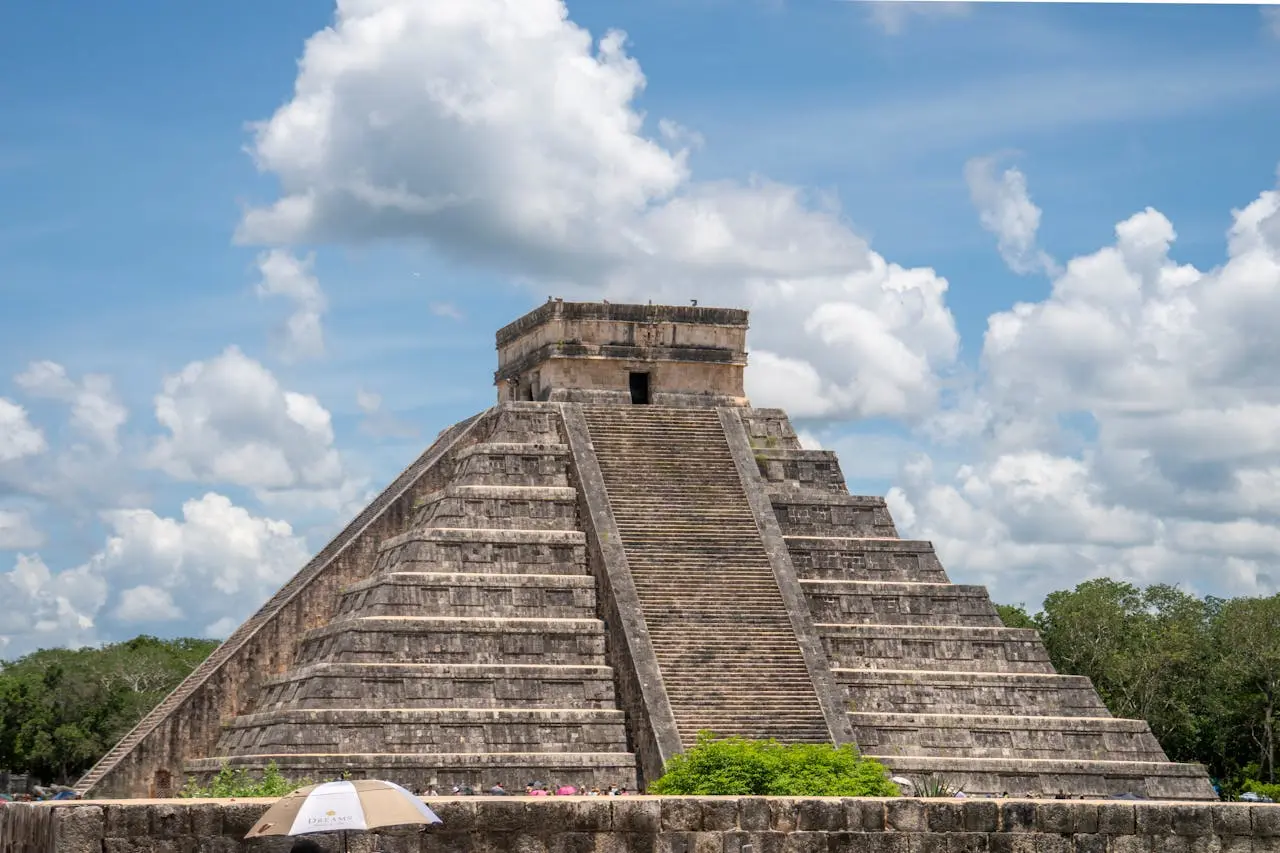
No, you cannot climb El Castillo at Chichén Itzá, and you have not been able to since 2006. Here is why, which nearby Maya pyramids you can still climb, what to wear for the heat and the rain, and every site rule on drones, tripods, food, water, umbrellas, bags and the cenote stop.
What You Should Know
- No structure at Chichén Itzá can be climbed, not just El Castillo. In April 2025 INAH widened the roped-off area around the pyramid, and people who have crossed the rope since have been escorted down and handed to police.
- Since March 27, 2026, every visitor enters through the new visitor center (CATVI), and you pass its artisan market on the way in. Vendors still work inside the site as well, so expect to say "no, gracias" a lot.
- Bring water and a hat or umbrella. Guests on recent tours keep saying there is almost no shade and nowhere to refill a bottle, and umbrellas are rented or sold near the entrance for about $5 to $7 USD.
- On most Cancún tours the cenote life jacket is mandatory and costs extra, and lockers are optional extras too. Rinse off your sunscreen before you swim.
Can You Climb Chichén Itzá? The Short Answer
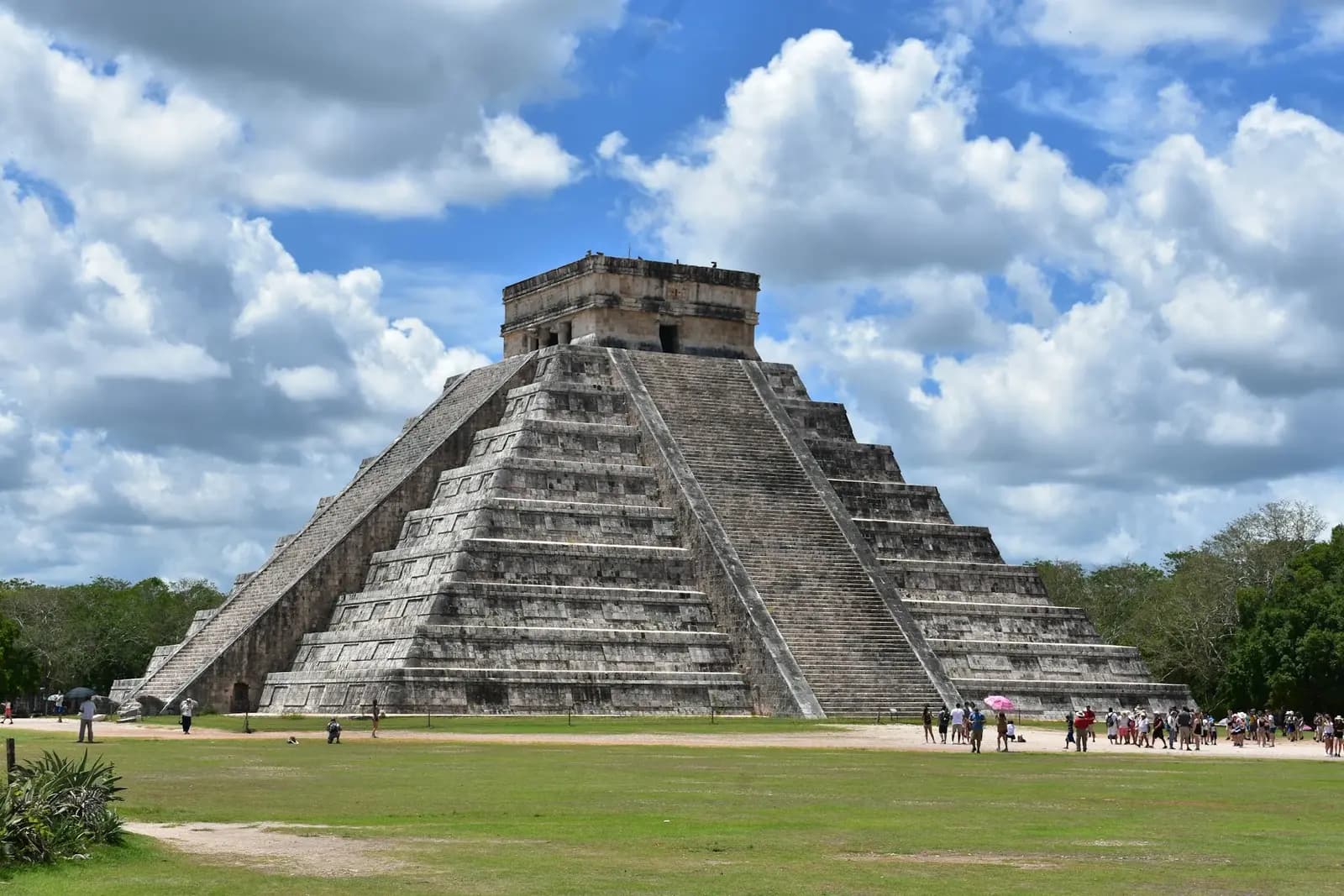
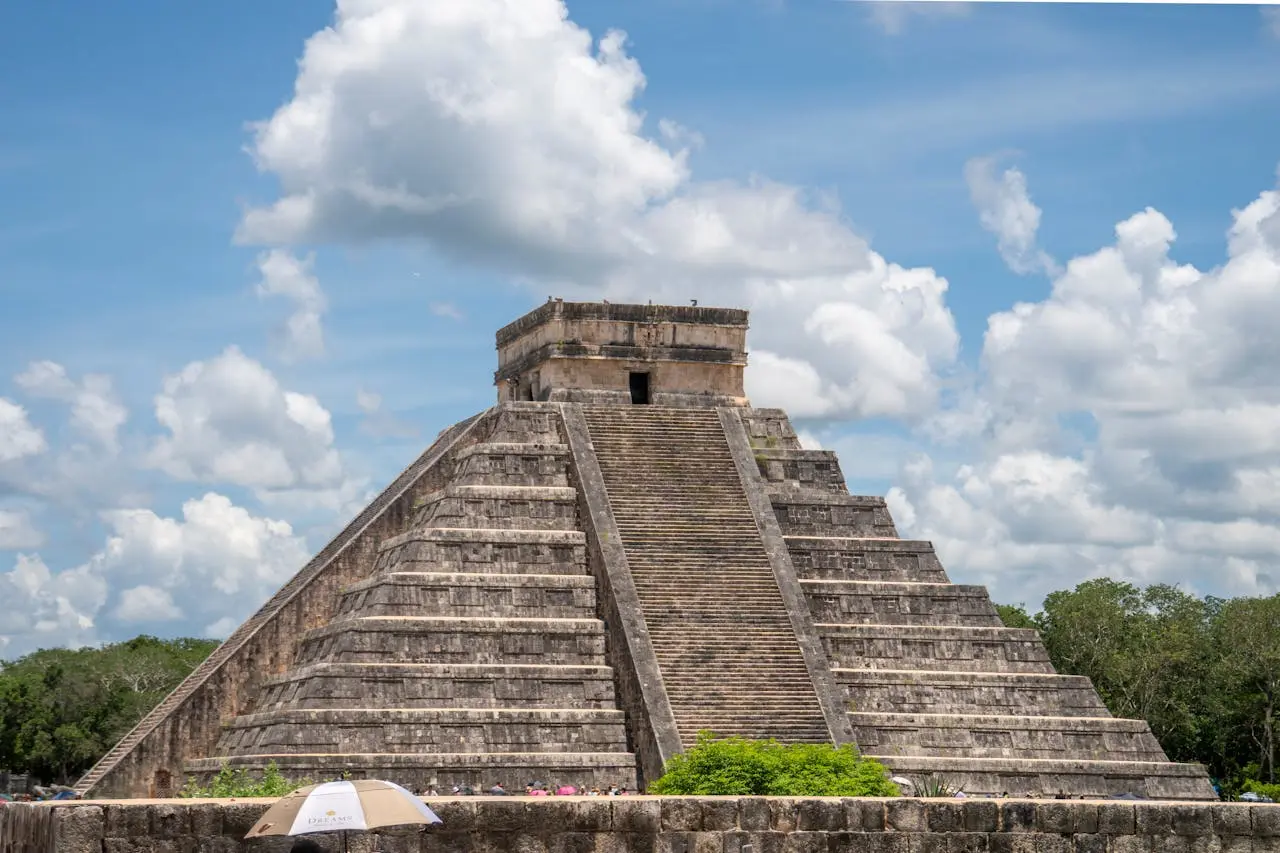
⭐ The short answer: No. You cannot climb El Castillo (the Temple of Kukulcán) or any other structure at Chichén Itzá. Climbing was stopped in 2006, the ban has been enforced ever since, and in April 2025 INAH, Mexico's national archaeology institute, widened the roped-off area around the pyramid. Anyone who climbs is escorted out and can be fined under federal monument law.
So can you climb Chichén Itzá in 2026? Not legally, and not without causing a scene. The stepped pyramid sits in the middle of an open plaza behind a rope line, with INAH custodians and, on busy days, National Guard officers watching it. The rule covers every building on the site, including the Temple of the Warriors, the Great Ball Court platforms and El Caracol (the Observatory). You walk around and between the buildings on marked paths, and you can go right up to the rope at El Castillo for photos.
If you are still deciding how to get there, our guide to Chichén Itzá tours from Cancún compares the day trips, what they include and how long the day really is. This page covers the rules once you are inside.
Why Can't You Climb Chichén Itzá Anymore?
For decades, climbing El Castillo was the main event of a Chichén Itzá day. Visitors hauled themselves up the steep, narrow steps and picked their way back down. Two things ended that: wear on the stone and the risk of falls.
The 2006 fall and the ban
In 2006 an elderly visitor fell to her death while coming down the steps, and climbing was stopped that year. You will see both 2006 and 2008 given as the start of the ban: Mexican press and the Riviera Maya News give 2006, while some outlets give 2008, the year the rule was formalised. Either way, nobody has been allowed up legally for close to 20 years.
The official reason INAH gives today is conservation. Millions of feet a year were polishing and cracking the limestone treads, and the stairways had become a safety risk. Chichén Itzá is a UNESCO World Heritage Site and, since 2007, one of the New Seven Wonders of the World, and it still draws close to a million visitors in six months, so reopening the steps is not on the table.
What happens to people who climb it now
People still try, and it usually goes badly for them:
- November 2022: a woman stepped over the rope, climbed to the top and danced on the stairs. On the way down, the crowd booed her, threw water and pulled her hair, and she was handed to municipal police in Pisté. INAH said the monument was not damaged. (This is the viral "Lady Chichén Itzá" video, often misdated to 2023.)
- March 2025: during the equinox crowds, two foreign tourists got past security in separate incidents. A 38-year-old German man reached the top, was struck by someone in the crowd and arrested.
- May 2026: video of visitors climbing again circulated in the Mexican press. Security made them come down, and INAH reminded the public that entering restricted structures can bring fines and sanctions under the federal law on archaeological monuments.
Mexican press citing that law have put the possible fine at up to 100,000 pesos. We could not find a published fine for any single recent case, so treat that as the ceiling, not the going rate. The bigger risk is the crowd.
Our take (managing expectations): If climbing a pyramid is the thing you most want from your trip, do not build your day around Chichén Itzá. Build it around Cobá or Ek Balam (below; our Chichén Itzá vs Tulum vs Cobá comparison helps you choose) and see Chichén Itzá for what it is: the most complete Maya city in the region, best appreciated from the ground with a good guide.
Most Popular Tours
Maya Pyramids Near Cancún You Can Still Climb
The good news: two big Maya pyramids within day-trip range of Cancún are open to climbers in 2026.
Cobá: Nohoch Mul (reopened December 2025)
Cobá's Nohoch Mul, at 42 metres the tallest pyramid in the northern Maya area, was closed to climbers in 2019 because visitor traffic was wearing away its original steps. On December 7, 2025, INAH and Mexico's Secretary of Culture opened a new wooden staircase laid over the original steps, built by ejido carpenters from Noh Bec with regional hardwoods, so you can climb up and down again without touching the stone. Many older blogs still say Cobá is closed to climbers; that stopped being true in December 2025. Our guide to visiting the Cobá ruins from Tulum covers the climb, the bike paths and the tours.
Ek Balam: the Acropolis
Ek Balam, north of Valladolid, has a huge Acropolis you can climb on stone steps, with a rope down the centre to hold, and a view over unbroken jungle from the top. Current 2026 travel guides and recent tour reviews describe climbing it (one guest in May 2026 wrote that they "climbed to the top of the Temple" after their Chichén Itzá day was switched to Ek Balam during the closure). INAH has not published a statement on the climb, so check on the day. Some Cancún day tours pair Chichén Itzá with Ek Balam, which is the only way to see the famous site and still climb something in one day.
Where you cannot climb
INAH points equinox crowds toward Izamal, Ek Balam, Uxmal and Kabah as alternatives, but do not assume every Maya site lets you climb. Rules differ by site and building, and they change: Nohoch Mul itself was closed for six years. Ask your guide or the ticket office before you set off up anything.
What to Wear to Chichén Itzá
For what to wear to Chichén Itzá, dress for heat first: closed walking shoes, a wide-brim hat or an umbrella for shade, and light, loose clothing. There is no official dress code. Wear your swimsuit underneath if your tour stops at a cenote, and add a poncho from June to October.
Chichén Itzá sits inland, away from the sea breeze, so it feels hotter than your Cancún beach. Guests on summer tours this year describe "the 42°C heat" and "high 90s" on the plaza, and several said they ran out of water. Yucatán's Por Esto newspaper gave the same advice for 2026 visitors: light clothing, a cap or hat, biodegradable sunscreen, comfortable shoes and plenty of water.
Is there a dress code at Chichén Itzá?
No. Neither INAH's visitor page for Chichén Itzá nor its 2026 event notices list any dress code, and shorts, tank tops and sundresses are all normal. The only clothing-related limit we found is for event days: during the March 2026 equinox, INAH turned away costumes, banners and flags with commercial branding at the bag check. It is a living sacred place for many Maya families, so swimwear alone (without a cover-up) is the one look we would skip.
What to wear in the rainy season
June to October is the wet season in the Yucatán, and Mexico's water authority, Conagua, forecast normal rainfall for the peninsula through September 2026. In practice that means hot, humid mornings and short, heavy storms in the afternoon. One summer guest's tour reached Chichén Itzá last, just as the storm broke, and the group "ended up returning back to bus completely drenched". Wear quick-dry clothes, shoes that can get muddy, and carry a poncho. If you have a choice, book a tour that visits the ruins first. Our guide to the best time to visit Chichén Itzá covers the months, the days to avoid and the March and September equinox.
Closed walking shoes
Sneakers or sturdy sandals with a back strap. Paths are compacted dirt, gravel and broken limestone, and you will walk for two to three hours. Leave the flip-flops for the cenote.
Wide-brim hat or an umbrella
There is almost no shade on the main plaza. Many visitors use an umbrella as a parasol; there is no rule against it, and they are rented or sold near the entrance for about $5 to $7 USD.
Light, loose, breathable layers
Cotton or linen, or quick-dry fabric that covers your shoulders if you burn easily. There is no dress code, so shorts and tank tops are fine. Light colours stay cooler in the sun.
Poncho and quick-dry clothes
From June to October afternoon storms are common. Pack a light poncho rather than a big umbrella, wear shoes that can get muddy, and add insect repellent for the shaded jungle paths.
Swimsuit for the cenote
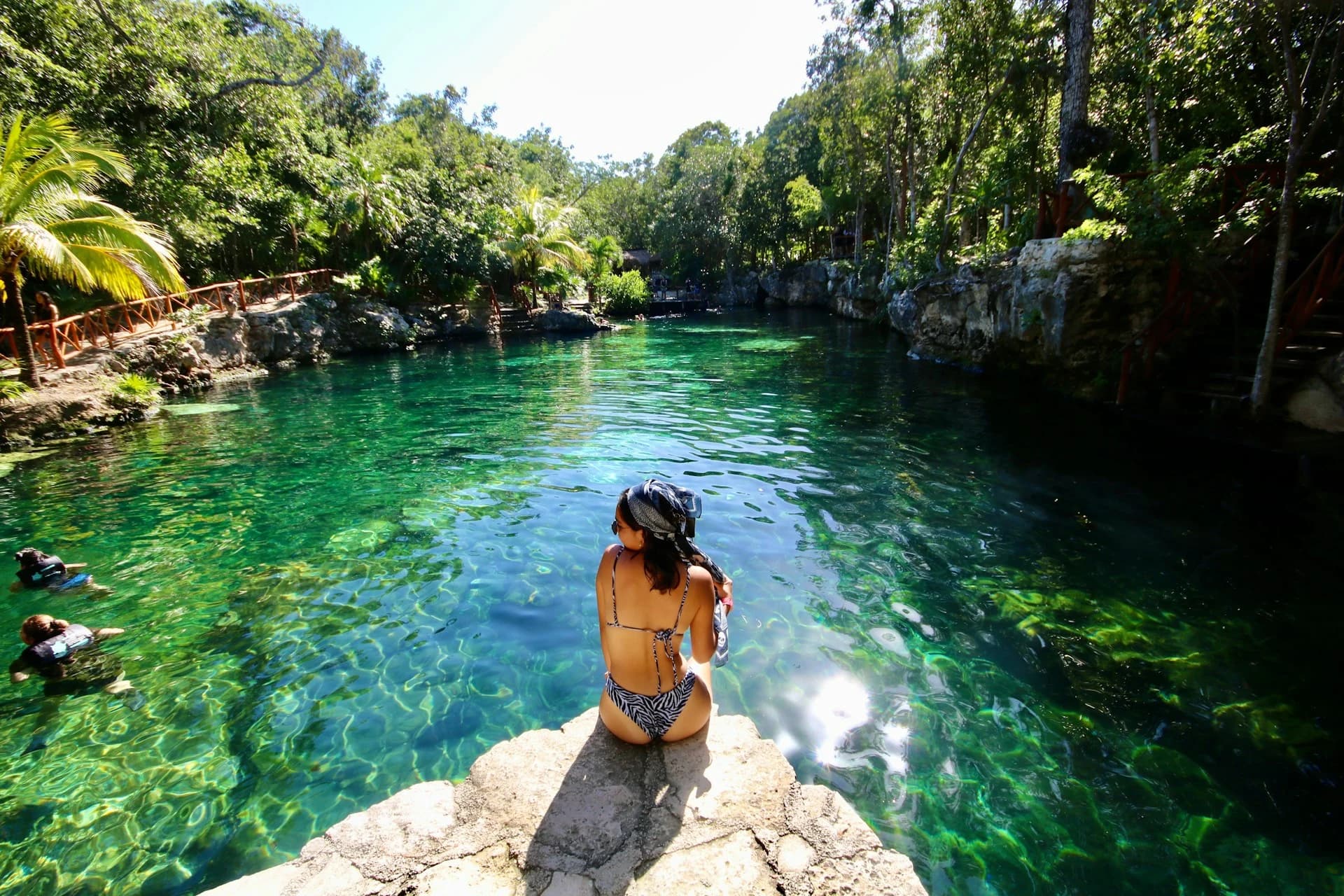
Most tours from Cancún stop at a cenote after the ruins. Wear your swimsuit under your clothes and bring a small towel and a dry change to save time in the changing rooms.
Sunglasses, sunscreen, small cash
Sun protection matters most at Chichén Itzá. Bring pesos in small notes for umbrella rental, water, life jackets and tips.
Chichén Itzá Rules: What's Banned and What's Allowed
Bags are checked at the entrance. INAH says these inspections are permanent, and the director of the site confirmed it again in April 2026. Here is what gets through, based on INAH's own 2025 and 2026 notices, with the gaps filled from recent visitor reports where INAH says nothing.
| Item | Allowed? | What to know |
|---|---|---|
| Climbing any structure | No | Applies to every building, not just El Castillo. Restricted areas are roped off. |
| Drones | No | Banned without prior written authorization from INAH's legal office (CNAJ). INAH repeated the ban for the 2026 spring equinox. |
| Tripods | No, without a permit | INAH treats tripods as professional equipment that needs CNAJ authorization. They were on INAH's banned list at the bag check for the 2026 equinox. |
| Professional camera kit | Permit only | Professional photo or video gear needs a CNAJ permit, applied for through INAH's online procedures page. Phones and ordinary cameras are fine. |
| Water | Yes | Bring your own. Recent visitors report nowhere to refill a bottle inside, and water sold inside costs more than in Pisté or Valladolid. |
| Food and snacks | Not officially | INAH banned food at its sites during the 2026 equinox, and visitor guides report snacks being taken at the bag check. Eat before you go in. |
| Umbrellas | Yes | We found no rule against handheld umbrellas, and they are rented by the entrance. Large beach umbrellas are a different matter. |
| Alcohol, cigarettes, vapes, knives | No | INAH lists cigarettes (electronic or any type), alcohol, drugs, knives and anything flammable. Smoking and lighting fires are banned inside the zone. |
| Pets | No | INAH barred pets at its sites for the 2026 equinox, and visitor guides report the same on normal days. Service animals are generally the exception. |
| Large backpacks | Usually yes, checked | Backpacks were banned for two days (April 21 and 22, 2026) after a shooting at Teotihuacán, then allowed again. A small daypack makes the check faster. |
| Costumes, banners, branded flags | No (event days) | Listed by INAH for the 2026 equinox, together with ashes and anything that could endanger people or monuments. |
| Ceremonies | Permit only | Ceremonies of any kind need INAH authorization. |
| Touching the monuments | No | Stay on the marked paths and off the stonework, including the carved panels. |
ℹ️ Rules checked against INAH bulletins and Yucatán press on October 14, 2026. INAH tightens the list on event days such as the equinox, so confirm at the gate if you are bringing anything unusual.
INAH also asks visitors to carry a small reusable bag and take their own rubbish out with them, as part of its clean-up campaign at the site.
Vendors, the New Entrance and What Changed in 2026
Chichén Itzá changed more in 2026 than in any year since the climbing ban, and most of it affects how your visit feels on the ground.
One way in: the CATVI
On March 27, 2026, INAH and Yucatán's tourism trust, Patronato CULTUR, moved the entrance to a new Centro de Atención a Visitantes (CATVI). It has the ticket windows, a 235-stall artisan market and five modules where licensed guide groups sell guided visits. The old tourist parador is no longer an entrance, and INAH's Yucatán director said in July 2026 that the single-entrance scheme will not change.
The May 2026 closure
Local artisans objected to the move. On May 18, 2026, members of Pisté's indigenous council let visitors in free, and the site then stayed closed from May 19 until June 1. Some Cancún tours switched guests to Ek Balam for those days. Things have been running normally since, but it is a reminder to check the news in the week before your trip.
Vendors inside the site
Vendors have not left the ruins. INAH's own statement says the agreement was not to move any artisan out of the interior of the zone. Guests on this year's tours describe vendors lining the walkways almost to El Castillo, calling out "one dollar" or "almost free" for noise-making toys and painted calendars. You do not have to stop. A smile and "no, gracias" while you keep walking works; if you do want to buy, cash in pesos and a little bargaining are normal.
Our take (vendors and early entry): The early-access tours win on more than the heat. Guests on the 8 AM arrivals keep saying they were inside before most stalls had even set up, which makes the plaza a very different place for your photos.
Photos, Video and Drone Rules at Chichén Itzá
Personal photos and video on a phone are free everywhere you are allowed to walk. Three rules catch people out:
- Handheld video cameras: Yucatán press report a 2026 permit fee of 63 pesos (about $3 USD) per person for non-professional video devices used without commercial purpose, paid once however many devices you carry. We could not find this fee on an INAH page, so ask at the window if you bring a GoPro or a camera for video.
- Professional gear, tripods and shoots: any professional photo or video equipment, tripods, commercial shoots and staged sessions (wedding or fashion shoots) need prior authorization from INAH's Coordinación Nacional de Asuntos Jurídicos. You apply through INAH's procedures portal well before your visit.
- Drones: banned. INAH restated the ban for the March 2026 equinox, and following general drone law does not make a flight over the site legal; it still needs INAH's permission.
Visitor guides say selfie sticks are generally tolerated, though staff may ask you to put one away in crowded spots. For the classic shot of El Castillo without people, you need to be there at the 8 AM opening.
Most Popular Tours
Cenote Stop Rules: Sunscreen, Life Jackets and Lockers
Almost every day trip from Cancún pairs Chichén Itzá with a swim in a cenote such as Saamal, Nool Ha or Ik Kil. The cenote is run separately from the ruins and has its own rules, and they are where most surprise costs come from.
- Life jackets are mandatory on most tours: the Sat Mexico Tours listings state that "the use of a life jacket is mandatory in the cenote", and the rental is extra unless you book the all-inclusive option. Guests this year report about 80 pesos, or roughly $5 to $10 USD. No life jacket, no swim.
- Lockers are optional and extra: recent guests report around $6 to $8 USD. Ekinox Tours' listing excludes lockers but includes a zipline at its cenote.
- Shower first, and go light on sunscreen: cenotes ask you to rinse off sunscreen, repellent and lotions in the showers before you get in. Rules differ by cenote: some guides to Ik Kil say sunscreen is not allowed in the water at all, others say only biodegradable sunscreen. The simple fix is to wear biodegradable sunscreen at the ruins and shower it off before swimming.
- Bring pesos: life jacket and locker rentals at the cenote are usually paid on the spot, and some do not take cards.
Want more time in the water? A dedicated cenote tour from Cancún gives you two or three cenotes and a far shorter drive.
Opening Hours, Last Entry, Wheelchairs and Strollers
Opening hours and last entry
INAH's page for the site lists Chichén Itzá as open daily from 8:00 AM to 5:00 PM, with last entry at 4:00 PM and visitors asked to start leaving from 4:30 PM. When the site reopened on June 1, 2026, one national outlet reported hours of 8:00 AM to 4:00 PM, so it is possible the closing time shifts. As of October 2026, plan on getting in by 4:00 PM at the latest and confirm on the day. On equinox weekends INAH runs special hours and closes some areas early.
Entry price, briefly
As of October 2026, INAH's site page lists a federal fee of 105 pesos plus a Yucatán state fee of 592 pesos for foreign visitors, 697 pesos in all (about $38 USD). Earlier 2026 reports quoted a state fee of 571 pesos, so check at the window. Many day tours do not include it. Mexican nationals and foreign residents of Mexico get in free on Sundays, which is why Sundays are the busiest day.
Wheelchairs and strollers
We found no official accessibility statement from INAH. Visitor guides describe the entrance area as paved with ramps and the main plaza around El Castillo as flat but unpaved, compacted dirt with loose stones, with rougher ground toward the Sacred Cenote and Old Chichén. A guest on an Amigo Tours trip this month put it bluntly: the paths are gravel, so think hard before bringing a walker or wheelchair. The site-based guides we list say their walks are wheelchair accessible, which tells you the main loop is doable with help. Strollers are allowed; a sturdy or jogging stroller copes far better than a small umbrella stroller.
Children under 13 and adults over 60 are exempt from the federal fee, and INAH lists people with disabilities as exempt too. Ask at the window whether the state fee also applies to you.
See It Early, With a Guide: Compare and Book
The rules above are easiest to live with early in the day: cooler air, fewer vendors set up and space at the rope line for photos. These are the options that get you there early or give you a licensed guide at the gate. Sat Mexico Tours' early-morning day trip is rated 4.8 across 6,903 reviews from $39 per person, plus the entrance fee. Note that guests on some departures still reached the site near midday, so check your pickup time when you book. For a full side-by-side of every day trip, see our Chichén Itzá tours from Cancún comparison. Staying farther south? We also compare Chichén Itzá tours from Playa del Carmen and day trips to Chichén Itzá from Tulum.
Popular Ways to See Chichén Itzá With a Guide
Nine options, all rated 4.5 or higher with at least 50 reviews and recent guest feedback. The first six are day trips from Cancún or guides you meet at the site. The last three suit specific needs: two private guides for families or slower walkers who want to set the pace, and Cancun Bay Tours' small-group day that adds Ek Balam, the pyramid you can still climb. Entrance fees are extra on most of them.
For the evening show at the ruins, see our Chichén Itzá light show guide, and for the rest of your trip, our guide to the best things to do in Cancún.
Most Popular Tours
How We Researched This Guide
We built the rules on this page from primary sources first: INAH's visitor page for Chichén Itzá, its bulletins for the September 2025 and March 2026 equinox operations, its December 2025 bulletin on the Nohoch Mul staircase at Cobá and its May 2026 statement on the visitor center. Where INAH is silent (umbrellas, food on normal days, accessibility), we used Yucatán and national press from 2025 and 2026 and say so in the text.
For the on-the-ground detail (heat, umbrella rentals, vendors, cenote charges) we read several hundred guest reviews posted between late 2025 and October 2026 across seven Chichén Itzá tours. Tour ratings, prices and inclusions come from live listing data checked on October 14, 2026, and every tour shown has a rating of 4.5 or more, at least 50 reviews and reviews from the last six months. Fees and rules change, so confirm anything critical at the ticket window or with your tour.
Frequently Asked Questions
Can you climb Chichén Itzá?+
No. You cannot climb El Castillo (the Temple of Kukulcán) or any other structure at Chichén Itzá. Climbing was stopped in 2006 after a visitor fell to her death and to protect the worn stone, and in April 2025 INAH widened the roped-off area around the pyramid. People who climb are escorted down and can be fined.
Why can't you climb El Castillo anymore?+
Two reasons: conservation and safety. Millions of visitors were wearing down the limestone steps, and in 2006 an elderly woman died after falling on the way down. Some sources date the formal ban to 2008. INAH, which manages the site, has kept it in place ever since.
Which Maya pyramids near Cancún can you still climb?+
Cobá's Nohoch Mul, 42 metres tall, reopened to climbers on December 7, 2025 via a new wooden staircase after six years closed. The Acropolis at Ek Balam, north of Valladolid, is also climbed on stone steps with a guide rope, according to 2026 travel guides and recent visitors. Rules can change, so check on the day.
What should I wear to Chichén Itzá?+
Closed walking shoes, a wide-brim hat or an umbrella, and light, loose, breathable clothing. There is no dress code, so shorts are fine. Wear a swimsuit underneath if your tour stops at a cenote, and add a poncho and quick-dry clothes from June to October, when afternoon storms are common.
Can you bring water and food into Chichén Itzá?+
Bring water: it is allowed, and recent visitors report nowhere to refill a bottle inside. Food is a different story. INAH banned food at its sites during the 2026 equinox, and visitor guides report snacks being taken at the bag check on normal days too, so eat before you go in.
Are umbrellas allowed at Chichén Itzá?+
Yes. We found no rule against handheld umbrellas, and they are the most common way visitors make their own shade. Recent guests say umbrellas are rented or sold near the entrance for about $5 to $7 USD, or around 100 pesos to buy a small one.
Can you fly a drone or use a tripod at Chichén Itzá?+
No, not without prior written authorization from INAH's legal office (CNAJ). Drones are banned, and tripods and professional camera gear count as professional equipment that needs a permit. Phone photos and video are free.
What time does Chichén Itzá close and when is last entry?+
INAH lists the site as open daily from 8:00 AM to 5:00 PM, with last entry at 4:00 PM and visitors asked to start leaving from 4:30 PM. One outlet reported 8:00 AM to 4:00 PM when the site reopened in June 2026, so as of October 2026 aim to be inside well before 4:00 PM and confirm locally.
Affiliate note: Some links on this page are affiliate links. If you book through them, we may earn a small commission at no additional cost to you.