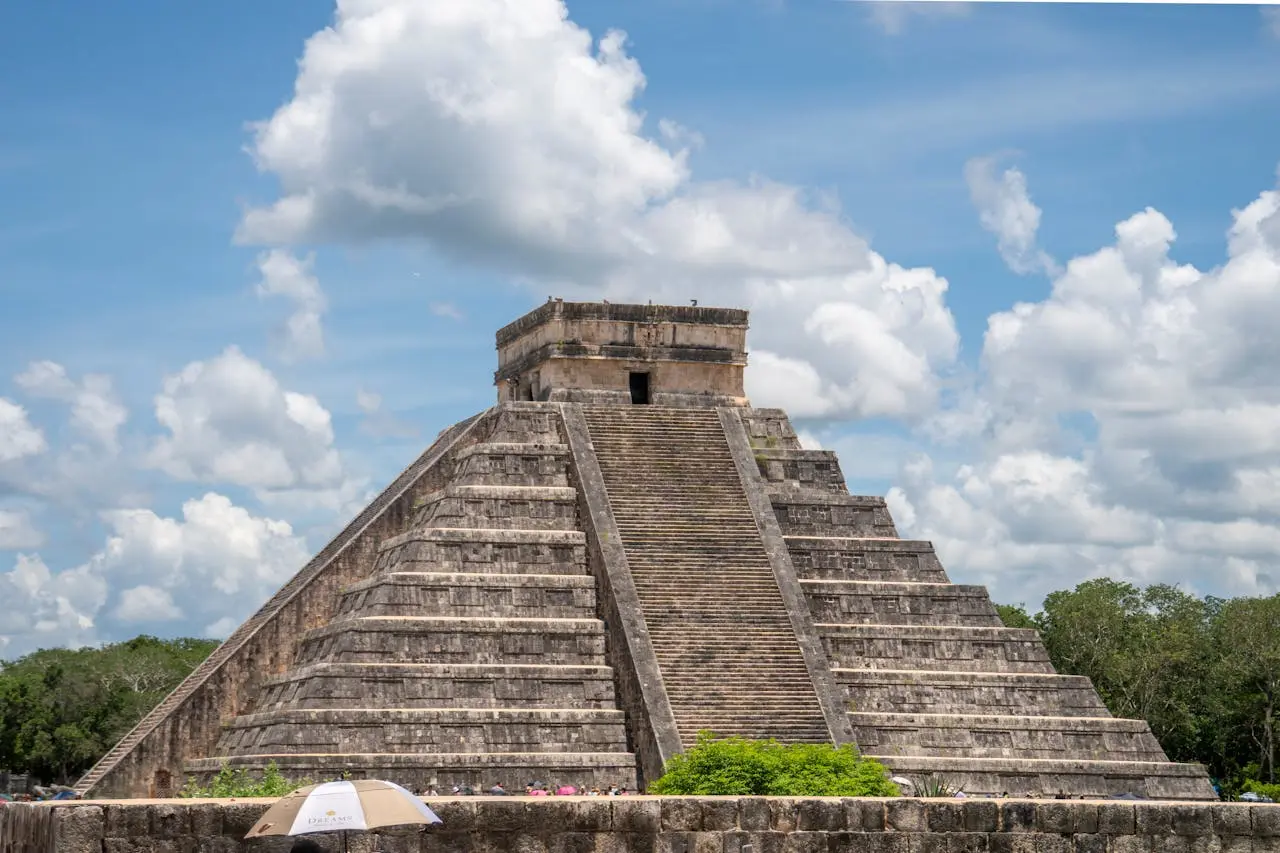
Chichén Itzá, Tulum or Cobá? We compare drive times from Cancún, Playa del Carmen and Tulum, what you actually see, which pyramid you can still climb, crowds, shade, 2026 entry fees and the combos that let you see two in a day, with a clear verdict for each kind of traveller.
What You Should Know
- Chichén Itzá is the biggest and most famous of the three, but it is also the longest day: about 218 km and close to three hours each way from the Cancún Hotel Zone, and a day tour runs around 12 hours door to door.
- Cobá is the only one of the three where you can climb the main pyramid. INAH reopened Nohoch Mul in December 2025 with a wooden staircase laid over the original steps. Chichén Itzá and Tulum are look-only.
- Tulum is the closest and the only one on the sea, but it is small (60 to 90 minutes with a guide) and exposed. Tulum's entry dropped to 265 pesos for foreigners in July 2026, so older guides quoting about 515 pesos are out of date.
- You do not have to pick just one: Tulum and Cobá sit about 45 minutes apart and pair easily in one day, while Chichén Itzá pairs with Valladolid and a cenote, or with Ek Balam if you want a climb.
Chichén Itzá vs Tulum vs Cobá: The Short Answer
⭐ The short answer: If you only have one day for ruins, go to Chichén Itzá: it is the largest, best-restored Maya city in the region and a New Seven Wonder, worth the long drive. Pick Tulum for a short half day with Caribbean views, and Cobá if you want jungle shade and a pyramid you can still climb. Tulum and Cobá together make the best second choice.
That is the answer to which Maya ruins to visit from Cancún for most people, but the right choice depends on how much time you have, who you are travelling with and how you handle heat. Chichén Itzá is the one you will regret skipping on a first trip. Tulum is the one you can fit around a beach holiday without losing a whole day. Cobá is the one that still feels like exploring: you ride a bike between temple groups under the trees and then climb 42 metres above the canopy.
Below we compare all three on drive time from Cancún, Playa del Carmen and Tulum, what you actually see, climbing, crowds, shade, the beach, 2026 entry fees and time needed, then give a verdict for each type of traveller. If you have already decided on Chichén Itzá, our guide to Chichén Itzá tours from Cancún compares the day trips side by side.
Side-by-Side: How the Three Ruins Compare
Here is how the three sites stack up on the things that change your day. Drive times are for a car from the Cancún Hotel Zone with no stops; a tour adds time for hotel pickups.
| Chichén Itzá | Tulum | Cobá | |
|---|---|---|---|
| Drive from Cancún | About 2 hr 45 min (218 km) | About 1 hr 50 min (131 km) | About 2 hr 15 min to 3 hr (153 to 178 km) |
| Setting | Open plazas in dry inland scrub | Walled town on a cliff above the Caribbean | Jungle city beside lagoons |
| Size and what you see | Largest and most restored: El Castillo, the Great Ball Court, the Temple of the Warriors, El Caracol, the Sacred Cenote | Small and compact: El Castillo on the cliff, the Temple of the Frescoes, the city wall | Spread out: several temple groups linked by raised white roads (sacbéob), with Nohoch Mul at the far end |
| Climb a pyramid? | No (banned since 2006) | No | Yes: Nohoch Mul, 42 m, via a wooden staircase since December 2025 |
| Shade | Very little | Very little | Plenty, under the jungle canopy |
| Crowds | Heaviest (close to 1 million visitors in the first half of 2026) | Heavy (about 1 million visitors in 2025) | Light (about 83,000 visitors in January to April 2025, against 500,000 at Tulum) |
| Beach | No (a cenote swim instead) | Yes, Playa Ruinas below the site | No (lagoons and nearby cenotes) |
| Entry for foreigners, 2026 | 697 MXN (about $38) | 265 MXN (about $14) | 209 MXN (about $11) |
| Time on site | 2 to 3 hours | 60 to 90 minutes | 2 to 3 hours, with a bike |
| Typical day from Cancún | About 12 hours with a cenote and Valladolid | About 10 hours with a cenote, or a half day from Tulum | About 12 hours paired with Tulum |
ℹ️ Fees and visitor figures checked against INAH, Yucatán and Quintana Roo press on October 14, 2026. Dollar amounts use 18.36 pesos to the dollar. Drive times are routing estimates with no traffic. Fees change often in this region, so confirm at the ticket window.
Which One Should You Choose? Verdicts by Traveller Type
No single site is best for everyone. Here is the one we would pick for each kind of traveller, based on the trade-offs above and on what guests on this year's tours keep saying about each site.
Chichén Itzá
If this is your one ruins day in Mexico, make it Chichén Itzá. Nothing else in the region matches its scale, and an early-arrival tour solves most of the heat and crowd problems.
Tulum
Tulum is the closest to Cancún and the quickest to see. From Playa del Carmen or Tulum town it fits into a morning, leaving the afternoon for the beach.
Cobá
Cobá is the only one of the three where you can climb the main pyramid, and biking the jungle paths between temple groups is half the fun.
Cobá, or Tulum + Cobá
Shade, bikes and a climb keep children interested far longer than a hot plaza. A parent on a Tulum and Cobá day this year said their 7 and 9 year olds loved it.
Tulum early, or Cobá on a bicitaxi
Avoid a midday Chichén Itzá. Tulum at the 8 AM opening is cool and short, and at Cobá you can hire a pedal taxi instead of walking or riding.
Tulum
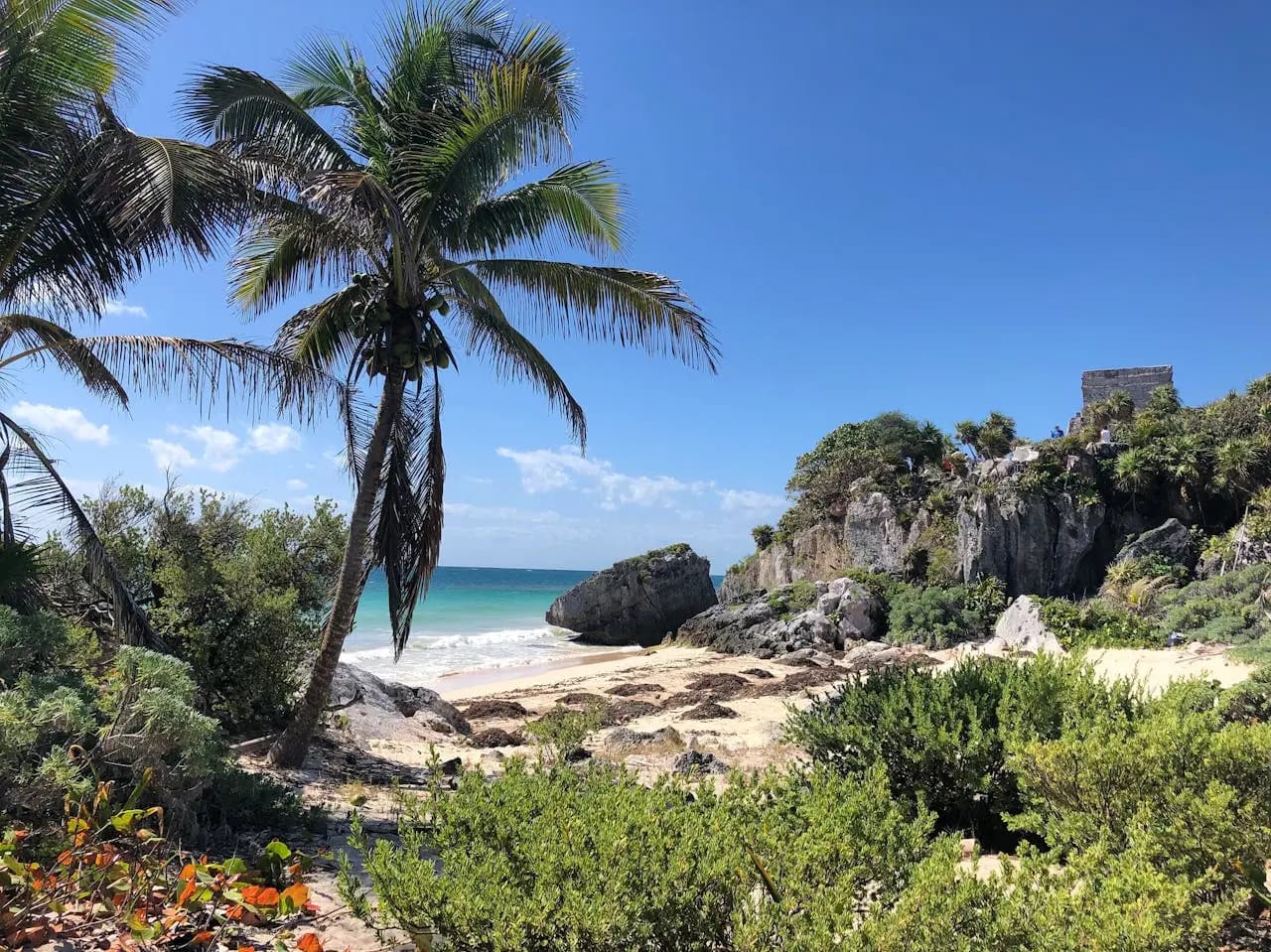
The cliff-top temple over turquoise water is the most photographed view in the Riviera Maya, and the beach is right below it. Go at opening for the light and the space.
Two days for ruins? Do Chichén Itzá on one and Tulum with Cobá on the other. That covers the three best-known sites near Cancún and includes one climb.
Chichén Itzá vs Tulum: Wonder of the World or Ruins by the Sea?
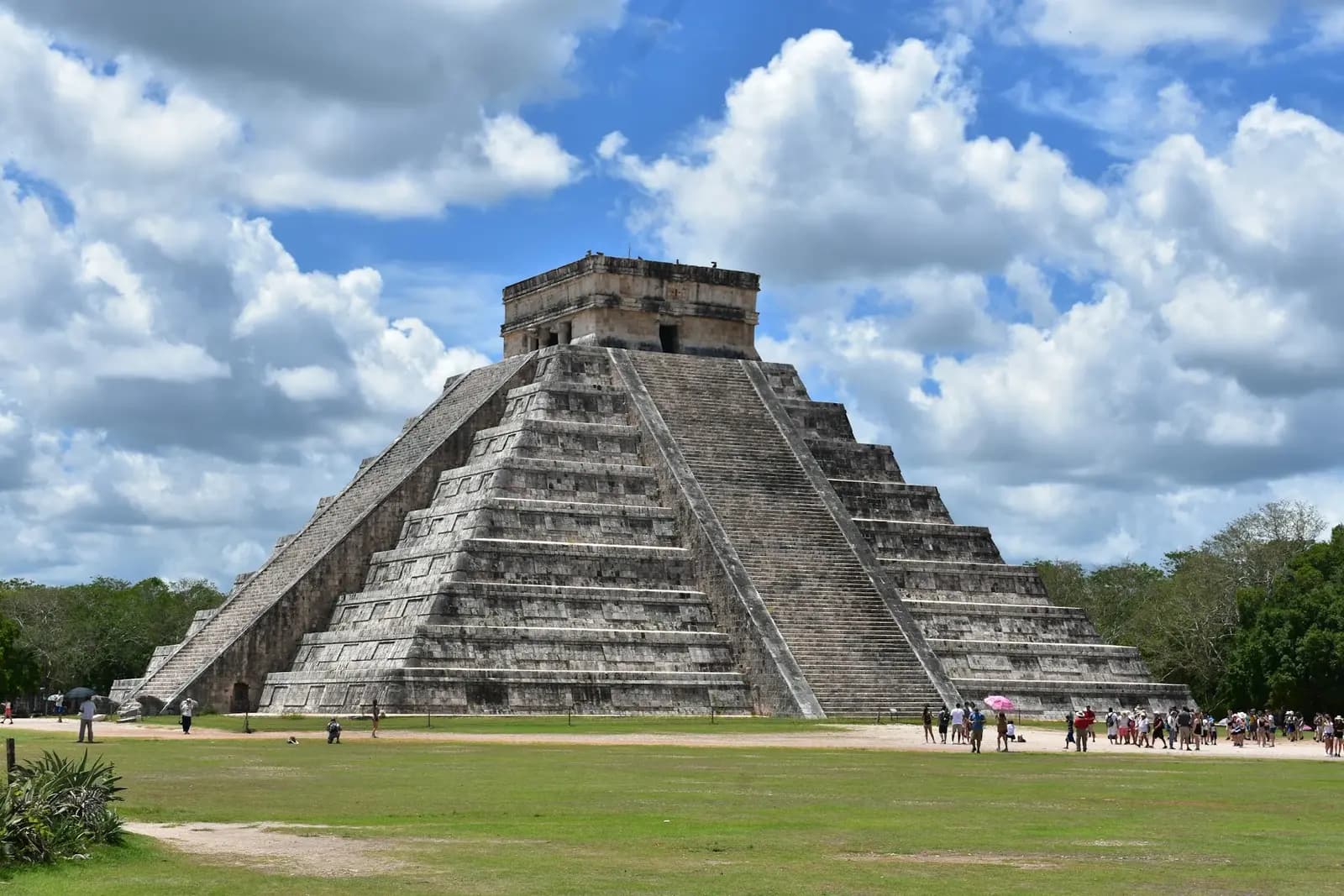
Chichén Itzá vs Tulum is the comparison most Cancún visitors are really making, and the two could hardly be more different. Chichén Itzá is a vast ceremonial city in the Yucatán interior, with the stepped pyramid of El Castillo (the Temple of Kukulcán) at the centre of a huge open plaza. Tulum is a small walled port on a limestone cliff, with nothing like Chichén Itzá's scale but a view no other Maya site can match.
Choose Chichén Itzá for the history and the "wow": the size of the Great Ball Court, the carved skull platform, the Temple of the Warriors and the Observatory. Choose Tulum if you want a short visit with sea views and a swim, or if a 12-hour day trip sounds like the wrong way to spend your holiday. Guests often say Tulum was smaller than they expected; one guest on a Tulum and Cobá day in March 2026 wrote that Tulum "was okay" and they "expected a little bit more", while praising the coastal view.
The deciding factor is usually time. From the Cancún Hotel Zone, Tulum is about an hour closer each way. From Playa del Carmen the gap is wider: Tulum is under an hour away, Chichén Itzá about two and a half. If you are staying in Tulum itself, the ruins are a ten-minute ride, so see them anyway and spend your big day trip on Chichén Itzá.
Chichén Itzá vs Cobá: Grand Plaza or Jungle Climb?
For Chichén Itzá vs Cobá, the trade is grandeur against experience. Chichén Itzá is more impressive as a set of buildings: it has been cleared and restored on a scale Cobá has never had, and its main structures sit close together, so you see a lot in a short walk. Cobá was one of the largest Maya cities of the northern lowlands, but most of it is still under forest. You travel between groups on wide jungle paths, by bike or pedal taxi, and the sense of discovery is part of the appeal.
The biggest practical difference is the climb. You cannot climb anything at Chichén Itzá (see our guide to Chichén Itzá rules and what to wear), while Cobá's Nohoch Mul reopened to climbers in December 2025. Cobá is also far shadier and much quieter, and its entry is about a third of Chichén Itzá's. Chichén Itzá wins on fame and on the cenote-and-Valladolid day that comes with it; Cobá wins on comfort and on the view from the top.
On combined Tulum and Cobá days, reviewers often rank Cobá first. A family on Amigo Tours' day in December 2025 summed it up: "Tulum was great, Coba was even better". Those are travellers who had already seen, or skipped, Chichén Itzá, though. On a first trip, most people still want to stand in front of El Castillo.
Most Popular Tours
Tulum vs Cobá Ruins: Which Is Better?
Between Tulum vs Cobá ruins, Cobá is the better archaeological site and the better experience on a hot day, while Tulum has the better setting. Tulum's buildings are smaller and you cannot climb any of them, but they stand on a cliff over the Caribbean. Cobá has the tallest pyramid in the northern Yucatán and miles of shaded paths, but no sea.
The good news is that you rarely have to choose. The two are about 45 minutes apart on Highway 109, and day trips from Cancún, Playa del Carmen and Tulum visit both, usually Tulum at the 8 AM opening and Cobá late morning, with a cenote swim after. If you are staying in Tulum, our guides to the Tulum ruins and visiting Cobá from Tulum cover each site in depth.
Our take: If you can only fit one of these two into a Cancún holiday, pick Cobá for the climb and the jungle, unless the photo of the temple above the sea is the reason you came. In that case, Tulum at opening time, before the tour buses, is unbeatable.
Drive Times From Cancún, Playa del Carmen and Tulum
Where you are staying changes the answer more than anything else. These are driving estimates by car with no stops or traffic, from routing data checked in October 2026.
| From | Chichén Itzá | Tulum ruins | Cobá | Ek Balam |
|---|---|---|---|---|
| Cancún Hotel Zone | 2 hr 45 min (218 km) | 1 hr 50 min (131 km) | 2 hr 15 min to 3 hr (153 to 178 km) | 2 hr 30 min (192 km) |
| Playa del Carmen | 2 hr 15 min to 2 hr 30 min (182 km) | 50 min to 1 hr (62 km) | 1 hr 30 min to 2 hr (108 km) | 2 hr 15 min (156 km) |
| Tulum town | 2 hr 15 min to 2 hr 30 min (153 km) | 10 min (4 km) | 45 min (47 km) | 2 hr (127 km) |
On a tour, add time for pickups. Most group day trips collect guests from several hotels and sometimes swap vans at a meeting point before setting off. On Tulum and Cobá days, guests in recent months reported first pickups between 4:30 and 5:15 AM, and one wrote that the bus "took over an hour to leave" town after collecting everyone. Chichén Itzá days from Cancún follow the same pattern and usually return after dark.
From Cancún, Chichén Itzá and Cobá are both long days, but Chichén Itzá comes with Valladolid and a cenote on the way, which makes the hours feel better spent. From Playa del Carmen or Tulum, Tulum and Cobá are the easy wins. Our guide to day trips from Cancún puts these against the island, cenote and park days if you are still planning the week.
What You Actually See at Each Site
Chichén Itzá: the showpiece
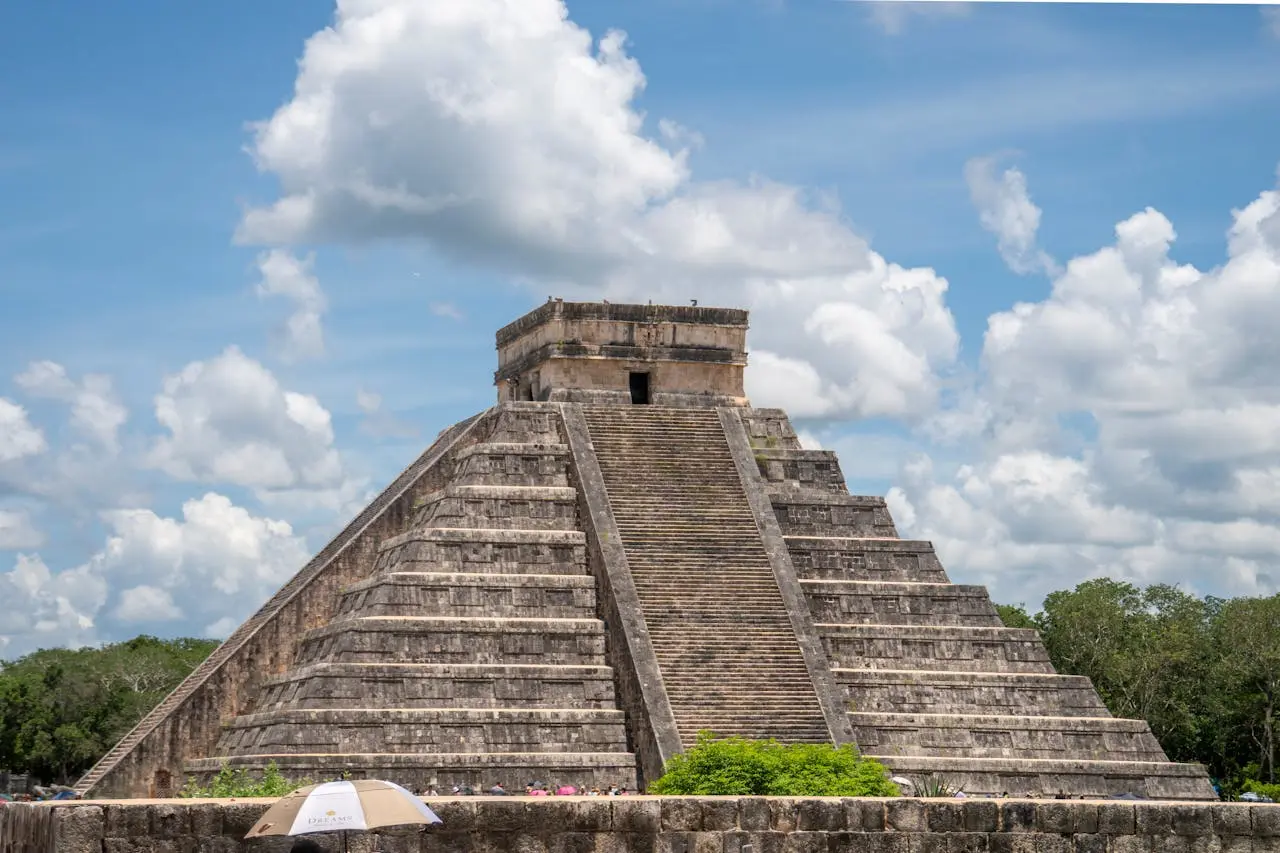
Chichén Itzá is a UNESCO World Heritage Site and one of the New Seven Wonders of the World, and it looks the part. You walk from the entrance straight onto the Great Plaza, where El Castillo rises from flat lawns with nothing around it. Within a short walk are the Great Ball Court, the Temple of the Warriors with its rows of carved columns, the skull platform (tzompantli), the round Observatory known as El Caracol and the path to the Sacred Cenote. A guided loop of the main buildings takes about two hours; add another hour to wander. Since March 2026 every visitor enters through a new visitor centre with an artisan market, and vendors still line the paths inside.
Tulum: small, but with that view
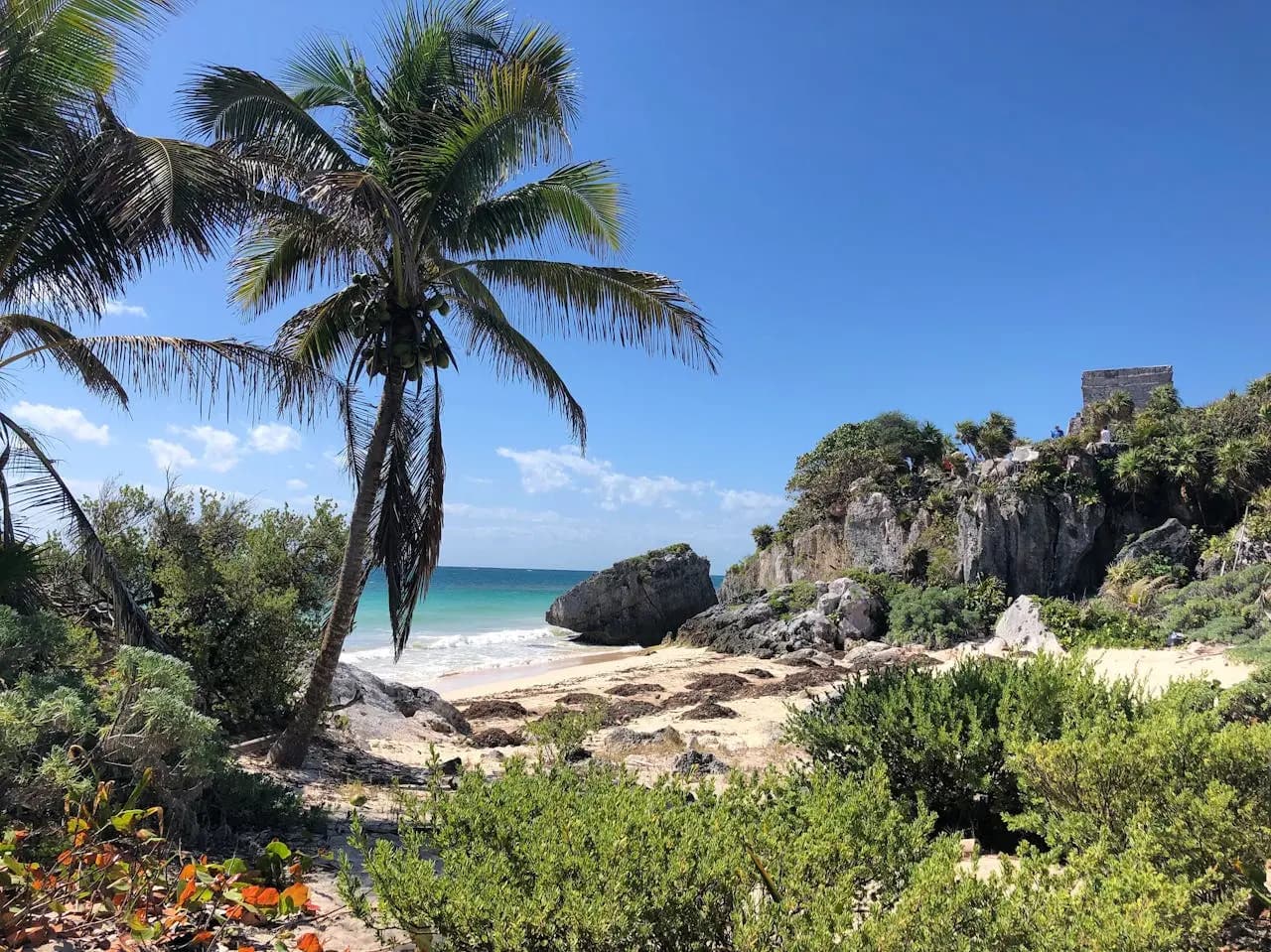
Tulum was a walled trading port, and its wall still encloses the site on three sides, with the sea on the fourth. The buildings are low and modest: the cliff-top temple everyone calls El Castillo, the Temple of the Frescoes with traces of painted murals, and a scatter of platforms and small temples. You see the highlights in 60 to 90 minutes with a guide. What you remember is the colour of the water and the iguanas sunning on every wall; one guest this year said they "literally had to step over a few that were blocking the path".
Cobá: a city in the jungle
Cobá feels nothing like the other two. Its temple groups are spread out along raised white-stone roads (sacbéob) under tall forest, so most visitors rent a bike or hire a bicitaxi at the entrance. Guests this year mention about $5 per person for a bike. The first group near the entrance has a ball court and a tall temple known as La Iglesia; the main draw is Nohoch Mul, at the far end, about 42 metres high. Visitors this year also describe spider monkeys, ocellated turkeys and even more iguanas, plus quiet corners of the site where they saw nobody at all.
A tip repeated in reviews: bike straight to Nohoch Mul first, climb it while the line is short, then explore the rest on the way back.
Can You Climb the Pyramids? Only at Cobá
If climbing a Maya pyramid is on your list, this decides it for you: of the three, only Cobá lets you climb.
- Chichén Itzá: no. Climbing El Castillo was stopped in 2006 after a visitor fell, and in April 2025 INAH widened the roped-off area around it. No other building on the site can be climbed either.
- Tulum: no. You walk the marked paths around the buildings and view them from behind ropes.
- Cobá: yes. Nohoch Mul, 42 metres and 120 steps, was closed to climbers in 2019. INAH and Mexico's Secretary of Culture opened a new wooden staircase laid over the original stone steps in December 2025. Visitors go up in controlled groups, reported as up to 15 people (one guest in March 2026 said up to 20), with about 15 minutes at the top. Some reports give a climbing window of 8:00 AM to 3:30 PM, earlier than the site's 5:00 PM close, so do not leave it until last.
Guests climbing it this year say the new wooden steps are uneven and far apart, and "a little difficult for someone on the shorter side", but the view over unbroken jungle is worth it. Group tours do not always guarantee the climb: Excursiones Riviera Maya's Chichén Itzá and Cobá day, for example, says outright that climbing Cobá's pyramid "is not included or guaranteed". If the climb matters, arrive early or choose a tour with more time at Cobá.
Ek Balam: a fourth option with a climb
Ek Balam, about 30 minutes north of Valladolid, is the other big site in range of Cancún where people still climb. Tour listings in 2026 include climbing its Acropolis, and a guest in April 2026 wrote that "being able to walk to the top of Ek'Balam is truly amazing". INAH has not published a statement on the climb, so check on the day. Because it sits close to Chichén Itzá, it is the one way to see the famous site and still climb something in the same day.
Crowds, Heat and Shade
Crowds
Chichén Itzá and Tulum are two of the busiest archaeological sites in Mexico. Chichén Itzá received 984,119 visitors in the first half of 2026, even after a drop of almost 14 percent. Tulum had about 1.03 million visitors in 2025 by INAH's count. Cobá is in another league: INAH counted 82,815 visitors there from January to April 2025, against 500,029 at Tulum over the same months. Even on a busy morning, Cobá's crowds thin out quickly once people spread along the paths.
At Chichén Itzá and Tulum, timing is everything. Both open at 8:00 AM, and the first hour or two is quieter and cooler. A guest who started at Tulum "right when it opened at 8 a.m." in late December said there were "no crowds" despite high season. Sundays are the busiest day at all three, because entry is free for Mexican nationals and residents.
Heat and shade
Chichén Itzá is the hottest of the three. It sits inland, away from the sea breeze, and the main plaza has almost no shade; summer guests this year describe "42°C heat" and say umbrellas are sold or rented by the entrance. Tulum is open to the sun too, although the sea breeze helps and shaded spots on the beach below are scarce. Cobá is the comfortable one: most paths run under the canopy, and the sun only really hits you at the top of Nohoch Mul and in the cleared plazas. Bring insect repellent for Cobá in the wet season.
Whichever you choose, aim to be at the ruins in the morning. From June to October, afternoon storms are common across the peninsula; for Chichén Itzá's months and days to avoid, see our guide to the best time to visit Chichén Itzá.
The Beach Factor: Tulum's Playa Ruinas
Tulum is the only one of the three where you can finish the visit with a swim in the sea. A path from the ruins leads to Playa Ruinas, the small cove below the cliff, and the longer Playa Pescadores lies a short walk east. Lifeguards watch the main swimming areas, and the sea is usually calmest from May to September; from October to April, stronger currents and northerly winds can make it rough. Shade on the sand is scarce, so bring a hat, water and reef-safe sunscreen.
The ruins also sit inside a protected area that was reorganised in 2026. In July 2026 the federal and Quintana Roo governments announced free public access to the beaches around the site, lower ruins fees and an electric shuttle from the parking area for 20 pesos. One tour operator also warns that single-use plastic bottles are not allowed inside the Tulum site, so carry a refillable bottle.
At Chichén Itzá and Cobá, the swim comes from a cenote instead. Most Chichén Itzá day trips stop at a cenote such as Ik Kil, Saamal or Nool Ha, and Cobá is ringed by cenotes and a lagoon. Many guests rate the cenote as the highlight of the day.
Most Popular Tours
Entry Fees in 2026 and How Long You Need
Entry fees changed at all three sites in 2026. INAH roughly doubled its federal fee for top-category sites such as Tulum and Cobá on January 1, 2026, then in July the federal and state governments cut Tulum's total for foreigners to 265 pesos. Chichén Itzá adds a large Yucatán state fee on top of INAH's, which is why it costs more than the other two together. As of October 2026, the prices are below; fees here change often, so confirm at the window and carry pesos.
If you book a Tulum and Cobá combo, check how admission is paid: Amigo Tours' listing, for example, asks for $44 USD per person by card on the day for both sites, more than the posted gate fees, so ask what that covers or choose an all-inclusive option.
105 pesos federal plus 592 pesos Yucatán state fee for foreigners, per INAH's site page. Earlier 2026 reports quoted 676 pesos. Plan 2 to 3 hours on site and about 12 hours for a day trip from Cancún.
Since July 2026: 100 pesos for the Jaguar Park plus 165 pesos for the archaeological zone, for foreigners. Optional 20-peso shuttle. Plan 60 to 90 minutes on site.
INAH's 2026 fee for its top-category sites, including Cobá. Bikes (about $5) and bicitaxis are extra and paid in cash. Plan 2 to 3 hours with a bike.
Federal plus Yucatán state fee for foreigners in 2026, among the highest in the state. Plan about 2 hours, ideally with Valladolid and a cenote.
Most group day trips do not include these fees. Mexican nationals and residents pay less and get in free on Sundays. Children under 13 are exempt from INAH's federal fee, as are Mexican seniors with an INAPAM card.
How to Combine Them: Tulum + Cobá, Chichén + Valladolid, or Ek Balam
Most visitors from Cancún see these sites as part of a combo day. These are the pairings that work, and the ones that do not.
Tulum + Cobá in one day
The classic pairing: Tulum at the 8 AM opening, then the 45-minute drive inland to Cobá, usually with a cenote swim and a late buffet lunch. From Cancún it is a 12-hour day or longer. Guests this year say Tulum at opening was cool and quiet, that time at each site was "a bit short" but enough for the highlights, and that the cenote was the surprise hit. Bring snacks, since lunch comes late. Our guide to Tulum tours from Cancún compares the Tulum-based day trips, including the ones that add Cobá.
Chichén Itzá + Valladolid + a cenote
This is the standard Chichén Itzá day from Cancún: the ruins, lunch and a swim at a cenote nearby, and a short stop in the colonial town of Valladolid. It is long, but the stops break up the drive. If you are staying in Tulum, our guide to Chichén Itzá day trips from Tulum covers the departures from there.
Chichén Itzá + Ek Balam
A smaller group of tours adds Ek Balam to Chichén Itzá, so you see the famous site and still climb a pyramid. Cancun Bay Tours' version, rated 4.9 by 96 guests, adds a cenote and a Maya village. Watch the timing: one guest in April 2026 reached Chichén Itzá at 4 PM with only an hour inside, so ask which site comes first.
Chichén Itzá + Cobá
Possible from Playa del Carmen and the Riviera Maya, where Excursiones Riviera Maya runs a small-group early-arrival day to both, but it is a long day and the Cobá climb is not guaranteed. From the Cancún Hotel Zone, this tour does not pick up.
What does not work: Chichén Itzá + Tulum
The two are at opposite ends of a 150 km drive, so seeing both properly in one day leaves you more time in a vehicle than at the ruins. Split them over two days instead.
Can't Choose? See Tulum and Cobá in One Day: Compare and Book
If you cannot decide between Tulum and Cobá, see both. Amigo Tours' Tulum and Cobá day from Cancún is rated 4.6 across 1,290 reviews, from $41 per person plus site fees, and adds a guided swim through a cenote cave. It is a long day (pickups from 5:00 AM, back in the evening), and a few guests mention cramped vehicles and bilingual commentary, but most say the early Tulum visit and the Cobá climb made it worth it. Want Chichén Itzá instead? Sat Mexico Tours' early-morning day is the strongest single-site option here, and our Chichén Itzá day trip comparison covers the rest.
Popular Ways to See Chichén Itzá, Tulum and Cobá
Nine day trips that cover one or more of these sites, all rated 4.5 or higher with at least 50 reviews and recent guest feedback. The first three are the best-value single choices: an early Chichén Itzá day, a Tulum and Cobá combo, and a shorter Tulum, cenote and Playa del Carmen day from Ekinox Tours. Below them are the Chichén Itzá and Ek Balam combo, a Tulum day with reef snorkeling (it adds a $35 USD conservation bracelet in cash), and smaller-group days from Cancun Adventures to Cobá, Tulum and Ek Balam. Note that Cancun Adventures picks up in Cancún only on certain weekdays, and Excursiones Riviera Maya's Chichén Itzá and Cobá day picks up from Moon Palace south, not in the Hotel Zone. Entrance fees are extra on most of them.
If you stay near Chichén Itzá overnight, our Chichén Itzá light show guide covers the evening show. For everything else on the coast, see our guide to the best things to do in Cancún.
Most Popular Tours
How We Researched This Guide
We built this comparison from primary and local sources: INAH's site page for Chichén Itzá and its 2025 and 2026 bulletins, including the December 2025 bulletin on the Nohoch Mul staircase at Cobá; INAH's January 2026 fee schedule; the July 2026 federal and Quintana Roo announcement on Tulum fees; and Yucatán and Quintana Roo press (Por Esto, Diario de Yucatán, Riviera Maya News, Tulum Times) for visitor numbers and current conditions. Drive times are routing estimates checked in October 2026.
For what each site feels like on the ground, we read several hundred guest reviews posted between late 2025 and October 2026 across nine day trips that visit Chichén Itzá, Tulum, Cobá and Ek Balam. Tour ratings, prices and inclusions come from live listing data checked on October 14, 2026, and every tour shown has a rating of 4.5 or more, at least 50 reviews and reviews from the last six months. Fees in this region change often, so confirm anything critical at the ticket window.
Frequently Asked Questions
Which is better, Chichén Itzá or Tulum?+
For a first visit, Chichén Itzá. It is far larger, better restored and one of the New Seven Wonders of the World. Tulum is better if you are short on time or staying in Playa del Carmen or Tulum: it is smaller (60 to 90 minutes on site) but sits on a cliff above the Caribbean with a beach below.
Is Cobá better than Tulum?+
As ruins, usually yes. Cobá is bigger, shadier, much less crowded and the only one where you can climb the main pyramid, Nohoch Mul, reopened in December 2025. Tulum wins on setting, with temples above the sea. They are about 45 minutes apart, so most people see both in one day.
Can you do Tulum and Cobá in one day?+
Yes, and it is the most popular combo. Tulum at the 8 AM opening, then Cobá, usually with a cenote swim and lunch. From Tulum town it is an easy day; from Cancún expect about 12 hours or more, with pickups from as early as 4:30 to 5:15 AM.
Can you see Chichén Itzá and Tulum in the same day?+
Not well. The two are about 150 km apart, so you would spend more time driving than at the ruins. Do them on separate days, or pair Chichén Itzá with Valladolid and a cenote, or with Ek Balam or Cobá.
Which Maya ruins near Cancún can you climb?+
Cobá's Nohoch Mul, 42 metres tall, reopened to climbers in December 2025 via a wooden staircase. Ek Balam's Acropolis is also climbed, according to 2026 tour listings and recent guests, though INAH has not published a statement on it. You cannot climb anything at Chichén Itzá or Tulum.
Which Maya ruins are closest to Cancún?+
Of the three big sites, Tulum is closest, about 1 hour 50 minutes from the Hotel Zone. Chichén Itzá is about 2 hours 45 minutes and Cobá 2 hours 15 minutes to 3 hours. Cancún also has small sites of its own, such as San Miguelito next to the Maya Museum, if you only have a few hours.
How much does it cost to enter Chichén Itzá, Tulum and Cobá in 2026?+
As of October 2026, for foreign visitors: Chichén Itzá 697 pesos (about $38), Tulum 265 pesos (about $14) since the July 2026 fee cut, and Cobá 209 pesos (about $11), plus bike rental. Most group tours do not include these fees. Prices change often, so confirm at the window.
Is Chichén Itzá worth the long drive from Cancún?+
For most first-time visitors, yes. It is about 2 hours 45 minutes each way and a 12-hour day, but the scale of the site and the cenote and Valladolid stops make it the most complete Maya day in the region. Book an early-arrival tour to beat the heat and the crowds.
Affiliate note: Some links on this page are affiliate links. If you book through them, we may earn a small commission at no additional cost to you.