Isla Mujeres, and Playa Norte especially, is one of the most sargassum-free spots in the Mexican Caribbean because it faces the sheltered west side. This guide covers which beaches get seaweed, the month-by-month pattern, the 2026 outlook, and how the island compares to Cancún.
What You Should Know
- Isla Mujeres is one of the best sargassum escapes in the Mexican Caribbean: Playa Norte faces west toward the mainland, sheltered from the Atlantic rafts, and is consistently among the most seaweed-free beaches in the region.
- It is not the whole island, though: the east coast faces the open Caribbean and does collect sargassum, while Playa Norte and the west-side town beaches stay clearest. You swim on the west side anyway, so the protected beaches are the ones you actually use.
- Playa Norte is not completely immune in a heavy year: cold fronts (Nortes) and the 2026 record bloom pushed occasional sargassum onto it, including more than 50 tons cleared in a single March 2026 event, but it clears fast and stays far better than Cancún or Tulum.
- The clean season is November to April; the regional peak is June to August. Even then, a ferry day trip to Playa Norte is the reliable clean-water move when Cancún's Hotel Zone beaches are covered.
Does Isla Mujeres Get Sargassum?
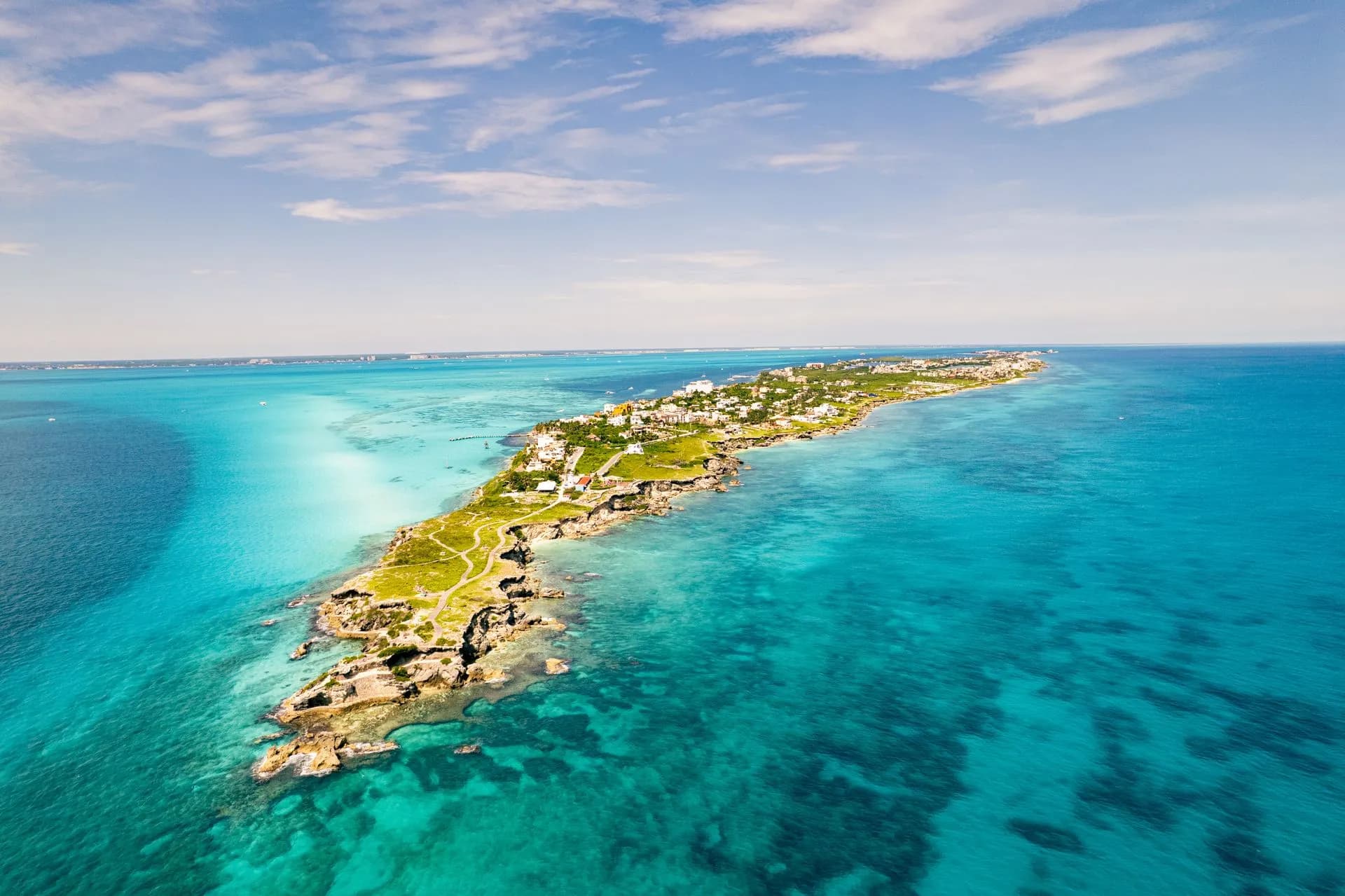
The short answer: Isla Mujeres gets far less sargassum than the mainland, and its main beach, Playa Norte, is one of the most reliably seaweed-free beaches in the entire Mexican Caribbean. The reason is geography. Playa Norte sits at the northern tip of the island and faces west, toward the mainland and the sheltered side, rather than the open Atlantic. For the incoming sargassum rafts to reach it, the current would have to wrap all the way around the northern tip of the island, which almost never happens. That is why, on a day when Cancún's Hotel Zone is dealing with a band of seaweed, the ferry across to Playa Norte is the classic clean-water escape.
The honest, complete answer is more nuanced. Isla Mujeres does get sargassum on its exposed sides: the east coast faces the open Caribbean head-on and collects it like any east-facing beach, and the southern points are more exposed than the protected north. And in a heavy-bloom year like 2026, even Playa Norte is not completely immune, with cold fronts occasionally pushing seaweed around the tip. But because the beaches you actually swim at are on the protected west side, the practical experience is that Isla Mujeres stays clean when much of the coast does not. This guide covers which beaches get sargassum, the month-by-month pattern, the 2026 outlook, and how the island compares to Cancún. For the wider seasonal picture, our guide to the best time to visit Isla Mujeres weighs sargassum against weather, crowds, and prices.
Here is how Playa Norte compares to the rest of the coast for sargassum risk:
| Destination | Sargassum (Seaweed) Risk |
|---|---|
| Playa Norte (Isla Mujeres) | Very Low |
| Cancún north beaches | Low |
| Cancún Hotel Zone (south) | Moderate |
| Playa del Carmen | High |
| Tulum | Very High |
Current Isla Mujeres Sargassum Conditions (Updated June 2026)
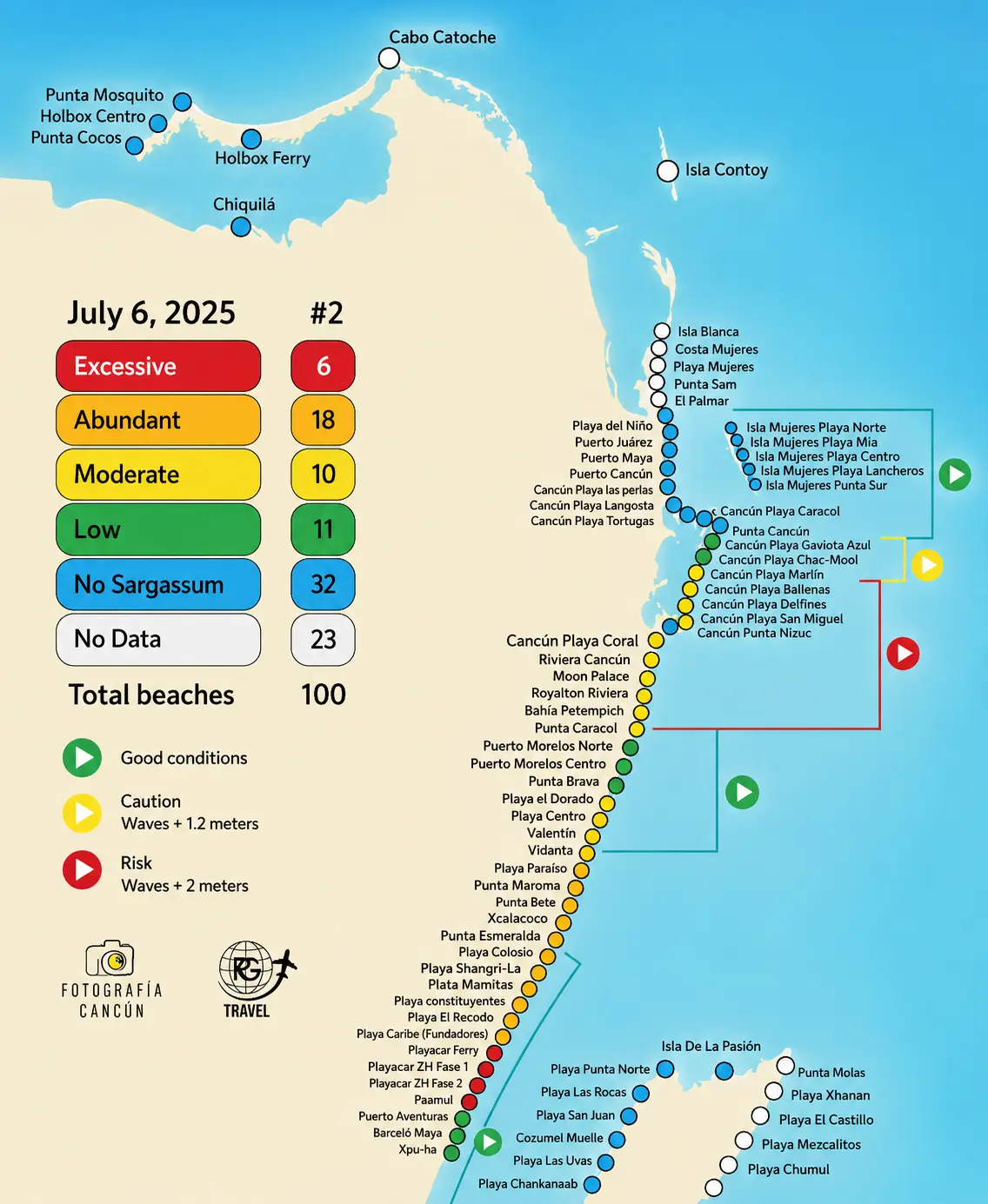
As of mid-June 2026, the Mexican Caribbean is in its peak sargassum season, and 2026 is tracking as a record year. On Isla Mujeres, municipal crews had cleared roughly 2,500 tons from the island's beaches by mid-June, with the heaviest accumulation on the exposed east coast. Playa Norte, on the sheltered west side, is holding up far better than the mainland: it sees the occasional patch after a wind shift but is cleared quickly and stays swimmable most days.
Expect the regional peak to continue through August before easing in September and October. If you are checking the Isla Mujeres seaweed today, or the Playa Norte seaweed today specifically, the live trackers in the tracking section below are the most reliable source, since conditions can change within a few days. We review this guide periodically, but same-week beach photos remain the best way to confirm the latest. Last reviewed: June 2026.
Isla Mujeres Seaweed vs Sargassum: Same Thing
If you are searching for Isla Mujeres seaweed, or Isla Mujeres algae, that is the same thing as sargassum: the terms are used interchangeably for the brown algae that drifts in from the Atlantic and washes up on Caribbean beaches. Whether you call it the Isla Mujeres seaweed season or the sargassum season, the timing, the beaches, and the advice in this guide are identical. The seaweed on Isla Mujeres is concentrated on the east coast, while Playa Norte and the west-side beaches stay clearest, and the Isla Mujeres seaweed forecast follows the same regional satellite data covered below. In short, if you have read about a seaweed problem on Isla Mujeres, it is sargassum, and the good news is that the island's main swimming beaches are among the least affected anywhere on the coast.
Isla Mujeres is small, but its beaches face completely different directions, and that is what decides where the sargassum lands. The protected west and north sides, where the main swimming beaches are, stay clearest; the open-Caribbean east coast takes the brunt.
| Beach / Area | Sargassum (Seaweed) Risk |
|---|---|
| Playa Norte (north tip) | Very Low |
| Centro / west-side town beaches | Low |
| Playa Lancheros (south-west) | Moderate |
| East coast (Caribbean-facing) | High |
| Punta Sur (southern tip) | High |
Playa Norte (the clearest beach)
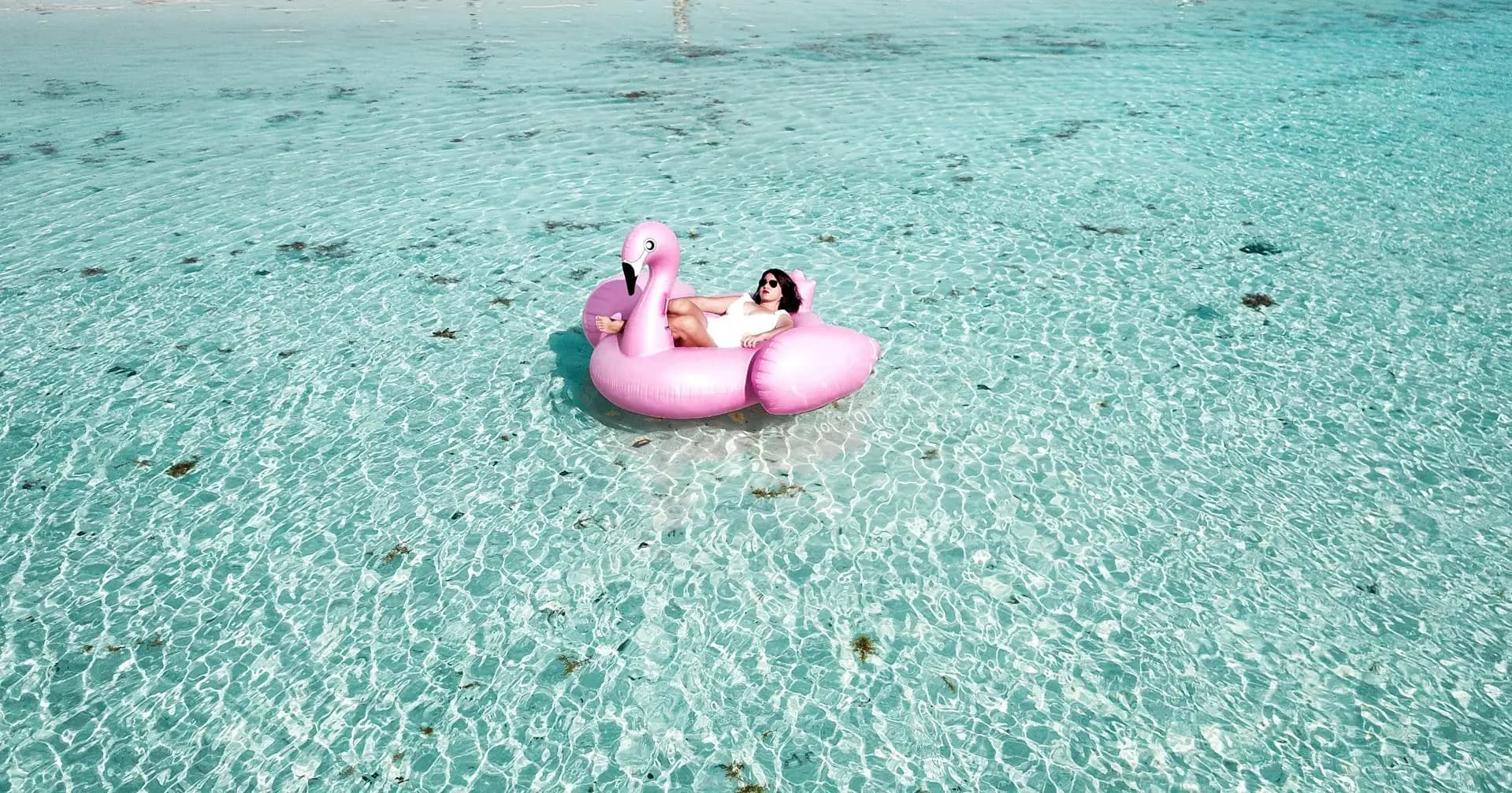
The island's headline beach, at the northern tip, faces west and is sheltered behind the island itself. The sargassum current has to wrap all the way around the north point to reach it, which rarely happens, so Playa Norte is consistently one of the most seaweed-free beaches in the Mexican Caribbean. This is the beach that makes Isla Mujeres a sargassum escape, and where we'd plan to spend beach time in any month.
Centro and the west-side beaches
The town beaches along the western, mainland-facing shore are also well protected and usually stay clear. This is the calm, swimmable side of the island where the hotels, the ferry dock, and most of the sand are, so the beaches you actually use line up with the least-affected coast. Our Isla Mujeres hotels guide covers where to stay on this side.
Playa Lancheros and the south
Farther south on the island, Playa Lancheros and the southern points are more exposed than the sheltered north, so they pick up more sargassum during the peak months. Still swimmable on good days, but not the reliable clean bet that Playa Norte is.
East coast and Punta Sur
The eastern, Caribbean-facing shore and the southern tip at Punta Sur take the open-Atlantic rafts head-on and collect the most sargassum on the island. These are mostly rocky, wave-exposed stretches you visit for the dramatic scenery and the Punta Sur sculpture park rather than for swimming, so the seaweed here matters far less to a typical beach day.
Isla Mujeres Sargassum Month by Month
This calendar tracks Playa Norte, the beach most visitors come for, with notes on the rest of the island. Because the north beach is so well protected, its levels stay low even when the regional season peaks; the bigger swings happen on the east coast.
| Month | Playa Norte Level | Island Notes |
|---|---|---|
| January | Minimal | Clean dry-season conditions; an occasional cold front can briefly push seaweed onto the north beach |
| February | Minimal | Among the cleanest beaches in the region |
| March | Minimal, occasional events | Usually clean, but Norte cold fronts can push sargassum around the tip (over 50 tons were cleared in March 2026) |
| April | Minimal | Playa Norte stays clear; the east coast begins to build |
| May | Low | East coast moderate to high; Playa Norte usually still clear |
| June | Low to moderate | Regional peak; the east side is heavy, Playa Norte stays mostly clear with occasional patches in a heavy year |
| July | Low to moderate | Regional peak continues; Playa Norte far cleaner than the mainland |
| August | Low | Peak easing late; Playa Norte mostly clear |
| September | Minimal to low | Easing; the island returns to clean |
| October | Minimal | Clearing into the dry season |
| November | Minimal | Clean; the Norte cold-front season starts, so brief pushes are possible |
| December | Minimal | Clean through the holidays |
ℹ️ Levels are for Playa Norte and shift with wind and currents. Even when sargassum does reach the north beach, municipal crews clear it quickly, so it rarely stays for long. Check live conditions close to your dates.
For broader month context, our Isla Mujeres in July guide covers the peak summer month, when the regional bloom is at its heaviest but the north beach still holds up well.