Puerto Morelos sits on the open Caribbean between Cancún and Playa del Carmen, but its barrier reef 500m offshore makes it more resilient to sargassum than its neighbors. This guide covers when it is worst, how the reef helps, the 2026 outlook, and how it compares to Playa del Carmen.
What You Should Know
- Puerto Morelos sits on the open Caribbean between Cancún and Playa del Carmen, so it does get sargassum, but a barrier reef about 500 meters offshore gives it more protection than any other major beach town on this stretch of coast.
- That reef advantage makes Puerto Morelos a moderate-risk destination: it stays more swimmable than Playa del Carmen and far better than Tulum during the peak, though it is not as clean as the sheltered, west-facing beaches of Isla Mujeres, Cozumel, or Holbox.
- The peak is May to September, with July and August the worst; the clean season is November to April. Puerto Morelos can occasionally keep getting some sargassum past October.
- The reef lagoon, the cenotes inland, and offshore reef snorkeling all stay usable on heavy beach days, since sargassum is a shoreline issue, not an offshore one.
Does Puerto Morelos Get Sargassum?
⭐ The short answer: Puerto Morelos does get sargassum, but its barrier reef roughly 500 meters offshore helps reduce the impact. While not sargassum-free, Puerto Morelos is generally more swimmable than Playa del Carmen and Tulum during the summer peak.
Does Puerto Morelos get sargassum? Yes, but it has a genuine advantage its neighbors do not. Puerto Morelos faces the open Caribbean, like Playa del Carmen and Tulum, so the Atlantic sargassum rafts do reach it in the summer. The difference is the reef: a barrier reef sitting roughly 500 meters offshore, part of a protected national marine park, that acts as a physical break before the open sea reaches the beach. No other major tourist beach between Cancún and Tulum has that close-in reef, and it is why Puerto Morelos has repeatedly stayed swimmable while Playa del Carmen and Tulum are buried during the same peak weeks.
The honest framing is that Puerto Morelos is a moderate-risk destination, not a sargassum-free one. In a heavy year like 2026 it still gets seaweed in the summer peak, and a big raft on a bad day will still line the sand. But day to day it tends to hold up better than the open beaches to the south, and the calm reef lagoon often stays usable when surf-side beaches do not. This guide covers when sargassum is worst, how the reef helps, the 2026 outlook, and how Puerto Morelos compares to Playa del Carmen and the rest of the coast. For the wider regional picture, our Cancún sargassum season guide sets out how the whole coast compares.
Here is how Puerto Morelos compares to the rest of the coast for sargassum risk:
| Destination | Sargassum (Seaweed) Risk |
|---|---|
| Isla Holbox (Gulf-facing) | Very Low |
| Isla Mujeres (Playa Norte) | Very Low |
| Cozumel (west coast) | Very Low |
| Cancún | Moderate |
| Puerto Morelos | Moderate |
| Playa del Carmen | High |
| Tulum | Very High |
Puerto Morelos Sargassum Today
🌊 Current assessment (mid-June 2026): The Mexican Caribbean is in peak sargassum season and 2026 is tracking as a record year, with authorities estimating up to roughly 130,000 tons could reach Quintana Roo's shores over the year. Puerto Morelos has held up better than its neighbors: thanks to the offshore reef, it has stayed comparatively swimmable while Playa del Carmen and Tulum see heavy landings. Conditions still vary day to day, and a large raft can reach the beach, but the reef lagoon often stays usable. Expect this pattern through July and August before easing in September.
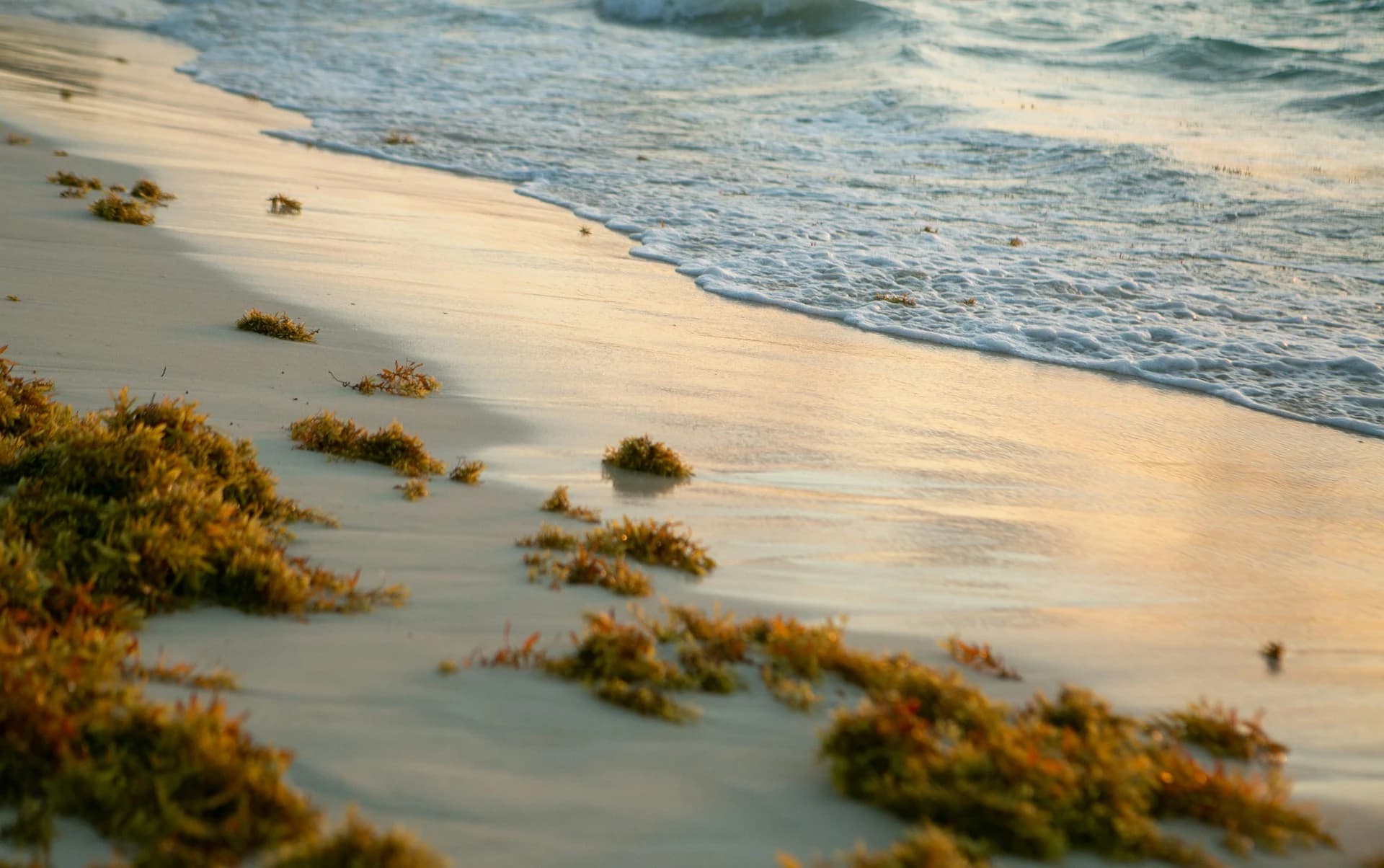
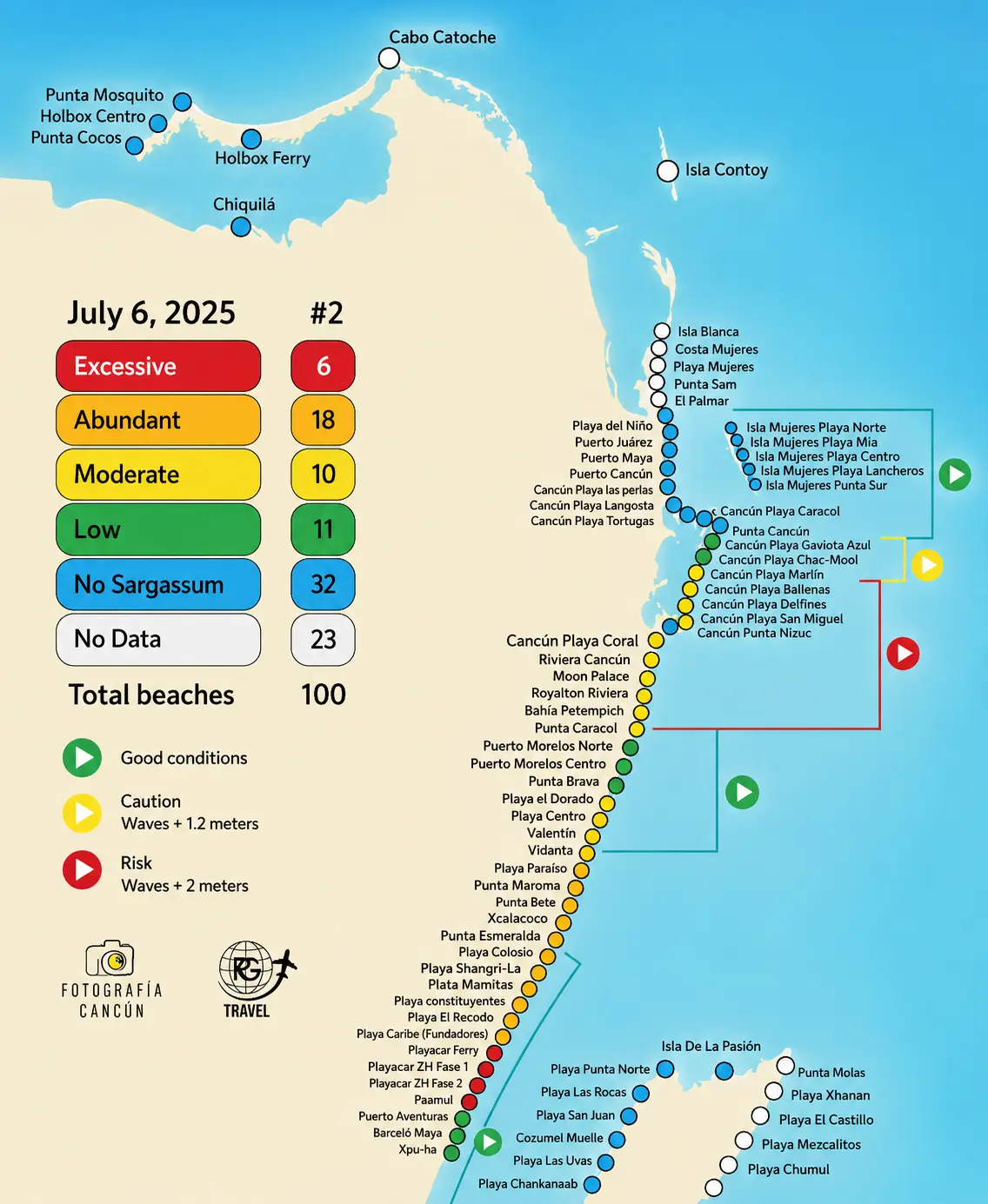
Latest beach photos: for same-day, dated photos, live satellite tracking, and current Puerto Morelos beach conditions, use the live sources listed in the tracking section below. Same-week photos from your specific beach or hotel are the most reliable read.
Last reviewed: June 2026. We update this assessment periodically; conditions can change within a few days, so confirm close to your travel dates. If you are checking the Puerto Morelos sargassum today for a specific date, the live trackers are more accurate than any seasonal average.
Puerto Morelos Seaweed vs Sargassum: Same Thing
If you are searching for Puerto Morelos seaweed, or Puerto Morelos algae, that is the same thing as sargassum: the terms are used interchangeably for the brown algae that drifts in from the Atlantic and washes up on Caribbean beaches. Whether you call it the Puerto Morelos seaweed season or the sargassum season, the timing, the beaches, and the advice in this guide are identical. The Puerto Morelos seaweed forecast follows the same regional satellite data covered below, and the seaweed here is heaviest in the July-to-August peak. The good news specific to Puerto Morelos is that the offshore reef means more of it gets broken up before it reaches the sand than at the open beaches to the south.
How the Puerto Morelos Reef Helps
Puerto Morelos sits inside the Puerto Morelos Reef National Park, and the barrier reef runs roughly 500 meters offshore, close enough to create a calm, shallow lagoon between the reef and the beach. That reef does two useful things during sargassum season. First, it breaks up and slows some of the incoming rafts before they reach the shore, so on many days less sargassum lands than at the unprotected open beaches a few kilometers south. Second, the lagoon itself stays calm and shallow, which makes the water more pleasant and easier for crews to clean than a surf-pounded open beach.
It is not a force field. On a heavy day, with the wind in the wrong direction, sargassum still gets into the lagoon and onto the sand, and Puerto Morelos is firmly a moderate-risk destination, not a guaranteed-clean one. But the reef is the single biggest reason the town consistently reports better conditions than Playa del Carmen and Tulum during the same peak weeks. It is also why the reef snorkeling here, in clear water beyond the lagoon, stays excellent regardless of what is on the beach.
Which Puerto Morelos Beaches Get the Least Sargassum?
Puerto Morelos beach conditions are fairly uniform along the town's compact shoreline, since the whole beach sits behind the same reef, but there are small differences worth knowing when choosing where to stay or swim. The calm reef lagoon areas are the most reliable, while the open ends of the beach catch a little more on a windy day.
| Area | Sargassum Risk |
|---|---|
| Main town beach | Moderate |
| North beach (toward the marina) | Moderate |
| South beach | Moderate |
| Reef lagoon areas | Lower |
| Resort-zone beaches | Varies |
Main town beach
The beach in front of the town square and the public pier is the heart of Puerto Morelos. It sits inside the reef lagoon, so the water is calm and the sargassum that does arrive is usually cleared quickly by municipal crews. Puerto Morelos water quality here is generally good, with shallow, clear lagoon water most of the year.
North and south beaches
Walking north toward the marina or south along the sand, conditions are broadly the same moderate risk as the town center, with the exact stretch on any given day coming down to wind direction. Checking Puerto Morelos beaches today on a live tracker is the best way to pick the cleanest stretch.
Reef lagoon areas
The calm, shallow water directly behind the reef is the most reliable for swimming, and where snorkeling conditions stay best. The reef both reduces the incoming Caribbean seaweed and keeps the lagoon easy to clean, which is why these areas tend to be the lowest-risk on the beach.
Resort-zone beaches
The hotels and larger resorts along the coast each maintain their own beach sections, so conditions vary by property and how diligent each one's cleaning crew is. As elsewhere on the coast, a resort that rakes its beach daily can stay clear while an unstaffed public stretch nearby holds more.
Puerto Morelos Sargassum Month by Month
Here is the typical pattern for Puerto Morelos. Treat it as the baseline: a heavy-bloom year like 2026 shifts the whole curve up, and the reef tempers the worst of it rather than removing it. The clean window is November through April; the worst is July and August.
| Month | Typical Level | What to Expect |
|---|---|---|
| January | Minimal | Clean dry-season beaches and calm lagoon water |
| February | Minimal | Among the cleanest months of the year |
| March | Low | Usually clean, with the first rafts possible late in the month |
| April | Low to moderate | Season begins; often still good early, building later |
| May | Moderate | Ramps up; the reef keeps the lagoon more usable than open beaches |
| June | Moderate to high | Heavy landings possible, but often milder than Playa del Carmen |
| July | High (peak) | One of the two worst months; the reef tempers but does not stop it |
| August | High | Peak continues; clean-up crews busiest now |
| September | Moderate | Easing through the month, still variable |
| October | Low to moderate | Clearing, though Puerto Morelos can hold some later than most |
| November | Minimal | Beaches clean again; one of the best beach months |
| December | Minimal | Clean through the holidays |
ℹ️ Levels are seasonal averages. The reef makes Puerto Morelos more resilient than the open beaches to the south, but it still follows the regional peak. Check live conditions close to your dates.